
Gabon: Water Becomes a Strategic Challenge in Africa
Libreville, Saturday, July 18, 2026 (Infos Gabon) – Access to water has become one of the major geopolitical challenges facing the African continent. At N’Djamena, where the African Water Forum was held, heads of state sent a clear message.
Without significant investments in hydraulic infrastructure, increased regional cooperation and adaptation to climate change, no sustainable development strategy can produce the desired results.
In participating in this continental meeting, Gabonese President Brice Clotaire Oligui Nguema inscribed his country in this collective dynamic while seeking concrete solutions to the challenges facing water supply and sanitation in the country.
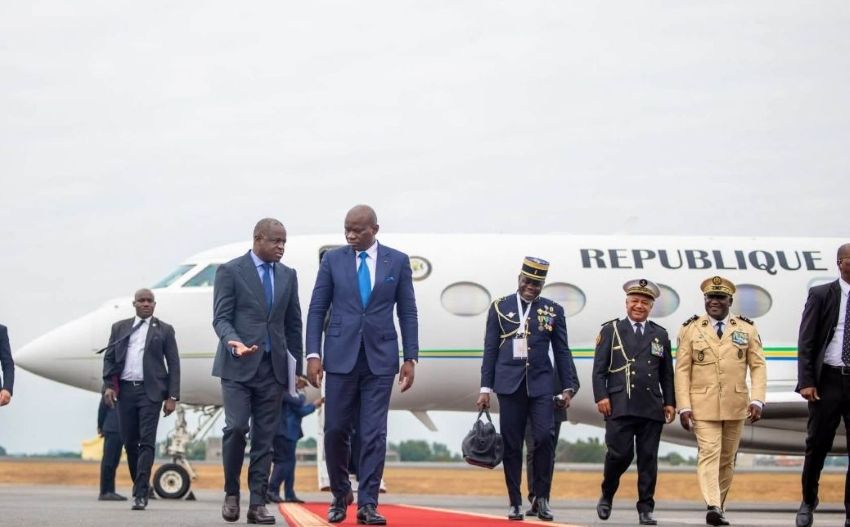
Returning on Friday to Libreville, the head of state reported more than a diplomatic participation. The Forum’s works opened new perspectives for financing, technical cooperation, and expertise transfer that could accompany the reforms undertaken to improve access to potable water and sanitation throughout the national territory.
The African continent is facing an urgent water crisis
Reunited for two days in the Chadian capital, several heads of state, representatives of financial institutions, technical partners, and international organizations drew a shared conclusion. The African continent is experiencing increasing pressure on its hydric resources due to combined effects of demographic growth, rapid urbanization, droughts, recurrent floods, and climate change.
The participants adopted several major orientations. They called for accelerating investments in water supply networks, strengthening the resilience of hydraulic infrastructure against climate change, improving governance over water resources, developing innovative financing mechanisms, and fostering a coordinated management of transboundary basins.
The objective is clear: making water no longer a constraint to development but a true driver of growth, public health, and economic stability.
For Gabon, these conclusions resonate particularly. Despite having one of the continent’s most significant hydric potential, difficulties in accessing potable water remain a daily concern for many households, especially in Grand Libreville.
Aware of this reality, President Oligui Nguema has made improving access to potable water and sanitation a national priority. The state of emergency declared recently illustrates this willingness to respond simultaneously to everyday needs while preparing long-term structural responses.
The participation in the African Water Forum inscribes precisely into this logic. It allows Gabon to mobilize new financial partners, access international best practices, and benefit from technical assistance to modernize its hydraulic infrastructure.
Bilateral exchanges conducted on the sidelines of the Forum have also allowed for consolidating relations with several African and international partners engaged in water, sanitation, and sustainable resource management sectors.
Making water a lever of development
Beyond the question of access to potable water, Gabon’s overall development strategy is concerned.
The water condition affects public health, food security, agriculture, industry, energy production, and investment attractiveness. In a context where the country aims to diversify its economy, securing this resource becomes an economic imperative as much as a social one.
The perspectives opened up at N’Djamena offer Gabon the opportunity to accelerate the modernization of its water distribution networks, strengthen the resilience of its infrastructure against climate change effects, and improve living conditions for populations.
“The Forum’s works have opened new perspectives in terms of financing hydraulic infrastructure, technical cooperation, and expertise transfer,” said the presidency.
As global balances are redressed by the effects of climate change, mastering water becomes one of the key indicators of a state’s sovereignty. For Gabon, the challenge now is to transform the commitments made at N’Djamena into concrete achievements. Because access to potable water is no longer just an objective of development but a condition for prosperity and resilience in the coming decades.
FIN/INFOSGABON/SO/2026