
Gabon’s fifth republic: faith and governance in national rebuilding
Libreville, Saturday June 13 2026 — As Gabon reshapes its political landscape following a transitional period, the relationship between state institutions and spiritual authorities is emerging as a cornerstone of national stability.
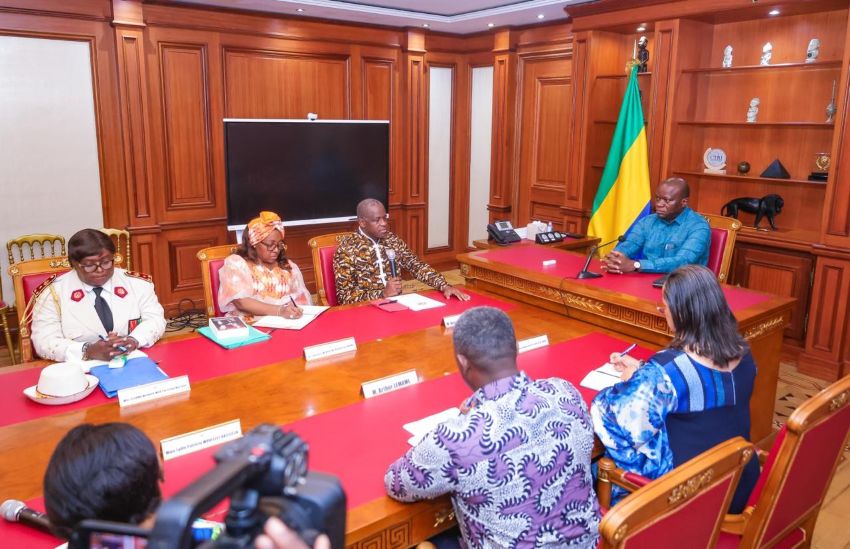
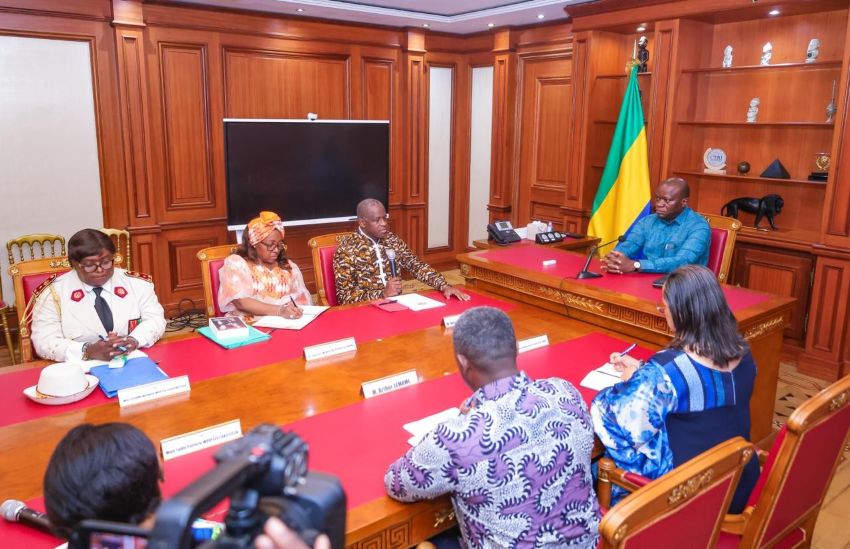
The recent meeting between President Brice Clotaire Oligui Nguema and Reverend Louis Sylvain Allogo Engo, leader of the Evangelical Church of Gabon, exemplifies this evolving dynamic. Far from being a mere formality, this encounter signals a strategic recognition of religion’s role in shaping civic values and social cohesion during periods of institutional transformation.
In many African nations, religious organizations wield influence that extends beyond spiritual guidance, often acting as pillars of community life. In Gabon, churches have long been integral to education, healthcare, youth mentoring, and conflict mediation. Their ability to mobilize citizens makes them indispensable partners in the nation’s rebuilding efforts.
Religious institutions as silent pillars of stability
The Evangelical Church of Gabon is one of several religious bodies that have maintained deep roots across the country. For generations, it has provided spiritual guidance during pivotal moments in the nation’s history. The government’s decision to engage with religious leaders reflects an understanding that true stability requires more than legal frameworks—it demands alignment with the moral and social values held by the population.
The presence of the Vice President during the meeting underscored the administration’s commitment to this collaborative approach. By fostering dialogue with spiritual leaders, the state acknowledges that governance thrives when it integrates the institutions that shape public consciousness.
Balancing secular governance with religious partnership
President Oligui Nguema emphasized that Gabon’s partnership with religious organizations operates within a secular framework. This distinction is crucial: it ensures that while the state collaborates with faith-based groups, it maintains the autonomy of both political and religious spheres. This model mirrors practices in mature democracies, where secularism fosters cooperation without compromising institutional independence.
The Reverend Engo highlighted the Evangelical Church’s contributions to national resilience, particularly in times of crisis. His remarks reinforced the idea that spiritual institutions do not merely respond to societal challenges—they help prevent them by cultivating ethical responsibility and communal solidarity.
Human development as a shared priority
Beyond political symbolism, the discussions also focused on practical collaboration. The upcoming national synod of the Evangelical Church, scheduled for July 20-26 2026 in Baraka Mission, was a key topic. The government’s willingness to support this event reflects a broader vision of development—one that encompasses moral guidance, civic education, and social cohesion alongside economic progress.
This approach aligns with global trends in sustainable development, where resilient societies are built on the interplay of economic strength, institutional stability, and social capital. By prioritizing dialogue with religious leaders, Gabon’s leadership signals that modernization must engage the values and communities that define its people.
In an era marked by global polarization, Gabon’s strategy of bridging institutional and spiritual realms may well become a model for other nations seeking to reconcile tradition with progress. The meeting in Libreville was not just an exchange of courtesies—it was a declaration that the Fifth Republic’s foundations rest on both law and shared values.