
Gabon’s new political era: Parliament takes center stage
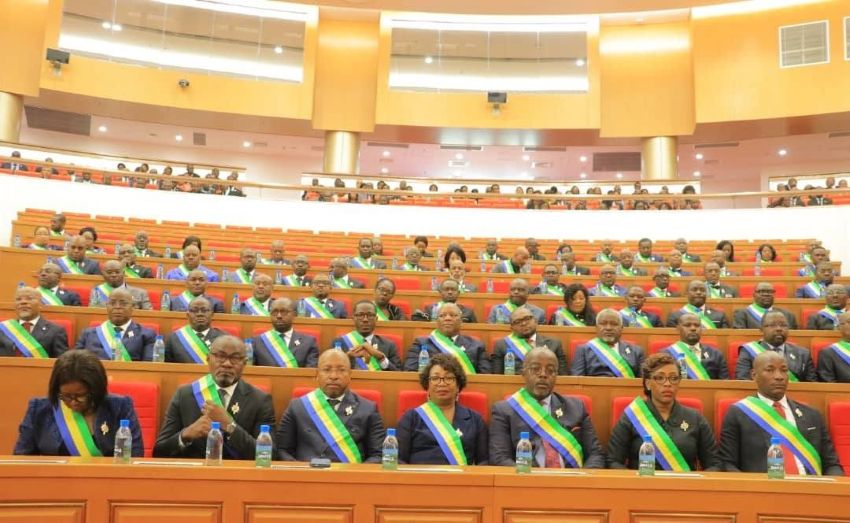
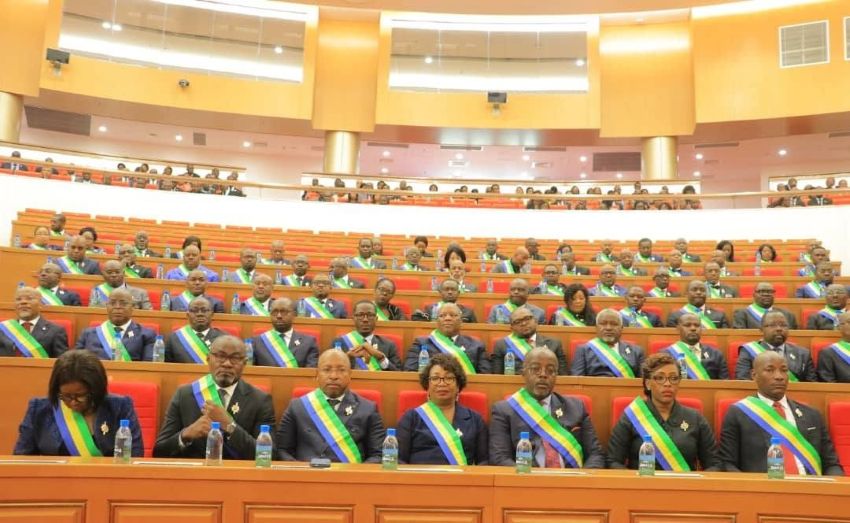
Libreville, June 15, 2026 – A historic constitutional milestone unfolded in Gabon today as President Brice Clotaire Oligui Nguema addressed the National Assembly in its first-ever joint session, marking a fundamental shift in the country’s political architecture.
This unprecedented gathering at the Palais Léon Mba signals more than just a procedural formality. It represents the dawn of a new republican era where the Parliament stands as the cornerstone of governance and accountability. For the first time since the adoption of the Fifth Republic’s Constitution, the head of state is constitutionally required to present an annual report to the combined chambers of Parliament, demonstrating a groundbreaking commitment to transparency.
The significance of this development cannot be overstated. In previous regimes, presidential addresses to Parliament were rare exceptions. The new constitutional framework transforms this into an annual obligation, compelling the president to account for his administration’s actions before the people’s representatives. This innovation elevates the Parliament from its traditional legislative role to become the ultimate arbiter of executive accountability.
A transformative shift in governance
The annual Congressional session introduces a revolutionary concept: regular presidential accountability at the highest institutional level. The president’s legitimacy is no longer derived solely from electoral mandate but is now complemented by a structured system of public evaluation. This model diverges sharply from conventional presidential systems by institutionalizing a culture where governance is measured not just by decree but by explanation and justification.
The symbolic importance of this change extends to the very location of the session. By convening at the Palais Léon Mba rather than the Presidential Palace, the president physically acknowledges the Parliament as the primary seat of national legitimacy. This gesture underscores a critical principle: democratic authority flows not just from the ballot box but from continuous dialogue with elected representatives.
Parliament’s empowered role in the Fifth Republic
The constitutional reforms born from the 2023 National Inclusive Dialogue have fundamentally redefined the Parliament’s status. No longer sidelined as a secondary institution, the Parliament now stands as an equal pillar of governance, tasked with safeguarding the republic’s new institutional balance.
This transformation responds to a critical national need: rebuilding public trust after years of political uncertainty. The new Constitution strengthens oversight mechanisms while emphasizing transparency and responsibility. The annual Congressional address embodies this philosophy, creating a vital space where both majority and opposition share a common institutional moment.
Through this innovation, the Parliament becomes the nation’s mirror, reflecting Gabon’s diverse political, geographical, and social fabric. The 215 deputies and senators gathered in Congress represent not just their constituencies but the entire Gabonese people, making the president’s address a national conversation rather than a solitary declaration.
Institutionalizing a culture of transparency
Every great democracy relies on rituals that give meaning to political time. Gabon’s annual Congressional session could well become such a defining tradition. Beyond its formal proceedings, this gathering institutionalizes a governance philosophy rooted in explanation and responsibility. Authority is no longer exercised solely through decree but through accountability to the people’s representatives.
In a continent where institutional reforms are often viewed with skepticism by investors and international partners, this innovation sends a powerful signal of stability. It demonstrates Gabon’s commitment to predictable, sustainable governance frameworks that prioritize public accountability over centralized power.
The true significance of today’s session extends far beyond the content of the president’s speech. This marks the birth of a republican tradition that will shape Gabon’s political landscape for generations. By establishing the Parliament as the common house where executive power meets national representation, the Fifth Republic lays the foundation for a new identity where state strength is measured not by power concentration but by its willingness to account for its actions.
This may well be the most profound transformation since the republic’s inception – a shift from governance by authority to governance through transparency.