
On April 20, 2026, General Évariste Ndayishimiye arrived in Ouagadougou for a high-level diplomatic mission centered on “friendship and cooperation.” At the time, the Burundian head of state held the rotating chairmanship of the African Union (UA).
This diplomatic outreach was designed to bridge the gap between the continental body and the Alliance of Sahel States (AES). This regional bloc, comprising Burkina Faso, Mali, and Niger, was then under the leadership of Captain Ibrahim Traoré. The visit occurred as AES member states were distancing themselves from UA institutions, following a series of political upheavals in the region.
During his time in Burkina Faso—a nation currently governed by a military administration—the Burundian president commended the initiatives taken to restore national stability and security. This praise came even as the local leadership openly suggested that traditional democratic frameworks were no longer a priority. Such interactions highlight a growing bond between regimes that seem to prioritize sovereign control over constitutional constraints.
An analysis of how these nations navigate international pressure reveals a sophisticated use of political resources. By examining the cases of Burundi, Mali, and Niger, one can see how these states maintain resilience despite facing significant external sanctions.
A shared path of institutional shifts
Burundi and the AES nations share a striking convergence in their political trajectories. Mali, Burkina Faso, and Niger have all faced restrictive measures from the Economic Community of West African States (CEDEAO) and the European Union (UE) following military takeovers between 2020 and 2023. These events have reshaped the landscape of West African politics, particularly regarding Burkina Faso news and regional security.
Burundi experienced similar international isolation in 2016. At that time, the UE and the United States imposed sanctions after President Pierre Nkurunziza pursued a controversial third term. Despite the thousands of miles separating Gitega from Bamako, the logic governing their political survival remains remarkably similar, transcending geographical and geopolitical differences.
The strategic identification of adversaries
In both Burundi and Mali, the identification of a specific enemy—whether domestic or foreign—acts as a vital tool for maintaining internal unity. This strategy allows leaders to justify their authority by constantly highlighting perceived threats, ranging from colonial legacies to regional rivals.
In Mali, this tactic reached its peak in early 2022. The military leadership capitalized on a “rally ’round the flag” effect, where the populace united behind the government against external pressure. Following the transition adjustments in May 2021, the administration garnered significant public backing.
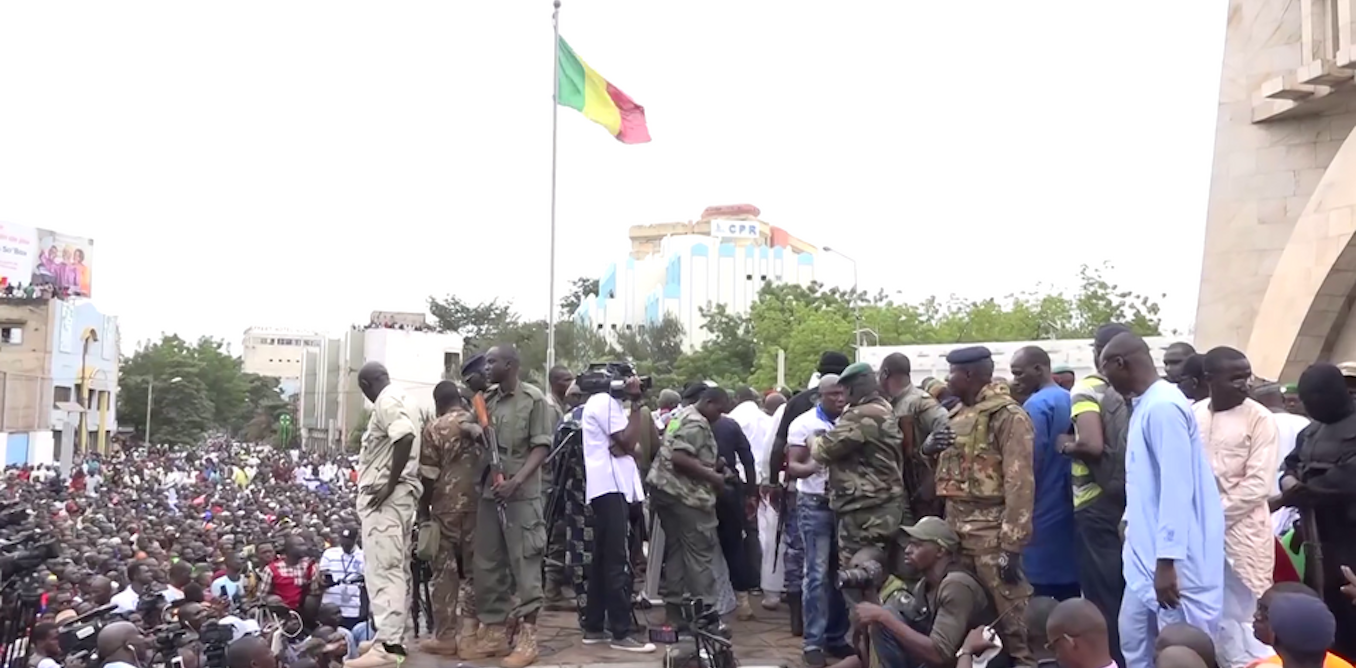
On January 14, 2022, tens of thousands gathered at the Boulevard de l’Indépendance to protest economic and diplomatic sanctions. The crowds expressed strong opposition to Paris and regional organizations, demanding a nation free from foreign interference. This mass mobilization served to solidify the junta’s domestic standing.
In Burundi, the ruling Conseil national pour la défense de la démocratie – Forces de défense de la démocratie (CNDD-FDD) has historically directed its rhetoric against Belgium. The former colonial power is frequently blamed for ethnic tensions and accused of conspiring with Rwanda to undermine the government. By framing sanctions as a product of Belgian influence, the Burundian leadership transforms international criticism into a narrative of anti-colonial resistance.
Navigating regional tensions
Regional dynamics also play a role in this strategy of confrontation. Mali has seen a significant breakdown in relations with Algeria, accusing its neighbor of harboring opposition figures like Imam Mahmoud Dicko and collaborating with armed groups. Consequently, the Malian authorities terminated the Algiers peace agreement in January 2024 and closed their airspace to Algerian flights by April 2025.
Burundi, meanwhile, views Rwanda and the government of Paul Kagame as its primary regional adversary. President Ndayishimiye has labeled Rwanda a “bad neighbor,” accusing it of shielding those involved in the 2015 coup attempt and supporting rebel groups like RED-Tabara. This friction led to the closure of land borders with Rwanda in early 2024.
Furthermore, Burundi deployed troops to the eastern Democratic Republic of the Congo (RDC) between 2022 and 2025. This intervention, aimed at supporting the Forces armées de la République démocratique du Congo (FARDC) against the M23 movement, was framed as a necessary defense against Rwandan-backed aggression. These conflicts provide the symbolic fuel needed to maintain a sense of national emergency.
Security as a tool for legitimacy
There is a distinct contrast in how security is used to justify power in these two nations. In Mali, the immediate threat posed by groups such as the JNIM and the FLA—highlighted by attacks on April 25, 2026—serves to validate the military’s grip on power. Assimi Goïta has effectively moved beyond the need for elections; in July 2025, he was granted a renewable five-year term without electoral oversight.
The Malian leadership positions itself as the only force capable of defeating insurgencies, even as the national economy struggles with power outages and a decrease in international aid. Security has become the ultimate justification for the indefinite suspension of the democratic process.
In Burundi, the approach is slightly different. The CNDD-FDD has already named the incumbent as its candidate for the 2027 elections. While the political environment remains tightly controlled, the electoral process is still maintained as a formal requirement. For Gitega, the security narrative is used to overshadow economic hardships, such as the persistent shortages of fuel and foreign currency that have plagued the country for nearly a decade.
Despite being ranked among the world’s most impoverished nations, both regimes successfully use the construction of external enemies to deflect from internal issues. This comparison reveals that for these administrations, the existence of an adversary is not a hurdle to overcome, but rather the very foundation upon which their authority is built.