
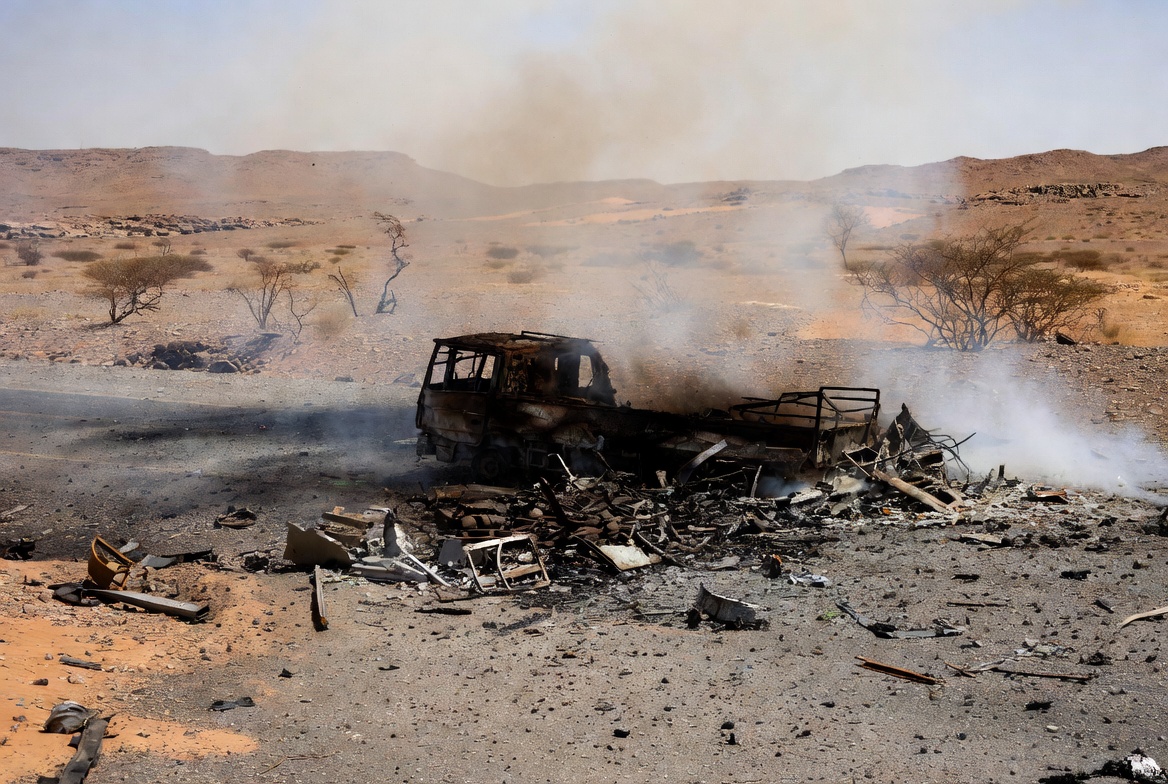
The serenity of northern Mali was shattered once again this Tuesday, April 14, 2026. In the vicinity of Aguelhok, within the Kidal region, a civilian transport vehicle fell victim to a devastating explosion caused by an improvised explosive device (IED).
A heavy toll for civilian travelers
This violent incident highlights the extreme vulnerability of local populations navigating the desert roads. The truck, which was carrying both essential goods and passengers, was nearly obliterated by the force of the blast. Initial reports from the scene indicate:
- Severe injuries: Several passengers sustained critical wounds and were rushed to nearby medical facilities, despite the limited healthcare infrastructure in this remote area.
- Material destruction: The vehicle was completely destroyed, and its entire cargo was lost to the explosion and the subsequent fire.
While no group has officially claimed responsibility, local observers and authorities point toward the armed terrorist groups active in the sector. These insurgents frequently use landmines and IEDs to disrupt movement, though civilians often become the primary victims of these traps.
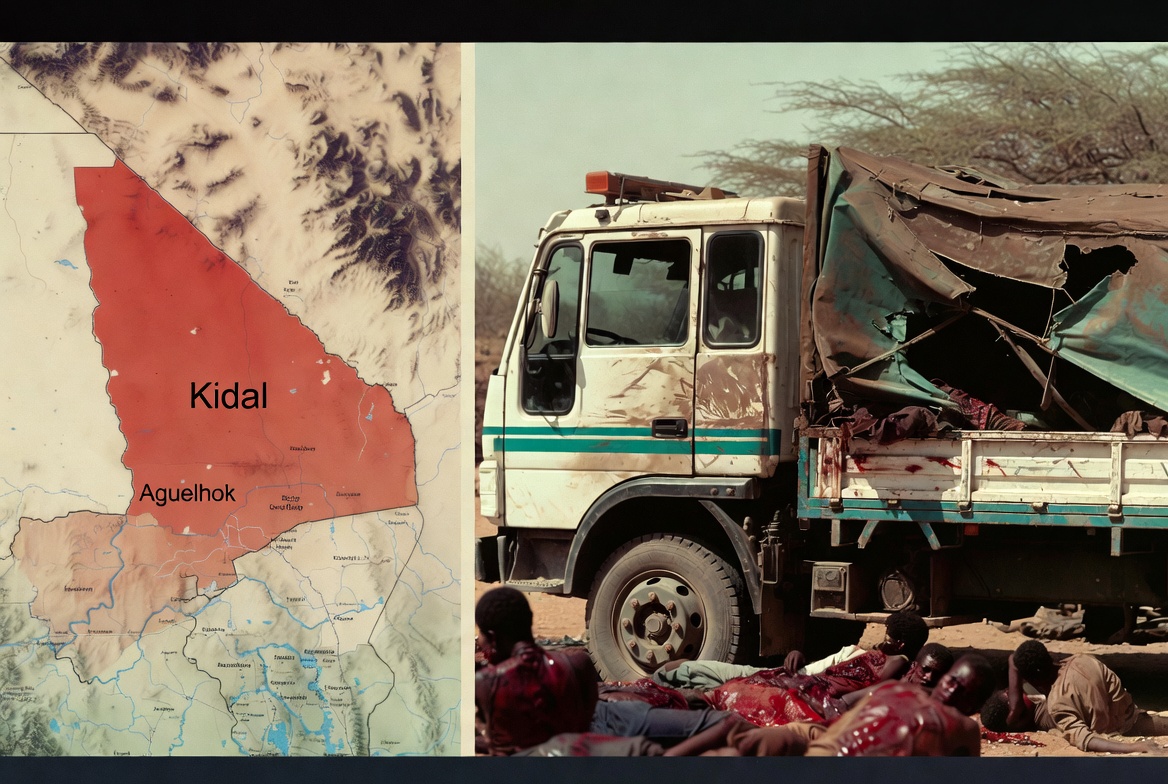
The deadly lottery of Malian roads
Residents of the Kidal region describe travel as an increasingly perilous gamble. “Every journey feels like it could be the last,” shared one local resident, emphasizing how the threat remains hidden beneath the sand. This latest tragedy underscores the persistent danger on the Gao-Kidal-Tessalit axis.
Beyond the immediate human suffering, these attacks are strangling the local economy. Transport operators are becoming increasingly hesitant to supply isolated northern towns, fearing for their safety. Despite ongoing demining efforts and surveillance, the vastness of the desert allows attackers to plant these lethal devices with ease. For the people of Aguelhok, this event is a somber reminder that stability remains elusive in the northeastern reaches of Mali.