
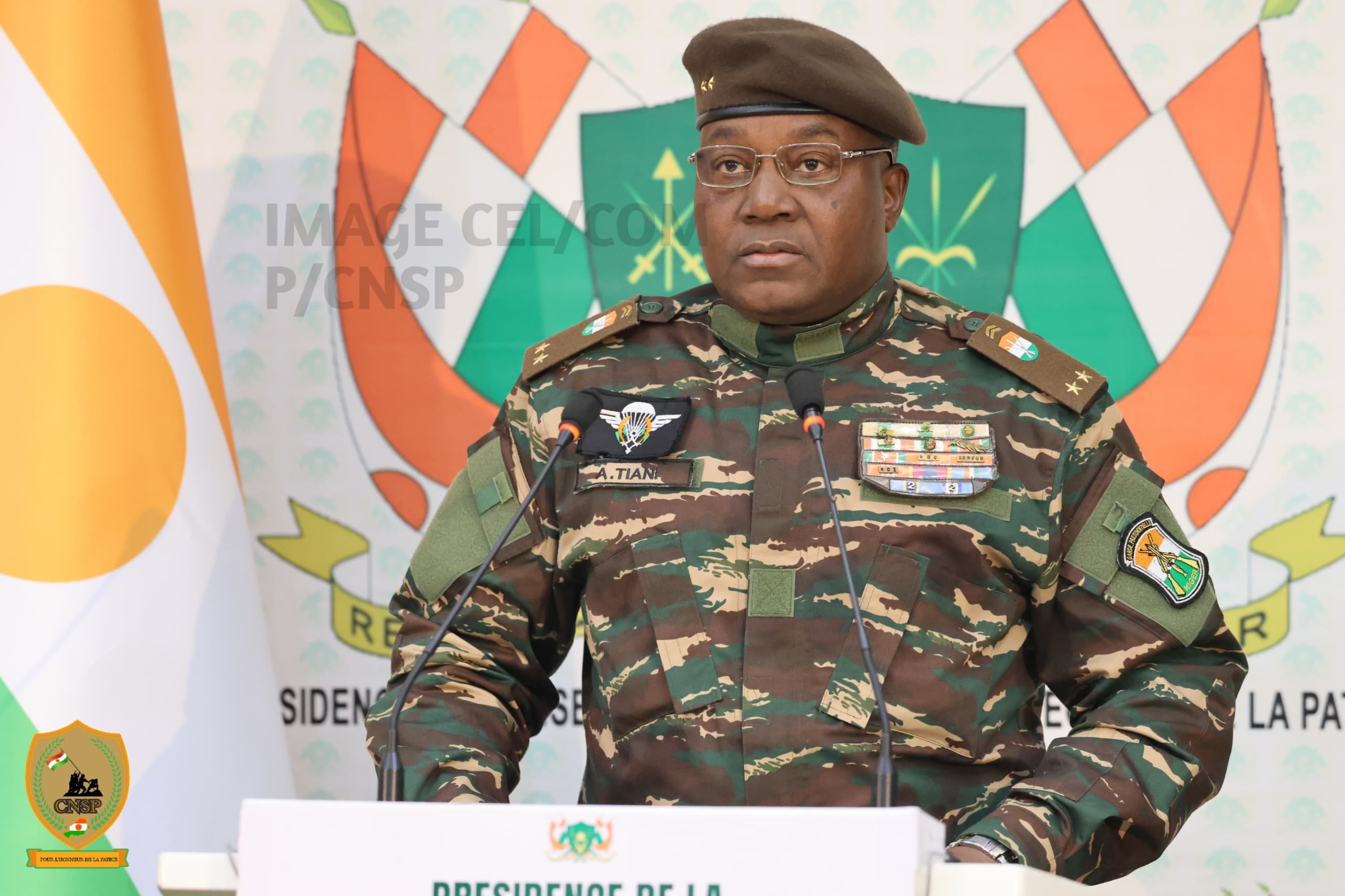
The Nigerien military’s battle against an expanding terrorist insurgency has taken a precarious turn, with General Abdourahamane Tiani caught between covert negotiations and internal fractures within his own ranks. As jihadist factions tighten their grip across the Sahel, the transitional leader is forced into a delicate balancing act—one that risks destabilizing both the nation’s security and his own authority.
the secret talks in say: a tactical gamble with high risks
On March 24, a discreet meeting near the town of Say sent shockwaves through Niamey’s corridors of power. A four-member delegation, dispatched by General Tiani, engaged in clandestine discussions with representatives of the Group for the Support of Islam and Muslims (GSIM). This marked a stark departure from the junta’s earlier vow of uncompromising resistance against armed groups, signaling a desperate pivot toward pragmatism.
The strategy hinges on two critical calculations:
- Divide and conquer: With the Islamic State in the Greater Sahara (EIGS) demonstrating lethal capabilities—most recently with the January attack on Diori-Hamani Airport—the Nigerien leadership seeks to neutralize the GSIM through dialogue. The goal is to transform a draining three-front war into a more manageable bilateral conflict.
- Learning from Mali’s mistakes: Observing how the GSIM has choked off Bamako’s supply lines, Niamey hopes to secure a lifeline by addressing the group’s demands—including prisoner releases and annual tribute payments—before the same fate befalls its own capital.
the army’s simmering discontent: a ticking time bomb
Yet no counterterrorism strategy can succeed without a unified and motivated fighting force. Recent turmoil within the Battalion for Security and Intelligence (BSR) in Tahoua has exposed deep-seated grievances. Soldiers, who once received 1,200 F CFA per month, were reportedly paid only 800 F CFA—sparking outrage in an elite unit that had previously served as a linchpin of cooperation with U.S. special forces before their abrupt withdrawal in 2024.
The dismissal of the BSR’s commander in response to the pay dispute underscores a broader crisis: budget cuts, logistical failures, and plummeting morale. Army Chief of Staff Colonel Mamane Sani Kiaou was compelled to intervene personally, highlighting how internal dissent may now rival external threats in urgency.
the geopolitical tightrope: allies, drones, and empty skies
General Tiani’s negotiations unfold against a backdrop of shifting alliances. Since the expulsion of French and American troops, Niger has aligned itself with the Alliance of Sahel States (AES) and forged new partnerships with Russia and Turkey. These shifts have brought a fresh influx of military advisors and surveillance drones to Niamey, yet critical gaps remain.
The loss of high-precision aerial intelligence—once provided by France’s former bases in Niamey and Agadez—has left the junta scrambling to rebuild its intelligence networks. This has forced an uncomfortable rapprochement with factions it once vowed to crush, as the regime seeks to compensate for lost technological advantages.
the shadow of the past: when strategy mirrors failure
There is a bitter irony in the current approach. While the July 26, 2023, coup was justified in part by the security collapse under former President Mohamed Bazoum, General Tiani now finds himself employing similar tactics. Bazoum had engaged in limited dialogue to secure hostage releases, such as the case of nun Suellen Tennyson. However, Tiani’s negotiations must be conducted in secrecy, lest they be perceived as weakness by hardline factions within the AES or domestic hardliners who view any concession to Al-Qaeda affiliates as capitulation.
Niamey stands at a crossroads. Dialogue with the GSIM may offer tactical relief, but it risks legitimizing armed groups and alienating key allies. For General Tiani, the greatest challenge is no longer seizing power—it is holding onto it while his army’s coffers shrink and his enemies’ territories grow.