
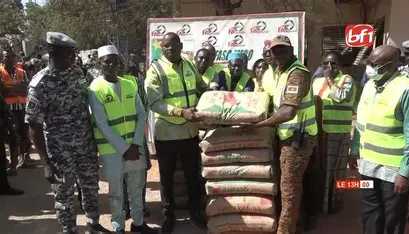
Established by Burkina Faso’s transitional authorities as a symbol of national reconstruction and renewed sovereignty, the Faso Mêbo agency—launched under the leadership of Captain Ibrahim Traoré—has become the focal point of growing scrutiny. While official narratives emphasize patriotism, collective effort, and visible infrastructure projects across urban centers, economists and observers question the transparency of public fund management and citizen contributions.
The illusion of rapid urban transformation
The agency’s undertakings are undeniably visible: road paving, drainage system rehabilitation, and urban beautification in cities such as Ouagadougou, Bobo-Dioulasso, and Koudougou. By engaging youth, students, and the diaspora, officials have crafted a compelling narrative around participatory development and national pride. Yet, critics argue that this focus on high-visibility projects may serve to obscure deeper governance concerns.
« The labor-intensive nature of these projects often masks their relatively low cost compared to the substantial sums reported under the national effort, » noted a Burkinabè economist who requested anonymity. « The emphasis on visible infrastructure sometimes diverts attention from the critical issue of fund allocation and accountability. »
Unverified financial practices and opaque controls
Central to the debate is the absence of independent oversight mechanisms capable of verifying the proper use of state budget allocations and public contributions. While Faso Mêbo officials assert that all transactions are traceable, recurring allegations include non-competitive contract awards, inflated material costs, and poorly documented budget lines. These irregularities, if confirmed, could benefit a narrow circle of military and civilian officials.
The chilling effect on scrutiny
The reluctance of oversight institutions and local media to challenge these practices is often attributed to a broader climate of intimidation. Journalists, activists, and judges who have raised concerns about government decisions have faced measures ranging from professional reprisals to deployment to conflict zones. Human rights organizations have also documented cases of enforced disappearances and curbs on civil liberties, fostering an environment of fear that stifles investigative reporting.
Patriotism versus the demand for accountability
Analysts describe Faso Mêbo’s approach as « infrastructural populism, » where tangible, high-profile projects bolster public support while sidestepping questions of governance and fiscal responsibility. Community participation in these initiatives has been widely praised, yet many argue that such enthusiasm should not overshadow the necessity of transparency and proper stewardship of public resources. For them, tangible improvements in living conditions must coexist with rigorous accountability.