
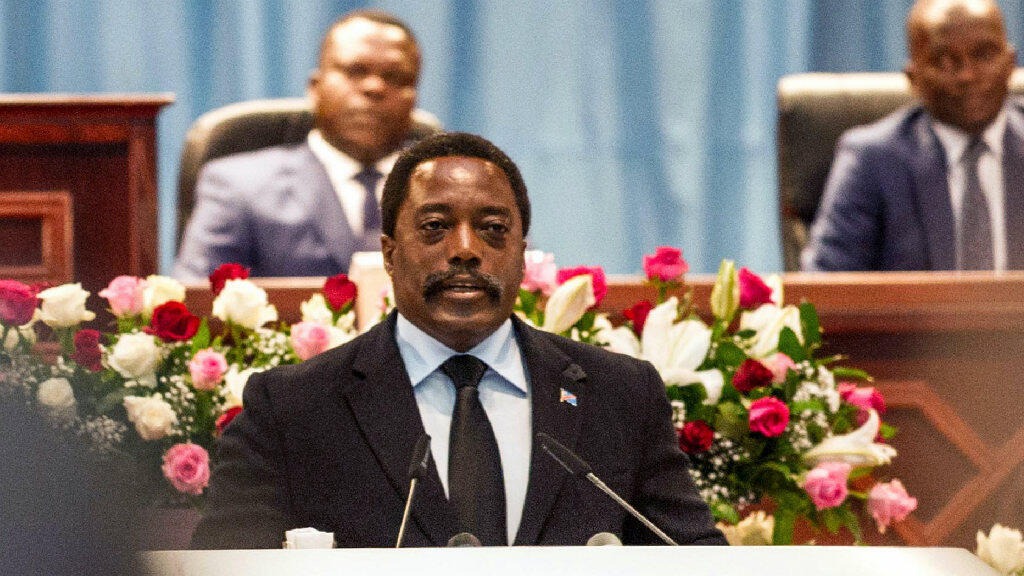
Joseph Kabila, former president of the Democratic Republic of Congo (DRC), has taken the helm of the Front for National Refoundation (FRN), a freshly unveiled politico-military coalition headquartered in Goma—a declaration made public in the embattled eastern region on October 12. The FRN unites dissident factions from the Congo River Alliance (AFC) and the March 23 Movement (M23), both of which have openly challenged President Félix Tshisekedi’s administration. While the announcement signals a bold escalation in Congo’s power struggle, key operational details—including battle plans and timelines—remain shrouded in uncertainty.
Who leads the FRN, and what does it mean for Congo’s fractured opposition?
Under Kabila’s leadership, the FRN has appointed a powerful transitional trio: Cornelius Nangaa, former head of the DRC’s independent electoral commission and AFC leader, and Bertrand Bisimwa, political chief of the M23, as vice presidents. General Sultani Makenga, the M23’s military commander, now oversees the Revolutionary Congolese Army’s high command, while Freddy Rukema Kaniki serves as secretary general. The restructuring effectively dissolves the AFC, absorbing its former network under the FRN’s expanding umbrella. The role and future of the M23 within this new structure, however, remain deliberately unspecified—a critical ambiguity analysts warn may destabilize future negotiations.
Why this alliance could redraw Congo’s military and political map
The FRN’s founding charter accuses Kinshasa of undermining democratic institutions, fostering systemic corruption, and deepening social inequality. More explosively, it challenges the legitimacy of the 2023 election results, calling on followers to mobilize “by all means necessary, including force.” These confrontational tones arrive at a pivotal moment when eastern Congo’s humanitarian crisis has reached catastrophic levels. The M23 and its AFC allies currently control strategic strongholds, including Goma—a city seized during the rebels’ sweeping 2025 offensive. The international community, including the UN, has repeatedly implicated Rwanda in supporting the M23, an allegation Kigali vigorously denies.
How international peace efforts clash with rebel ambitions
Diplomatic tracks in Doha and bilateral talks between Kinshasa and Kigali had begun to show tentative progress before the FRN’s emergence. Yet the coalition’s abrupt formation now threatens to derail fragile ceasefire agreements and prisoner-swap deals—both of which the FRN dismisses as empty promises. Reacting to Kinshasa’s alleged failure to honor its commitments, the FRN hints at expanding military operations rather than seeking diplomatic resolution. Kabila, who presided over the DRC from 2001 to 2019, has long denied any direct links to the M23. Nevertheless, Kinshasa’s military courts handed him a contempt-of-court death sentence in 2025 for treason, war crimes, and rebellion—a verdict he dismisses as politically motivated.
What’s next for Congo as the FRN stakes its claim?
As Kinshasa scrambles to assess this new threat, several pivotal questions remain unanswered. Will the M23 integrate seamlessly into the FRN’s command structure, or will internal rivalries fracture the alliance? Can a rebel-led coalition realistically challenge a sitting government backed by regional and international allies? Most crucially, how will this development affect civilians in eastern Congo, already caught between armed groups and state security forces? While the FRN’s bold rhetoric may embolden opposition supporters, its long-term viability hinges on securing tangible resources, cohesive leadership, and, ultimately, broad-based public trust. One thing is clear: Congo’s already volatile landscape is poised for further upheaval.