
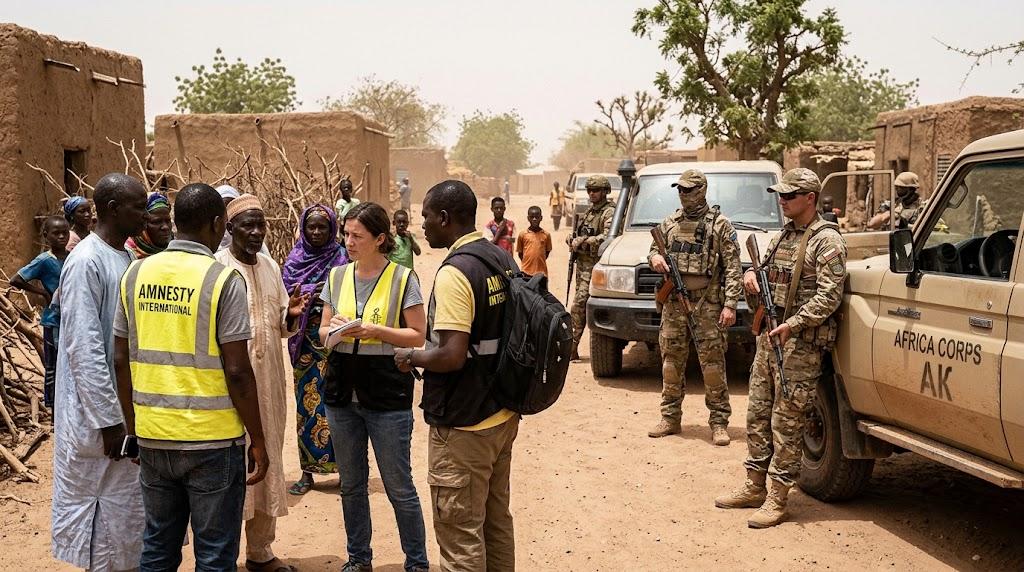
As Africa Corps takes over Wagner’s operations in Mali, a critical question emerges: has the shift improved civilian safety, or merely perpetuated existing patterns of abuse? Reports indicate that despite the structural change, alleged human rights violations—including extrajudicial killings, torture, and arbitrary detentions—have continued unabated. The situation raises pressing concerns about impunity and the protection of vulnerable communities.
Mali’s evolving security landscape under Africa Corps
Since Africa Corps began its deployment in January 2025, replacing Wagner’s controversial presence, the security crisis in Mali has taken a new form. However, fresh allegations of abuses suggest that the transition has not yielded the expected improvements. Operations initially framed as a strategic upgrade now face scrutiny for their alleged failure to prevent civilian harm, despite shifts in command and methodology.
Operational failures and civilian casualties
Between June 2023 and December 2025, at least 34 civilians were reportedly killed during military operations along the Mali-Mauritania border, involving Malian armed forces and former Wagner personnel. Witness accounts describe executions disguised as arrests, with victims targeted even when attempting to flee. Other incidents, such as drone strikes in marketplaces and residential areas, have resulted in further civilian fatalities, raising serious questions about proportionality and military precision.
One such strike on March 16, 2025, reportedly killed 16 people at a market in Ejdeir. A subsequent attack in November 2025 on a home in Tangata left seven dead. In both cases, no evidence emerged of armed combatants or military objectives in the vicinity, underscoring potential violations of international humanitarian law.
Torture and systemic abuse in detention
Beyond battlefield casualties, reports detail torture and inhumane treatment in detention centers, particularly in Léré and Nampala. Survivors describe harrowing methods, including waterboarding, electric shocks, and severe beatings with metal rods or rifle butts. Sexual violence against detainees has also been documented. At least five individuals are believed to have died from torture or neglect within these facilities, while others endured prolonged detention without access to legal counsel or family communication.
The testimonies suggest that Wagner-affiliated personnel, operating alongside Malian troops, participated in these abuses. Some soldiers allegedly interrogated detainees without intervening to stop the violence, highlighting systemic failures in accountability.
Targeted persecution: the human cost of collective punishment
Certain ethnic groups—peul, arab, and tuareg communities—face disproportionate risks, often due to unfounded suspicions of collaboration with armed factions such as the Group for Support of Islam and Muslims (JNIM). Beyond physical harm, these populations endure systemic destruction of property, livestock theft, and economic strangulation, exacerbating their vulnerability in already precarious conditions.
The targeting of civilians based on perceived affiliations cannot be justified under international law, which mandates the protection of non-combatants in all circumstances. Yet, these patterns persist, revealing a widening chasm between military objectives and humanitarian obligations.
Bombori: a case study in unchecked violence
On July 10, 2026, a violent incident in Bombori’s Fulani quarter cast further doubt on Africa Corps’ approach. Approximately 80 men were reportedly rounded up, beaten, and interrogated about suspected ties to armed groups. Six individuals attempting to escape were shot, while three others were executed. The lack of transparent investigations into the episode underscores the entrenched culture of impunity perpetuating such acts.
The role of Africa Corps: continuity or reform?
Africa Corps, described as directly controlled by Moscow, assumed Wagner’s mantle in June 2025. While touted as a reform effort, the transition has done little to curb alleged abuses. Reports link Russian personnel to renewed episodes of violence, prompting concerns over governance, operational oversight, and the Malian government’s accountability in joint missions.
Legal vacuum: the crisis of impunity
Since 2023, no Malian government forces personnel have faced judicial proceedings for civilian-targeted abuses, despite mounting evidence. This systemic failure to investigate not only emboldens perpetrators but also silences potential witnesses, making it increasingly difficult to document crimes. Restricted access to conflict zones further hampers impartial fact-finding, leaving victims in legal limbo.
The international community’s pressure for accountability has yet to translate into tangible action. Without independent inquiries, prosecutions of responsible parties, and robust civilian protection measures, Africa Corps’ deployment risks mirroring Wagner’s legacy rather than breaking from it.
Beyond military force: a call for justice and transparency
The Mali crisis demands a fundamental reassessment: security cannot be achieved at the expense of human rights. Africa Corps’ presence must be accompanied by strict oversight, adherence to international law, and unwavering commitment to justice for victims. For the cycle of violence to end, impunity must become unacceptable—and perpetrators, regardless of affiliation, must answer for their actions.