
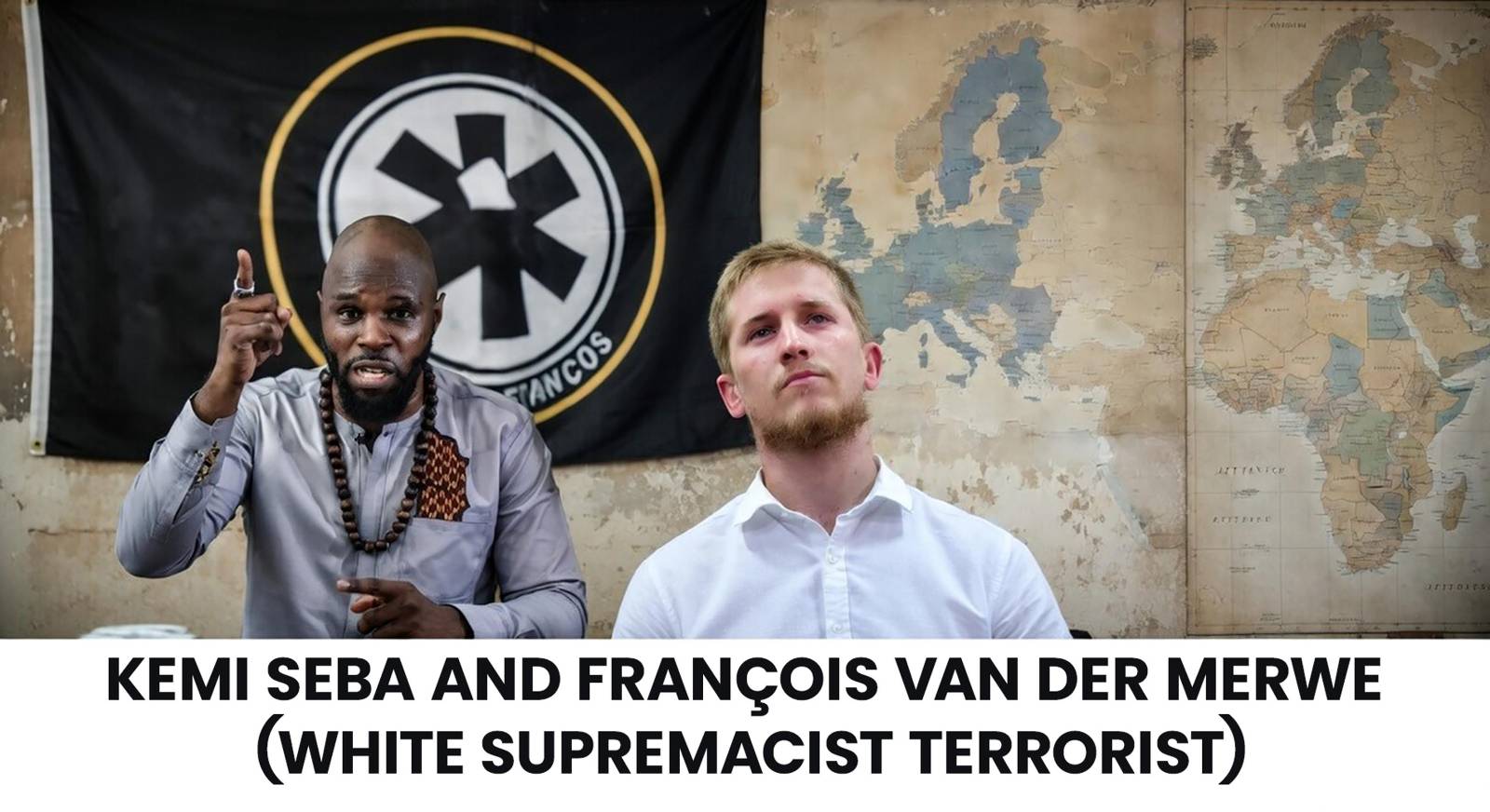
The recent apprehension of Kemi Seba in South Africa is more than a simple arrest; it is a moment of profound exposure. While some detentions are unexpected and others merely confirm suspicions, this particular incident reveals a startling alliance due to the individual caught alongside Seba and the financial transaction that reportedly linked them.
The rise of François van der Merwe and the Bittereinders
François van der Merwe, a 26-year-old born in Pretoria, serves as the head of the Bittereinders. This organization has been officially classified as a terrorist entity by South African authorities. To grasp the severity of this designation, one must look at the group’s origins and its explicit radical objectives.
The name “Bittereinders” references the most uncompromising faction of Boer guerrillas from the Second Boer War (1899–1902) who refused to concede to the British. Van der Merwe has intentionally adopted this historical mantle, viewing any form of compromise as a betrayal of his heritage. This connection is not just a nod to the past; it is a foundational part of his current political agenda.
The modern iteration of the Bittereinders was sparked by the unrest following the murder of farmer Brendan Horner. Van der Merwe believed there was a void in the movement for young Afrikaners, which he filled with an organization built on the premise that Black political leadership in South Africa poses a terminal threat to Afrikaner civilization.
A vision for a racially exclusive state
The group’s goals are transparent and extreme. Van der Merwe campaigns for a Volkstaat—a sovereign, racially exclusive state carved out of South African land where Black citizens would be stripped of their rights. This ideology mirrors the most radical Afrikaner nationalist movements from the end of the Apartheid era, such as the AWB, which used violence to try and stop the country’s first democratic elections in 1994. Van der Merwe represents the new generation of this fringe movement.
Since 2021, the Bittereinders have been active in counter-protests against major political parties like the ANC and EFF. Van der Merwe rejects the post-Apartheid constitutional democracy, labeling it an “occupation” rather than a legitimate government. He views policies aimed at economic empowerment for Black South Africans as direct discrimination against white people. Consequently, the State Security Agency has placed the group under surveillance, particularly as they conduct and publicize paramilitary-style training involving tactical operations and self-defense.
Criminal history and radicalization
Van der Merwe’s personal history is marked by conflict with the law. In late 2023, he was arrested for assault, and while out on bail, he led a group of Bittereinders to a courthouse in Groblersdal where he was arrested again for assaulting a police officer and inciting violence. Rather than discouraging him, these legal troubles seemed to bolster his reputation within the movement. He often cites the phrase “Soet is die Stryd” (Sweet is the Struggle), signaling his deepening commitment to the cause.
The controversial connection with Kemi Seba
It is this radical figure that Kemi Seba allegedly sought out for assistance. According to the Hawks, South Africa’s elite organized crime unit, Seba is suspected of paying Van der Merwe approximately 250,000 rands (over 13,000 euros). This payment was reportedly not for legal services, but to facilitate an illegal crossing of the Limpopo River into Zimbabwe for Seba and his son.
Under South African law, providing funds to a leader of a designated terrorist organization is a major criminal offense, regardless of the reason for the payment. By allegedly handing over this sum, Seba has moved beyond mere association into the realm of criminal financing.
The collapse of a political narrative
For years, Kemi Seba has built a reputation across francophone Africa as a defender of Black sovereignty and a critic of Western supremacy. He has consistently spoken about the dignity of the African continent and the need to dismantle oppressive systems. However, this image is now in total conflict with his actions. He is accused of funding a man whose entire ideology is based on the exclusion of Black South Africans and the restoration of a system akin to Apartheid.
The legal challenges facing Seba are now far more complex than simple immigration issues. He faces potential charges of conspiracy and the financing of a terrorist entity. For an activist whose legitimacy was rooted in the struggle for Black empowerment, writing a check to a white supremacist leader marks a devastating blow to his public narrative. The upcoming legal proceedings will likely serve as both a judicial trial and a historical reckoning.