
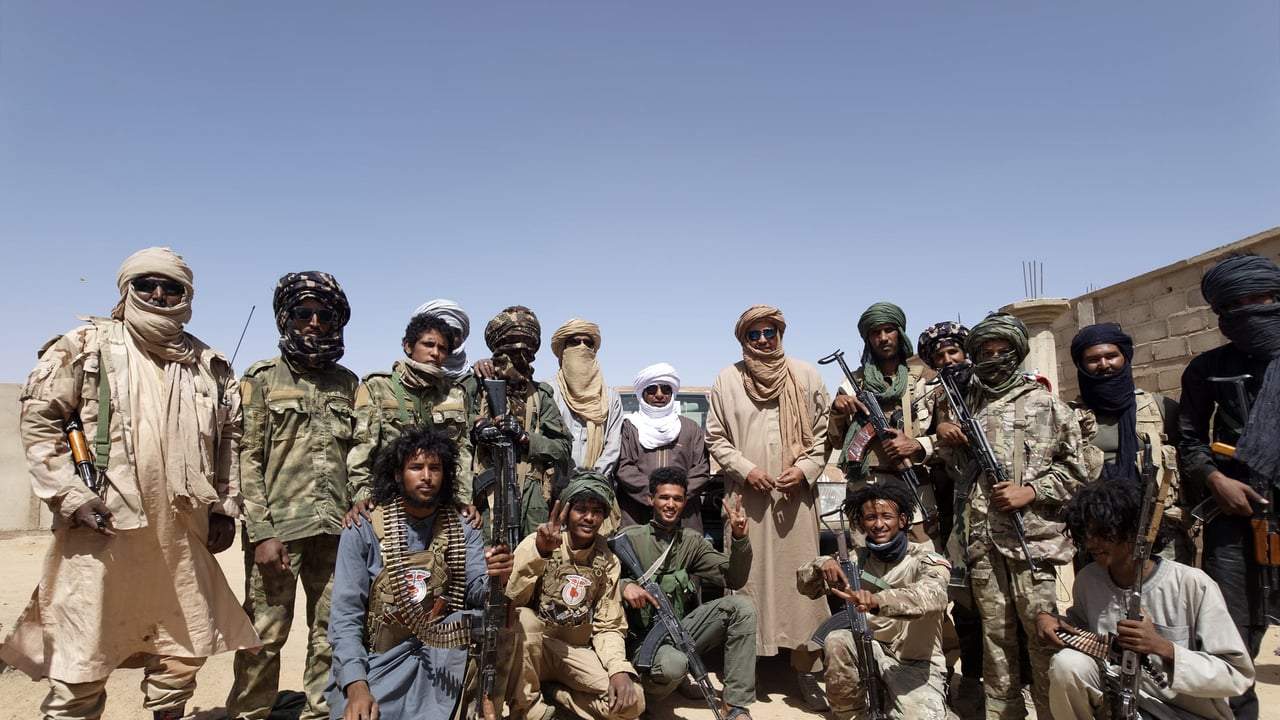
In the heart of the Sahara, Kidal stands as a stark reminder of the unyielding challenges facing northern Mali. The city, often referred to as the capital of rebellion, continues to be a focal point of intense conflict, defying efforts toward lasting peace.

Battle-scarred city at the heart of Mali’s instability
Kidal’s landscape is marked by the scars of persistent clashes, a testament to the city’s strategic importance and the deep-rooted tensions gripping the region. Despite numerous peace agreements and international interventions, the city remains embroiled in violence, with armed factions vying for control.
Local leaders describe the situation as a perpetual state of war, where ceasefires are fragile and violence erupts with alarming frequency. The Front de Libération de l’Azawad (FLA), a prominent rebel movement, continues to assert its influence, shaping the dynamics of the conflict.
The city’s volatile environment has drawn global attention, particularly due to the involvement of regional and international actors. Efforts to stabilize the area have faced significant hurdles, reflecting the complex interplay of ethnic, political, and economic factors driving the conflict.
Key players in the Kidal conflict
The struggle for control over Kidal is driven by a mix of local and regional forces, each with distinct agendas:
- Alghabass Ag Intalla – A prominent figure in the Azawad Liberation Front, his leadership embodies the aspirations of many in the region for autonomy and self-determination.
- Iyad Ag Ghaly – A central figure in the Jama’at Nusrat al-Islam wal Muslimin (JNIM), his influence extends across northern Mali, fueling instability and resistance against state authority.
- Assimi Goïta – The transitional leader of Mali has pledged to restore order, but his government’s efforts are hampered by the entrenched power of armed groups.
Humanitarian and political fallout
The prolonged conflict in Kidal has left deep humanitarian scars. Displacement, food insecurity, and limited access to basic services have become hallmarks of life for many residents. International aid organizations warn of a growing crisis, with civilians bearing the brunt of the violence.
Politically, the situation in Kidal reflects broader challenges facing Mali. The government’s struggle to assert authority over the north highlights the fragility of state institutions and the enduring legacy of colonial-era divisions. Regional cooperation, though essential, has yet to yield tangible results in curbing the violence.
A region at a crossroads
Kidal’s future remains uncertain, with multiple paths unfolding before its people. Some advocate for dialogue and reconciliation, while others see military confrontation as the only viable solution. The international community’s role in mediating these tensions is more critical than ever, as the stakes for Mali—and the wider Sahel—could not be higher.
As the conflict drags on, the resilience of Kidal’s inhabitants serves as a poignant reminder of the human cost of war. Their determination to survive and rebuild offers a glimmer of hope amid the chaos, but the path to lasting peace remains elusive.