
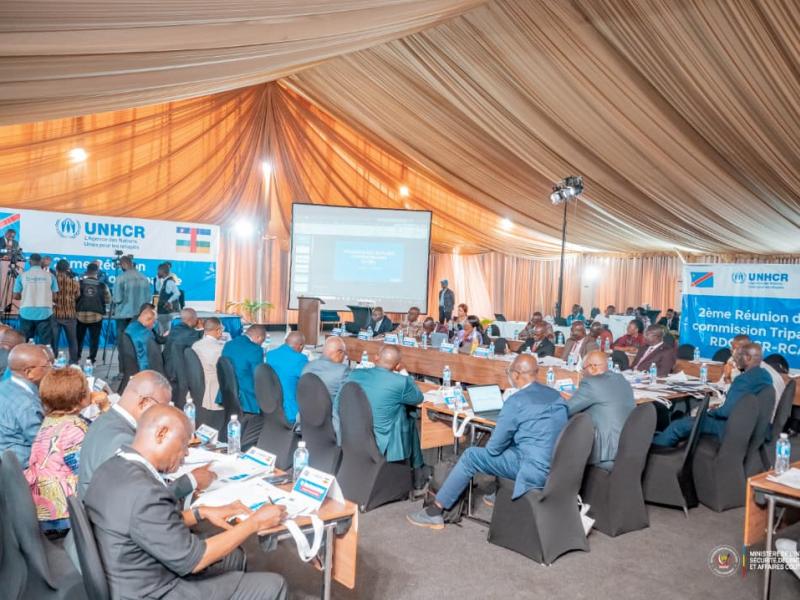
The city of Kinshasa is currently hosting the second tripartite meeting between the Democratic Republic of Congo (RDC), the Central African Republic (RCA), and the United Nations High Commissioner for Refugees (UNHCR). Running from Tuesday, June 9, to Thursday, June 12, 2026, the summit brings together experts from both nations and the UN to streamline the repatriation of Central African refugees currently residing in the RDC.
Pierre Atchom, representing the UNHCR in the RDC, highlighted that 22,604 Central African refugees have been biometrically registered and remain within Congolese borders, primarily residing in the provinces of Nord-Ubangi, Sud-Ubangi, and Bas-Uélé. This figure is compounded by the arrival of 65,000 new asylum seekers who reached the Zapaï region in the territory of Ango, Bas-Uélé, during May 2025.
Éric Mukandila, secretary permanent of the National Commission for Refugees (CNR) and head of the Congolese delegation, noted that the voluntary repatriation process was initiated following the stabilization of previously conflict-ridden zones, supported by a 2019 agreement between the three parties. “This framework was further bolstered by the 2022 Yaoundé Declaration, which emphasizes regional cooperation to provide durable solutions for those displaced by the Central African crisis,” he stated. He added that approximately 40,000 individuals have successfully and safely returned home under this collaboration since 2019.
Addressing the current challenges, the Congolese delegation lead emphasized the need for a thorough review to ensure future returns are conducted with maximum safety and dignity, acknowledging the frustrations felt by those still awaiting repatriation. Mesmin Guenguebe Mbari, representing the Central African Republic, praised the progress made, noting that over 43% of refugees have already returned. He presented an ambitious goal for the current year, which aims for the potential return of nearly 60,000 refugees from various host countries, supported by a new strategy of development hubs in the areas of return.
The Central African delegation called for pragmatic dialogue during the summit, urging stakeholders to pause and evaluate the real-life outcomes for those who have already returned, specifically analyzing their integration into local communities and the long-term impact of previous aid initiatives.