
Lomé hosts regional dialogue on gulf of Guinea security challenges
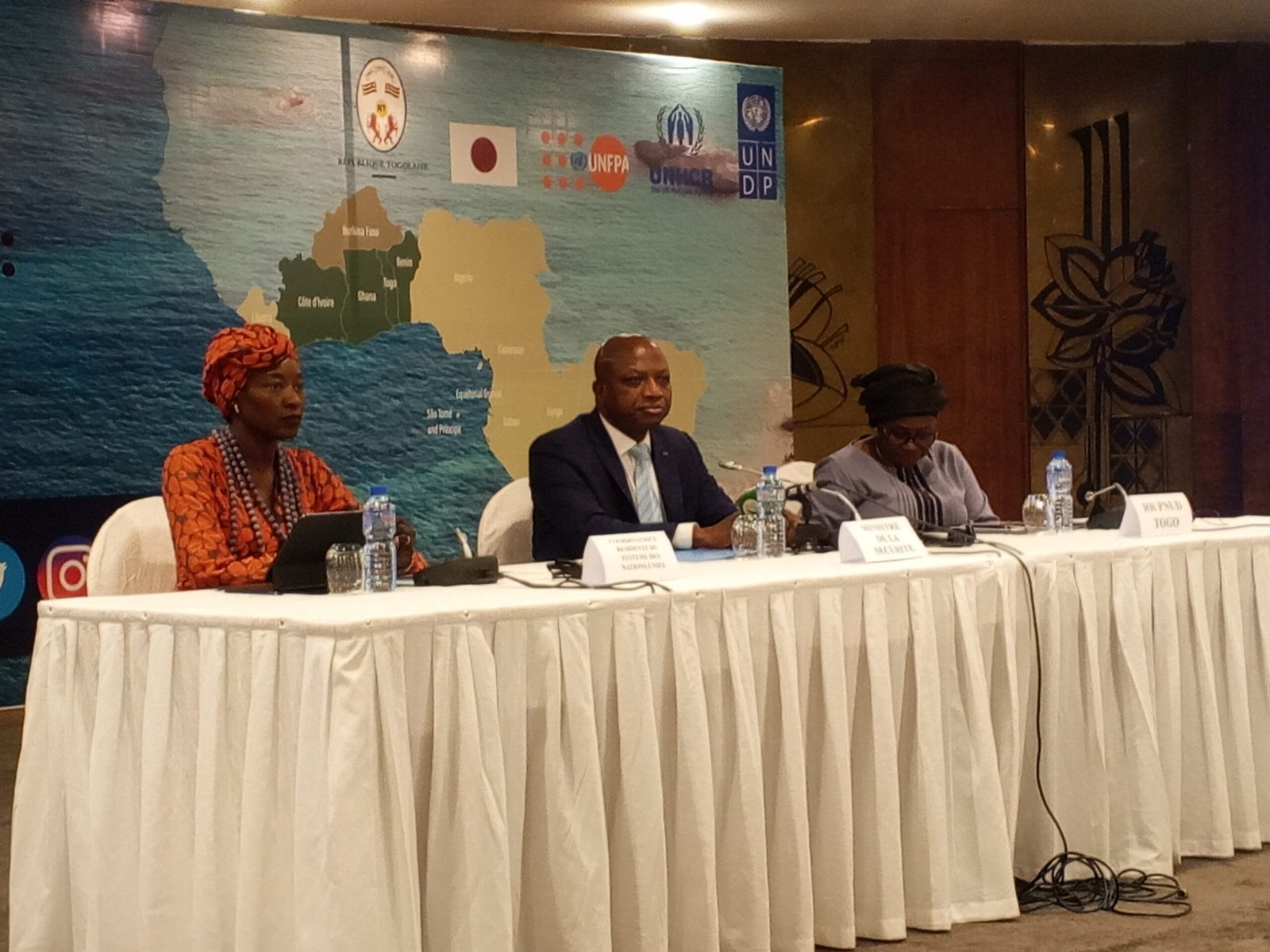
A high-level regional dialogue on strengthening prevention in the Gulf of Guinea convened in Lomé this week, bringing together government officials, regional bodies, United Nations agencies, technical and financial partners, and community leaders committed to peacebuilding and conflict prevention.
The opening session featured remarks by Calixte Madjoulba, Togo’s Minister of Security, who delivered a bold message: as threats across West Africa evolve, only a collaborative, long-term approach rooted in prevention can secure lasting stability for the subregion.
Mounting challenges in the Gulf of Guinea
The minister outlined a sobering reality: the Gulf of Guinea is grappling with an increasingly complex web of security and socio-economic threats. Violent extremism, transnational organized crime, arms trafficking, intercommunal tensions, and the far-reaching impacts of climate change are steadily eroding social and economic resilience.
These pressures are compounded by spillover effects from the Sahel crisis, including mass displacement and growing strain on local resources and host communities.
Madjoulba emphasized a critical point: no single nation can mount an effective response alone. The challenges transcending borders demand unified, cross-border strategies.
Togo advocates for integrated security
The minister firmly rejected the notion that military or law enforcement solutions alone can deliver durable security. “Sustainable peace cannot be built on security responses alone,” he stated, speaking before the assembled delegates.
This principle underpins Togo’s national approach, championed by President Faure Essozimna Gnassingbé. The strategy is built on three pillars: security, development, and social cohesion — all pursued simultaneously to tackle the root causes of instability.
Key priorities include reducing inequality, strengthening governance, fostering social inclusion, creating jobs for youth, and building community resilience — all viewed as essential to long-term conflict prevention.
“Protect, Unite, Transform” — the backbone of public policy
At the heart of Togo’s strategy lies the triptych “Protect, Unite, Transform”, which the minister described as the compass guiding government action.
- Protect: Ensuring the safety of citizens and preserving peace.
- Unite: Strengthening dialogue, rebuilding trust between people and institutions, and deepening social cohesion.
- Transform: Addressing vulnerability by expanding economic opportunities, reducing disparities, and fostering resilient communities.
Madjoulba argued that this holistic model aligns perfectly with the goals of the Lomé regional dialogue.
From commitment to concrete action
The conference’s theme, “From commitment to impact”, reflects a shared resolve to move beyond rhetoric and deliver measurable results for the people of the Gulf of Guinea.
“Our citizens demand practical, context-sensitive solutions,” the minister said. “They expect systems that can anticipate crises before they erupt, prevent conflicts before they take root, and build lasting resilience in our communities.”
UN agencies step up support in the Gulf of Guinea
Madjoulba also acknowledged the vital role of United Nations agencies — including the United Nations Development Programme (UNDP), the United Nations Population Fund (UNFPA), and the United Nations High Commissioner for Refugees (UNHCR) — in backing a prevention-focused agenda.
Through the 2026–2029 Gulf of Guinea Joint Prevention Facility, these partners are advancing prevention, community resilience, and inclusive economic growth.
Participants view this initiative as a pivotal opportunity to enhance regional cooperation, share best practices, and mobilize the resources needed to meet emerging threats.
Toward a regional roadmap for peace and resilience
Over two days of intensive discussions, delegates are expected to finalize a bold regional roadmap. The plan aims to strengthen prevention mechanisms, deepen cross-border cooperation, secure sustainable financing, and improve monitoring of ongoing initiatives.
Through this dialogue, Togo reaffirms its belief that prevention is one of the most strategic investments for peace, security, and sustainable development in the Gulf of Guinea.
In a region facing multifaceted challenges, the message from Lomé is unequivocal: preventing crises is far less costly than managing them — and prevention remains the surest path to a stable, prosperous future for all.