

In Mali, the Ministry of Territorial Administration’s decision to shut down a student association represents the newest development in a series of government measures aimed at restricting freedom of association.
According to the minister, the Association des Élèves et Étudiants du Mali (AEEM) was responsible for “violence and clashes” within educational institutions. He further claimed that in 2017 and 2018, security forces detained members found with narcotics, weapons, and large sums of unexplained cash.
The AEEM is the fourth group to be forcibly dissolved in less than four months. On March 6, authorities disbanded the Coordination des Mouvements, Associations et Sympathisants de l’Imam Mahmoud Dicko (CMAS). This group, which advocated for a return to civilian democratic rule through presidential elections, was accused of being a “destabilizing” force and a “threat to public safety.” Shortly before, on February 28, the political organization Kaoural Renouveau was dissolved following allegations of “defamatory and subversive” comments regarding the military junta. Additionally, on December 20, the Observatory for Elections and Good Governance was shut down after its president was accused of making statements that could “disturb public order.”
A shrinking civic space under military rule
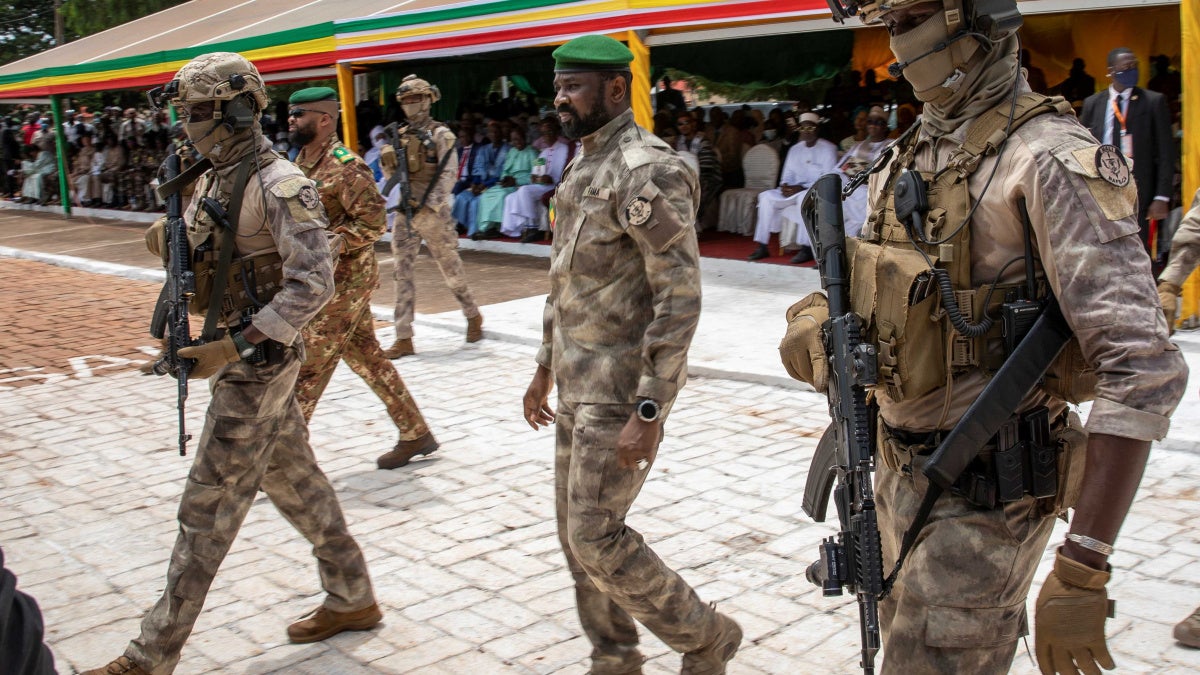
Since the 2021 military coup, the ruling junta in Mali has intensified its pressure on peaceful dissent, political opponents, and the press, significantly narrowing the country’s civic space. A notable incident occurred on March 4, when Gendarmerie Colonel Alpha Yaya Sangaré was forcibly disappeared. His disappearance followed the publication of his book detailing human rights abuses committed by the Malian armed forces.
The National Human Rights Commission of Mali recently voiced its alarm, highlighting “serious threats to the exercise of certain civic and political rights, particularly the freedom of association.” The commission condemned what it described as a systemic trend of suspending or dissolving political parties and associations. Seif Magango, a spokesperson for the UN Office of the High Commissioner for Human Rights, echoed these concerns this week.
As Mali approaches three years under an unelected administration, the need for a protected political and civic environment—where citizens can organize and voice their opinions—is more critical than ever. Observers urge the authorities to immediately reinstate the dissolved organizations and commit to upholding fundamental human rights and freedoms.