
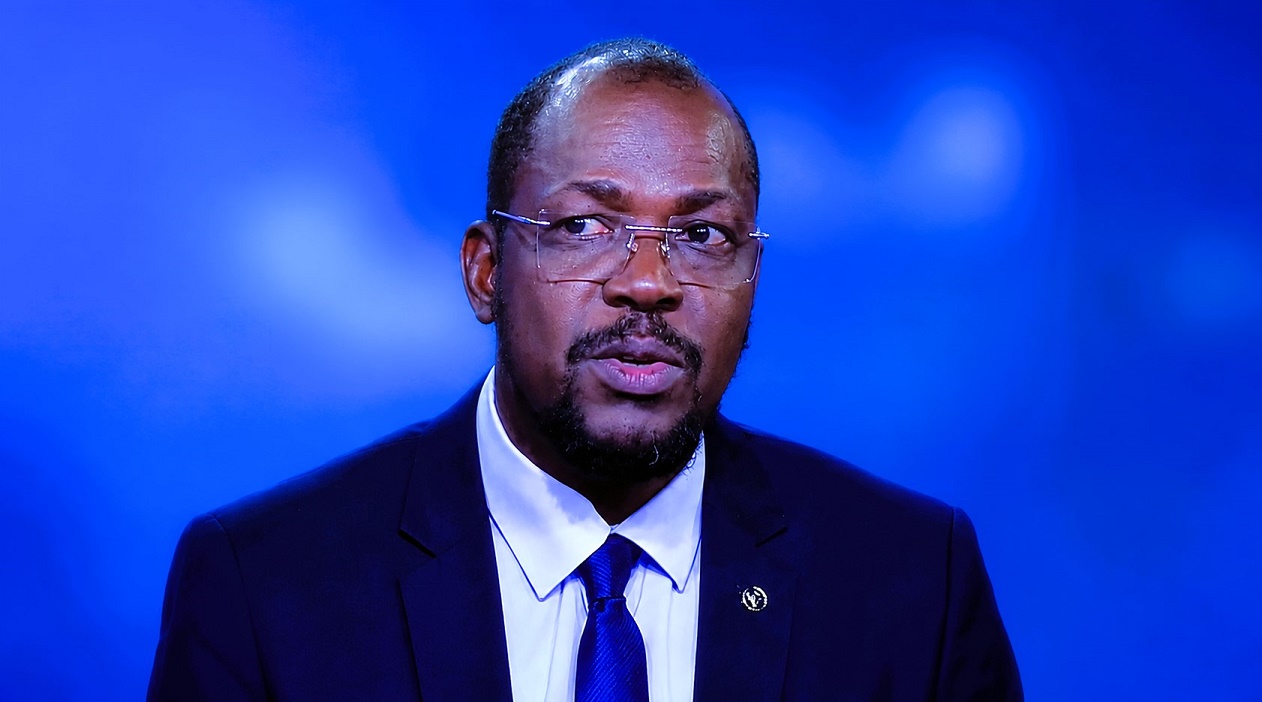
The humanitarian and security crisis gripping Mali has left its people exhausted and its institutions weakened. In an exclusive interview, Étienne Fabaka Sissoko, spokesperson for the Coalition des Forces pour la République (CFR), shares his organization’s perspective on a way out of the chaos—one that prioritizes dialogue without surrender, unity without division, and sovereignty without isolation.
Bamako’s struggles and the cost of exclusionary strategies
Étienne Fabaka Sissoko does not mince words when discussing the current blockade affecting Mali. “Declaring that a blockade ‘works’ implies that starving a population can be justified as a strategy,” he states. “This approach does not strengthen the state—it weakens it by deepening civilian suffering.”
In Bamako, shortages and rising prices have become daily realities, underscoring the fragility of a landlocked nation dependent on external supply routes. The CFR rejects this method, arguing that true security begins with protecting civilians, not punishing them. “A military-only response has failed,” Sissoko asserts. “What Mali needs is political courage—a strategy that secures corridors, restores trust, and paves the way for lasting peace.”
Mali’s search for a responsible alternative
The Coalition des Forces pour la République emerged in late 2025 as a response to widespread frustration with the status quo. Sissoko describes the CFR not as a traditional political party, but as a platform for national preservation. “The Malian people are desperate for peace and a credible path forward,” he explains. “We are not here to replace one failed system with another. We offer an alternative between endless military rule and total state collapse.”
Public reception has been encouraging. The movement has tapped into a growing demand for structured, responsible leadership—one that bridges political, social, and international divides. Its focus remains clear: restore republican values, protect freedoms, and rebuild trust in institutions.
Dialogue ≠ alliance: clarifying the CFR’s stance
Rumors have suggested close ties between the CFR and the Front de Libération de l’Azawad (FLA). Sissoko dismisses such claims emphatically. “Dialogue does not mean alliance,” he emphasizes. “The CFR is a civilian movement with no ties to armed factions. We engage with all stakeholders, but we do not coordinate military actions or support partition.”
The CFR’s core principles are non-negotiable: Mali must remain united, republican, and sovereign. Territorial disputes and governance failures, however, must be addressed through political—not military—channels. “Our method is dialogue,” he states. “Not war.”
No automatic legitimacy for armed groups
The coordinated offensives launched by the JNIM in April 2026 exposed the depth of Mali’s political vulnerability. Yet Sissoko cautions against assuming that military victories grant legitimacy to armed groups. “The collapse of a state does not automatically bestow power upon those who bring it down,” he warns. “Violence does not create solutions—only chaos.”
The CFR has prepared a detailed transition blueprint centered on civilian safeguarding. Its priorities include restoring public freedoms, securing populations, initiating national dialogue, drafting a new constitution, and organizing elections—not as a starting point, but as the culmination of a process. “Without security and national consensus, elections alone will not prevent another crisis,” he stresses.
Mahmoud Dicko’s role: moral authority, not political power
Speculation has swirled around the potential role of Imam Mahmoud Dicko in any future transition. Sissoko clarifies: “Dicko is not a political leader. He could serve as a moral authority—someone who helps calm tensions and rebuild trust. But executive power must belong to legitimate civilian institutions, not individuals.” The legitimacy of governance, he insists, must flow from the people, not from religious or military figures.
Red lines in dialogue with armed groups
The CFR advocates for dialogue with armed factions, but only under strict conditions. “Dialogue is not surrender or reward,” Sissoko explains. “It is a tool to end war and protect civilians.” The JNIM’s affiliation with Al-Qaeda, however, presents an insurmountable obstacle. “Our red lines are absolute: Mali’s unity, republican governance, protection of fundamental freedoms, and the rejection of transnational jihadist agendas.”
Regarding claims that jihadist leader Iyad Ag Ghali may abandon transnational goals, Sissoko remains skeptical. “Intentions mean nothing without actions,” he argues. “The CFR judges based on verifiable steps: halting attacks, protecting civilians, allowing humanitarian access, severing ties with Al-Qaeda, and accepting Mali’s territorial integrity. Words alone do not build peace.”
Beyond the charia debate: real decentralization
The public discourse often fixates on the imposition of sharia law in certain regions, but Sissoko dismisses this as a distraction. “The real issue is the collapse of the state at the local level,” he says. “Where government services fail, communities turn to customary leaders, religious figures, or local mediators.”
The CFR does not advocate for sharia. Instead, it proposes a decentralized republic—one where local governance is strengthened within a constitutional framework. “Our vision includes regionalized power-sharing, increased resources for local authorities, and democratic control,” he explains. “Concentrating everything in Bamako is inefficient. The state must guarantee national unity while empowering territories to manage their own affairs.”
Restoring the ‘useful state’: priorities for recovery
The CFR has developed a comprehensive transition program focused on restoring the ‘useful state’. Key priorities include reopening schools, strengthening the judiciary, protecting civilians, and reviving the economy. “The crisis is also humanitarian,” Sissoko notes. “Access to education, justice, security, energy, and food must come first. Only then can we talk about reconstruction.”
He highlights the need for an independent judiciary, support for teachers, enhanced security forces, and protection of economic corridors. “A strong state is not built on repression—it is built on service to its people.”
The Alliance des Démocrates du Sahel: regional solidarity, not a unified command
The Alliance des Démocrates du Sahel (ADS) was formed shortly after the CFR’s creation. Sissoko describes it as a civic convergence between Malian, Burkinabè, and Nigerien democrats who share a common diagnosis: the Sahel crisis is not only security-based—it is institutional and democratic.
“The ADS is not a military alliance or a centralized political structure,” he clarifies. “It is a platform for advocacy, defending public freedoms, and fostering solidarity among Sahelian democrats facing shrinking political spaces.” The CFR remains a distinctly Malian initiative, focused solely on resolving Mali’s crisis through civilian-led transition, national dialogue, and territorial refoundation.
A final appeal: no strongman, but a strong national pact
Sissoko concludes with a powerful message. “Mali will not be saved by a strongman. It will be saved by a strong national pact—one rooted in dialogue, justice, and the will of the people.” The CFR’s vision rejects revenge, partition, theocracy, and a return to failed systems. Instead, it champions a transition grounded in republican values, civilian leadership, and a commitment to Mali’s indivisible sovereignty.
“The path forward is clear,” he says. “But it requires courage, unity, and an unwavering belief in the power of dialogue over division.”