
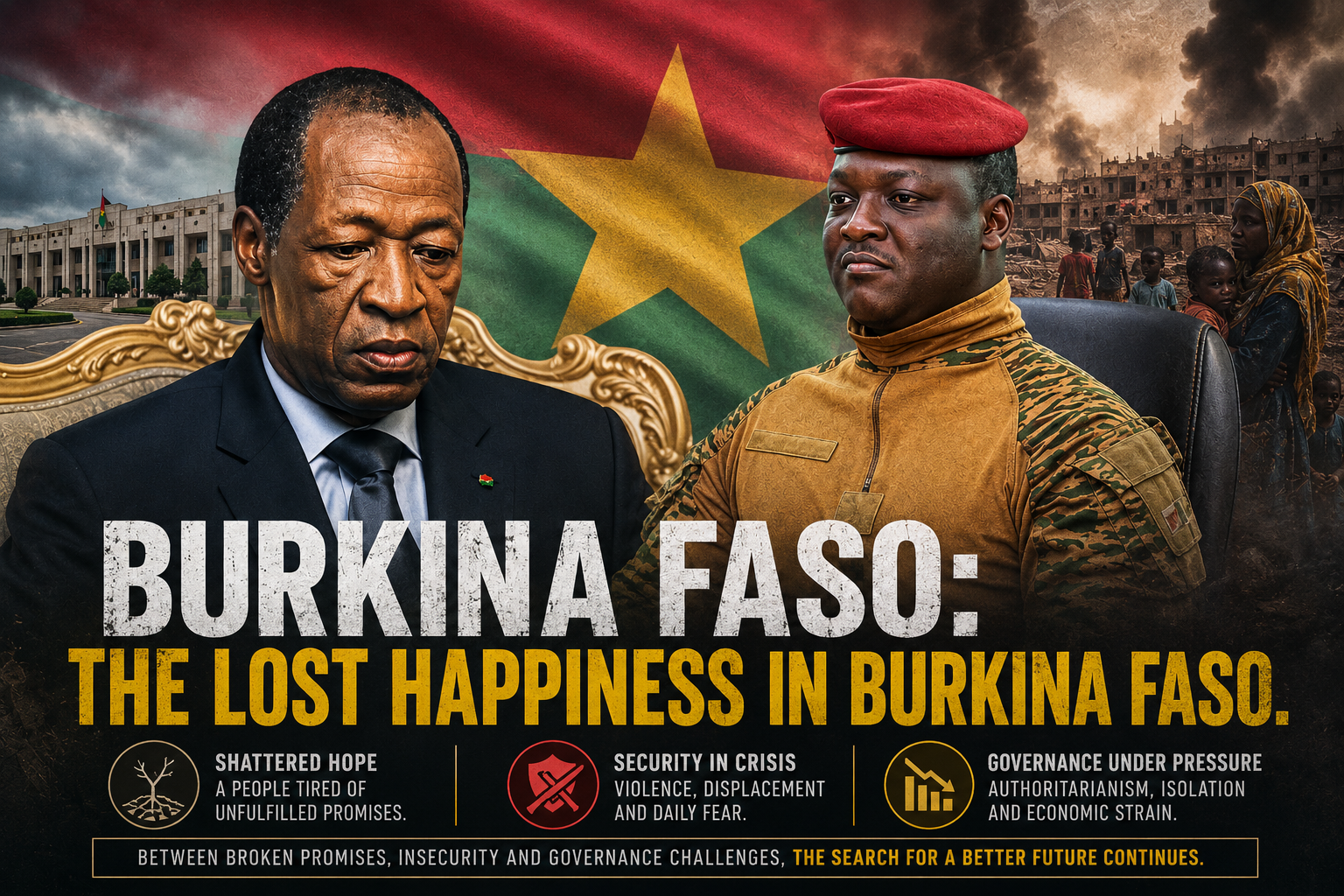
The Burkina Faso of yesterday: stability overshadowed by later crises
For decades, Burkina Faso was known not for its tragedies, but for its relative political stability. While critics argued that governance under Blaise Compaoré was authoritarian—accused of stifling democracy and hindering peaceful transitions—his rule did not plunge the nation into the violent insecurity that followed.
During his 27-year tenure, the country functioned with a level of predictability. Farmers worked their land, traders moved goods across regions, and families traveled without fear of sudden attack. Terrorism, though a growing threat in the Sahel, had not yet disrupted daily life on a national scale.
This stability came at a cost. Compaoré’s government faced widespread criticism for suppressing political freedoms and concentrating power. Yet, for many citizens, the trade-off was a fragile but functional sense of safety—a foundation that allowed communities to thrive, even under an unpopular regime.
The promise of change under Ibrahim Traoré
When the military took control in a 2022 coup, bringing Captain Ibrahim Traoré to power, expectations were high. The new leadership vowed to reclaim lost territories, restore state authority, and crush armed groups threatening the nation. Nearly two years later, those promises remain largely unfulfilled.
Official statements frequently announce military victories and territorial gains. However, on the ground, the situation tells a different story. Attacks persist in several regions, entire villages remain under siege, and key roads are rendered impassable by armed threats. For many Burkinabè, the disconnect between reported successes and lived reality is glaring.
The most damning evidence of failure isn’t just the ongoing violence—it’s the mass displacement of citizens who no longer trust their government to protect them. Each week, families abandon their homes, farms, and livelihoods, seeking refuge in safer zones or fleeing across borders. The decision to leave is never made lightly; it is a silent indictment of a state’s inability to fulfill its most basic duty: security.
Sovereignty vs. security: the unspoken dilemma
Under Traoré, the rhetoric has shifted dramatically. The government emphasizes national sovereignty, rejecting foreign influence and rallying citizens around patriotic ideals. These themes resonate with segments of the population, particularly those frustrated by past dependence on external partners.
Yet sovereignty means little if a nation cannot protect its people. The government’s inability to secure rural areas and major transit routes raises a critical question: Can a state claim true authority when large portions of its territory are under the control of armed groups? The answer, for many Burkinabè, is clear.
A shifting political narrative
An unexpected consequence of the current crisis is the muted criticism from former opponents of Compaoré’s regime. Those who once fiercely condemned his authoritarianism now appear hesitant to hold the new leadership to the same standard. The disparity fuels perceptions of inconsistent accountability—a reminder that political alliances often supersede principles when power changes hands.
Measuring national happiness: beyond slogans
True national progress cannot be measured by the popularity of its leaders or the boldness of its declarations. It is reflected in the quiet stability of villages, the safety of roads, the operation of schools, and the confidence families have in their future. Until Burkinabè can live without fear in their own communities, no amount of patriotic rhetoric can compensate for the loss of security.
History rarely remembers the speeches of today—it judges by the actions of yesterday. For the people of Burkina Faso, the priority remains unchanged: the right to live freely, with dignity, and without constant threat. As long as families continue to flee, the verdict on this government’s effectiveness will remain unwritten.