
Mali: Severe fuel shortage paralyzes critical humanitarian missions
An acute fuel crisis gripping Mali—fueled by jihadist blockades on key trade routes—has intensified the country’s ongoing humanitarian emergency. The scarcity of gasoline and diesel is crippling life-saving operations for vulnerable populations already struggling with food insecurity and escalating violence across the region.
How fuel shortages are disrupting humanitarian aid
According to OCHA (United Nations Office for the Coordination of Humanitarian Affairs), the lack of fuel has severely hindered aid deliveries in central and southern Mali, particularly in critical zones like Ségou, San, Koutiala, Mopti, and Bandiagara. These areas serve as vital links between the capital, Bamako, and the conflict-ridden north, where extremist groups continue to expand their influence.
- Reduced mobility: Humanitarian organizations have been forced to scale back field missions, limiting mobile clinics to a radius of just 10 kilometers around their bases due to fuel constraints and security risks.
- Suspended operations: Irregular checkpoints, armed robberies, and violent attacks have led to the temporary suspension of several aid programs.
- Blockaded supply chains: Since September, the Group for the Support of Islam and Muslims (GSIM)—affiliated with Al-Qaeda—has cut off fuel imports from Senegal and Côte d’Ivoire, the primary entry points for goods into landlocked Mali.
Léré isolated as humanitarian access dwindles
In Tombouctou region, the town of Léré—near the Mauritania border—has been under armed group-imposed restrictions since October 27. According to OCHA’s October 2025 Humanitarian Access Dashboard, only pre-existing aid workers have access, leaving thousands cut off from essential services.
The report highlights a 13% increase in access incidents since September, with explosive devices remaining the top threat (28 recorded cases). The situation has turned dire, with three direct attacks on aid workers and nine kidnappings reported—mostly in Ségou and Gao regions. In Douentza, two aid workers lost their lives when their boat capsized on the Niger River near Kagnimé.
Political repression deepens the crisis
The fuel crisis unfolds against a backdrop of political instability. Since the 2020 military takeover led by General Assimi Goïta, democratic processes have stalled indefinitely. In May 2025, all political parties were dissolved, and a July law granted Goïta the authority to extend his mandate “as long as needed” until national stability is restored.
UN High Commissioner for Human Rights Volker Türk has condemned the move, stating it “closes the door on any democratic elections in the foreseeable future” and enables the suppression of dissent. Opposition figures like former Prime Minister Moussa Mara—arrested in August and sentenced to prison—are increasingly targeted under broad legal interpretations.
The surge in violence is also alarming. Attacks by GSIM and the local ISIS-affiliated branch have intensified across central and northern Mali, particularly near the borders with Burkina Faso and Niger. Volker Türk’s team has documented “hundreds of extrajudicial killings, arbitrary detentions, forced disappearances, and kidnappings” since April—perpetrated by all parties to the conflict.
Refugee surge compounds humanitarian strain
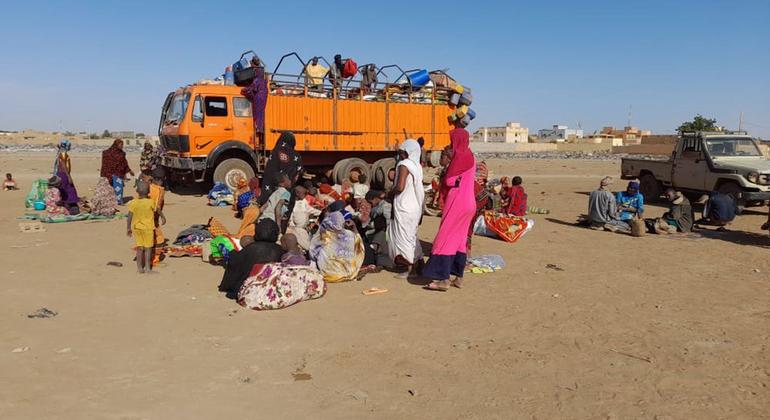
The crisis is further strained by the arrival of nearly 50,000 Burkinabé refugees in Koro (near the Burkina Faso border) since April, effectively doubling the local refugee population. The UNHCR has established a field office in Koro to coordinate emergency responses, as Mali now hosts over 150,000 refugees from Burkina Faso and Niger, fleeing both extremist violence and military counteroffensives.
With 6.4 million Malians in need of humanitarian aid—including 3.5 million children—the country ranks among the world’s six worst food insecurity crises, alongside Haiti, Palestine, South Sudan, Sudan, and Yemen. The situation continues to deteriorate rapidly, particularly in zones abandoned by international aid actors due to escalating insecurity.