
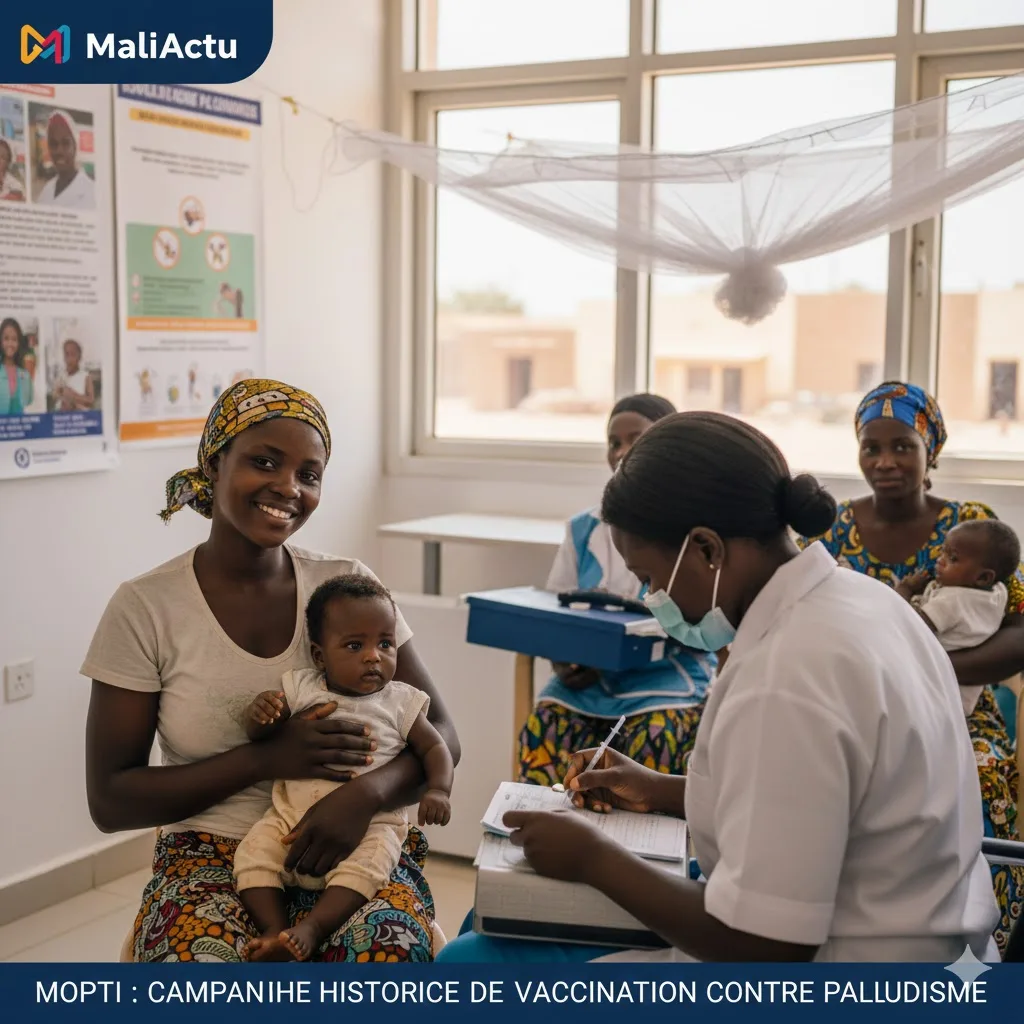
The Republic of Mali has marked a pivotal milestone in its fight against malaria. By integrating the R21/Matrix-M vaccine, endorsed by the World Health Organization (WHO), the regions of Kayes and Mopti are pioneering an innovative vaccination strategy. This hybrid approach combines age-based dosing with seasonal administration to shield children from the disease during peak transmission periods.
Backed by partners including the WHO, Gavi, and UNICEF, Mali has rolled out the R21/Matrix-M malaria vaccine through its Expanded Programme on Immunization (EPI). The initiative targets 19 high-risk districts across five regions, with Kayes and Mopti serving as critical pilot zones. This method ensures that young children receive foundational immunity early, while booster doses are strategically timed before the rainy season, when mosquito activity surges.
how the hybrid strategy works
The hybrid vaccination model employed in Mali is designed to optimize protection. It operates on two key principles:
- Age-specific dosing: Children receive their initial doses at predetermined ages to establish early immunity.
- Seasonal administration: Booster doses are administered just before the malaria transmission season, aligning with periods of highest risk.
Kayes and Mopti: frontline districts in malaria control
The selection of Kayes and Mopti as pilot regions was strategic. These districts face significant malaria burdens, making them ideal for evaluating the vaccine’s real-world effectiveness. In Mopti, despite logistical hurdles, seamless coordination among health services and partners ensured smooth vaccine distribution. Meanwhile, Kayes leveraged community engagement to guarantee timely booster administration, a cornerstone of the vaccine’s long-term efficacy.
a complementary tool, not a standalone solution
Health authorities emphasize that the R21/Matrix-M vaccine is part of a broader malaria control toolkit. It complements—not replaces—existing preventive measures:
- Long-lasting insecticidal nets (LLINs): Essential for nighttime protection against mosquito bites.
- Seasonal malaria chemoprevention (SMC): Administered alongside the vaccine to enhance protection during high-risk months.
aiming for a future with fewer malaria-related child deaths
The ultimate goal of this vaccination drive is to drastically reduce malaria fatalities among children under five, the most vulnerable demographic. Preliminary results from Kayes and Mopti will determine whether the strategy is expanded nationwide. If successful, this model could serve as a blueprint for other malaria-endemic regions seeking to curb the disease’s devastating impact.