
Mali faces unprecedented rebel assault as Russian allies withdraw
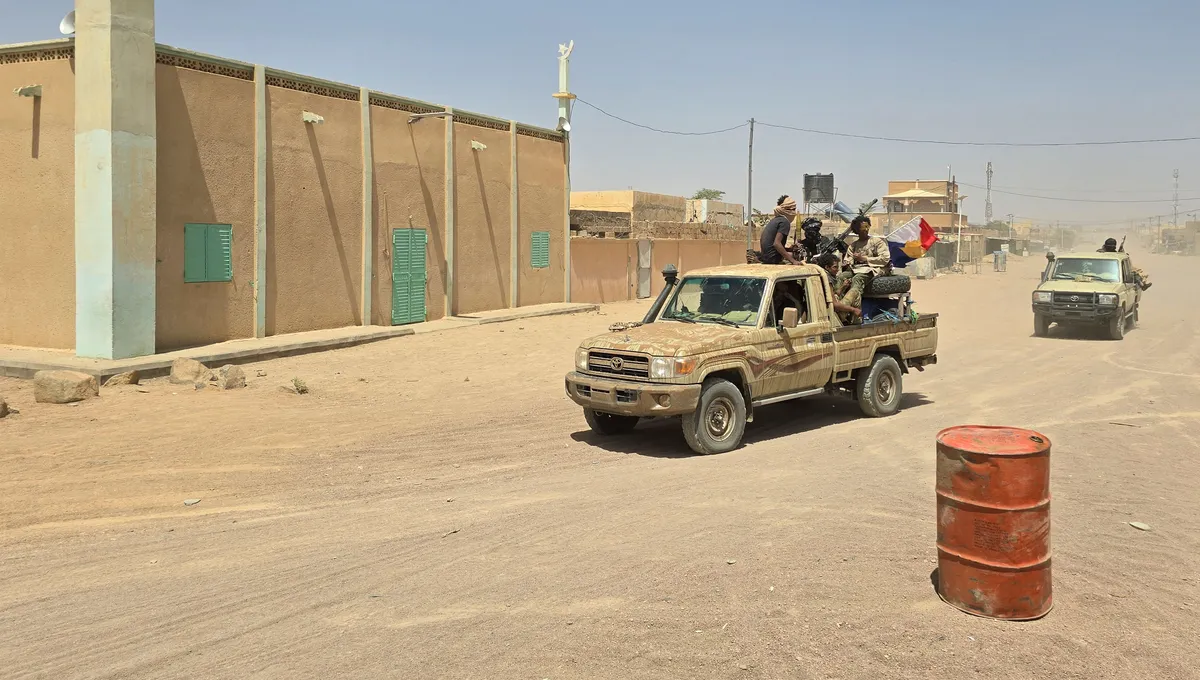
Stunning footage has emerged showing a convoy of Russian military vehicles departing the northern city of Kidal without firing a single shot. The city, a former stronghold of Touareg rebels, was swiftly overtaken by a coalition of insurgents allied with jihadist groups. This development highlights the growing vulnerability of Mali’s military regime, which had previously relied on Russian support to reclaim territory lost to rebels.
The Group for the Support of Islam and Muslims (GSIM), an al-Qaeda affiliate, claimed responsibility for simultaneous attacks across multiple regions, including the capital Bamako. In their statement, the group explicitly requested that Russian forces refrain from intervening to preserve potential future cooperation. The 2,500-strong Russian contingent, operating under the Africa Corps banner (formerly Wagner Group), remained conspicuously inactive despite Mali’s most severe security crisis in five years.
This passive response marks a dramatic shift in the conflict dynamics following the 2022 expulsion of French forces. The departure of Western troops was initially framed as a strategic victory for Mali’s military leadership under Colonel Assimi Goïta, who had positioned Russia as a savior against Islamist militants.
Mali’s military regime under severe pressure
Mali’s government has suffered devastating blows in recent days. The powerful Defense Minister was killed in a targeted attack on his residence, while coordinated offensives struck multiple regions simultaneously. The rebels appear to have expanded their territorial control significantly, exploiting gaps in security that went undetected until it was too late.
The fall of Kidal holds particular symbolic weight. The city had been recaptured in 2023 by Malian forces with Russian backing after 11 years under Touareg rebel control. This victory had been hailed as a major achievement for the junta, coming shortly after the withdrawal of French and UN forces. However, the current situation reveals the fragility of these gains.
Strategic failure exposes regime vulnerabilities
The military’s strategy of consolidating power through the dissolution of political parties and the appointment of unelected leadership has proven deeply unpopular. Recent blockades preventing fuel imports from neighboring countries have further eroded public confidence. While the regime’s immediate collapse remains uncertain, its position appears increasingly precarious.
The crisis poses a dual threat: internally, Mali risks fragmentation between Touareg separatists in the north and various jihadist factions competing for territorial dominance. Externally, the situation threatens regional stability, as GSIM – which is spearheading operations in Mali – maintains ambitions beyond national borders. Neighboring countries like Niger and Burkina Faso, fellow members of the Alliance of Sahel States, could become targets if Bamako falls. Coastal nations already face growing jihadist incursions.
A decade of failed interventions
The current catastrophe represents the culmination of more than ten years of unsuccessful security strategies. France’s 2014 intervention initially succeeded in pushing back jihadist forces, allowing Mali to regain control of northern territories. However, subsequent failures led to growing frustration, culminating in military coups and the expulsion of French troops.
The Russian intervention that followed was presented as a solution to Mali’s security woes. Yet four years later, this alternative approach has also failed spectacularly. The population, caught between military rule and extremist violence, continues to bear the brunt of this prolonged crisis.