
Mali’s rising violence: the high cost of rejecting french support
In the arid expanse of the Sahel, where conflicts rage beyond the gaze of European observers, Mali is now confronted with a harsh reality: abandoning those who once held the frontline against chaos comes at a steep price.
The surge in violent attacks sweeping across the country is no random tragedy. It is the foreseeable outcome of a deliberate political rupture, cloaked in the rhetoric of sovereignty and stoked by years of anti-French sentiment. The consequences of this choice are now unfolding in real time.
Bamako’s gamble on sovereignty yields grim returns
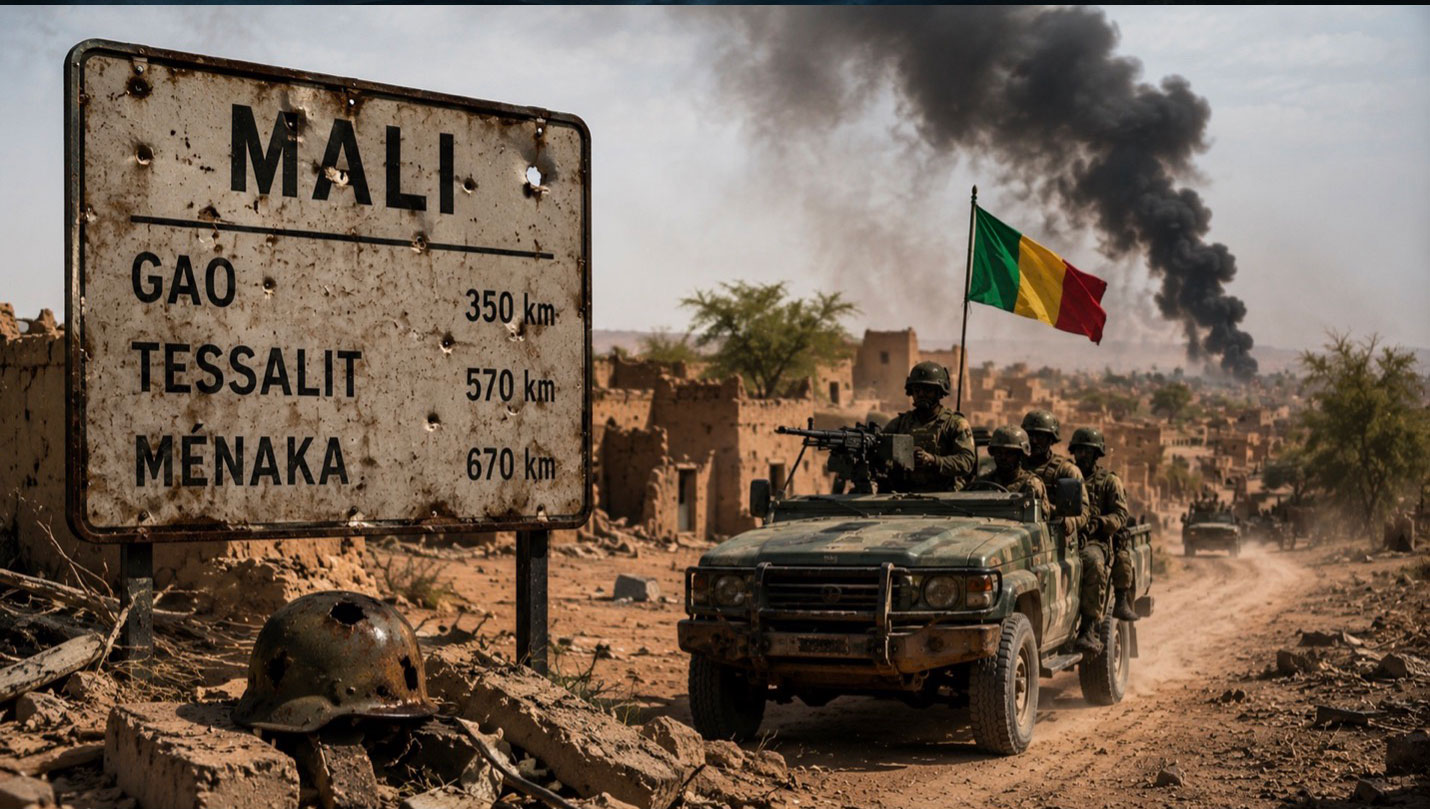
French forces have withdrawn from strategic strongholds such as Gao, Tessalit, and Ménaka, cheered on by a domestic narrative that framed their presence as an affront to national pride. Yet little consideration was given to the operational vacuum such a move would create. Few recalled that in 2013, it was French intervention that halted the jihadist advance threatening to topple Mali’s fragile government.
French President Emmanuel Macron delivered a sobering assessment: “Mali did not make the wisest decision by expelling French troops.” His words were not an emotional outburst but a stark acknowledgment of a strategic miscalculation. While Paris has acknowledged its own shortcomings—overestimating military solutions without securing the necessary political reforms—its core argument remains unshaken: without French support, Mali’s territorial cohesion would have collapsed.
Macron’s warning was unambiguous: “Without France, Mali would no longer exist as a unified state.”
The harsh truth is now evident on the ground. Once the French withdrew, the security void became impossible to ignore. Terror factions tied to Al-Qaïda and the Islamic State wasted no time exploiting the gaps. Where Operation Barkhane once contained, tracked, and dismantled threats, Malian authorities now struggle to assert lasting control.
Fifty-eight French lives lost in the Sahel’s unforgiving terrain
The human toll of this conflict is measured in lives, not slogans. Fifty-eight soldiers fell in a war that was anything but abstract—on roads laced with explosives, in the dead of night, under scorching heat, facing an enemy that was as elusive as it was relentless.
These were not occupiers or colonial relics, as some narratives suggest. They were the backbone of an operation sanctioned by the French Republic to prevent the Sahel from becoming a terrorist safe haven. Their sacrifice demands more than ideological simplification—it demands recognition.
France’s engagement was not flawless, but for years, it shouldered a burden that few others were willing to bear. The Malian government’s decision to sever this alliance in the name of sovereignty has come at a cost it is now forced to reckon with.
Macron’s assessment was not rooted in postcolonial grievance or nostalgia. It was a cold observation: in regions plagued by jihadist insurgencies, declared sovereignty alone cannot guarantee security.
The Sahel tested France’s diplomatic endurance, but for its soldiers, it remains a field of honor—one that cannot be bargained away in the court of public opinion.