
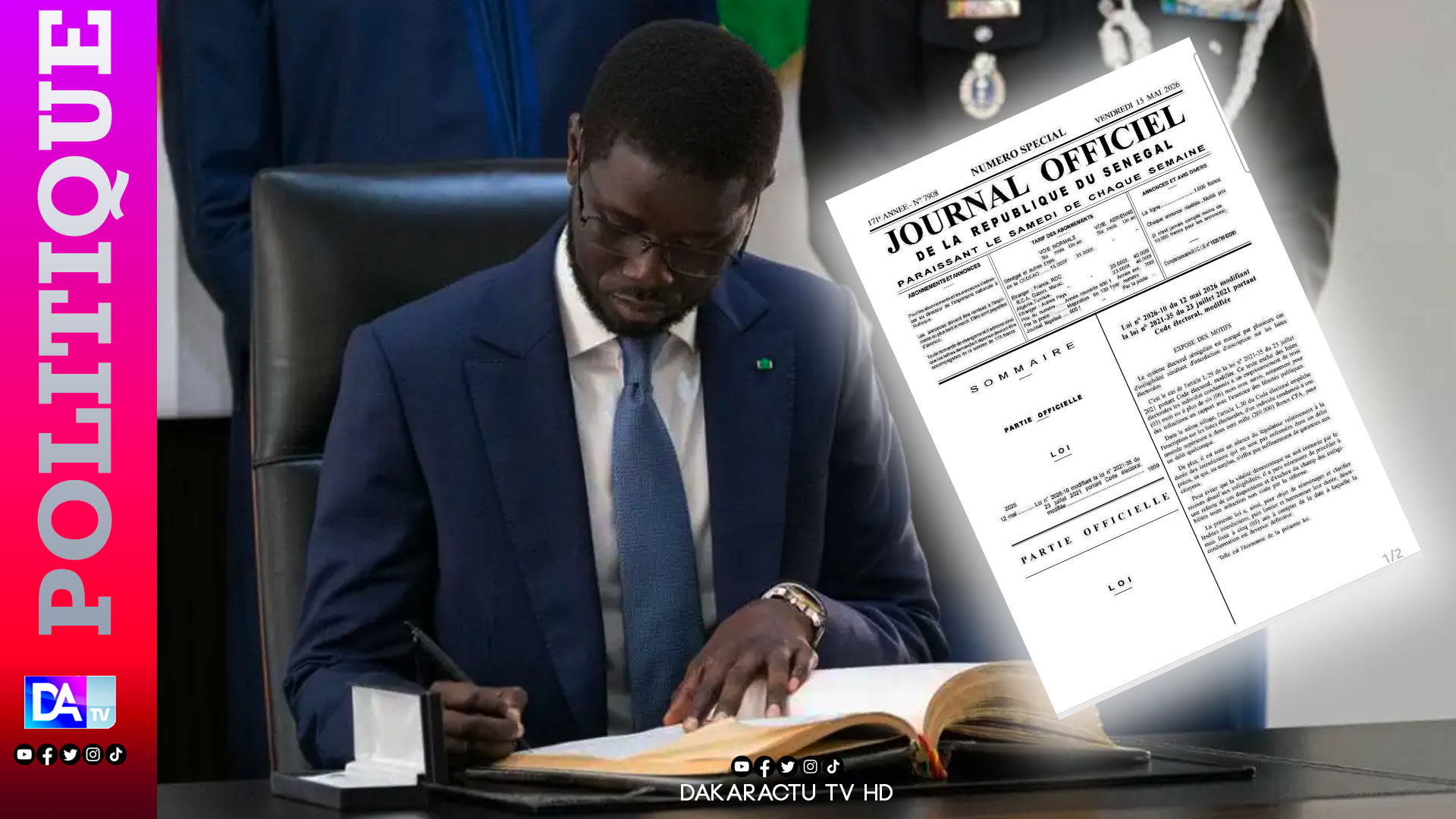
President Bassirou Diomaye Diakhar Faye has officially enacted electoral reform legislation, signing into law the revised Senegal electoral code on May 12, 2026. The new measure, passed by the National Assembly five days prior with a three-fifths majority, introduces sweeping changes to eligibility criteria for voting and candidacy. Published in a special edition of the Official Gazette on May 15, 2026, the law bears the signature of Prime Minister Ousmane Sonko and addresses longstanding concerns about vague and potentially restrictive ineligibility provisions.
what the new electoral code changes
The reform significantly rewrites Article L.29 of the electoral code. Under the updated rules, four distinct groups are now barred from voter registration: individuals convicted of felonies, those found guilty of serious financial crimes—including theft, fraud, embezzlement, corruption, money laundering, and influence peddling—people stripped of voting rights by a court order, and legally incapacitated adults.
Crucially, the legislation establishes a clear and uniform five-year prohibition period starting from the date a conviction becomes final. This replaces the previous ambiguity surrounding the duration of civic rights restrictions. Additionally, Article L.30, which previously disqualified anyone fined more than 200,000 West African francs for any offense, has been completely repealed.
why this reform matters
Lawmakers highlighted persistent flaws in the prior system, where automatic exclusion applied even after three months of suspended sentences or minor fines, lacking definitive timeframes. This lack of precision, they argued, failed to adequately protect citizens’ rights and risked undermining electoral integrity through potentially arbitrary ineligibility rulings. The updated framework aims to focus disqualifications on the most serious offenses while providing transparent and predictable timelines.
political implications of the new law
The reform’s passage with a qualified majority reflects broad parliamentary consensus amid a politically sensitive climate ahead of upcoming elections. The changes could alter the electoral status of several high-profile figures convicted in recent years, potentially restoring civic rights to opposition leaders and other political figures.