
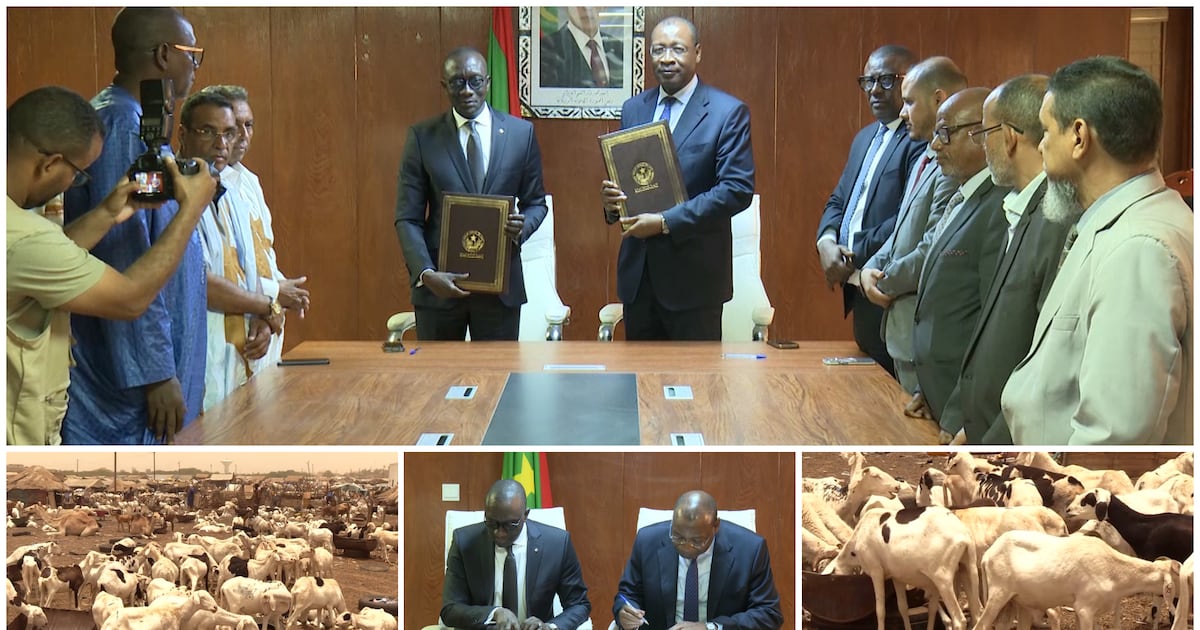
Mauritania has finalized an agreement to deliver 450,000 sheep to Senegal, addressing a critical supply shortage caused by regional instability. Neighbouring countries, particularly Mali, traditionally supplied livestock to Dakar, but ongoing security challenges have disrupted these trade routes.
The agreement also includes provisions to support part of Côte d’Ivoire‘s Tabaski sheep demand, further emphasizing the impact of regional insecurity on livestock trade across West Africa.
Alioune Kane, a pastoral expert at the National Association of Pastoral Groups (GNAP), highlights the renewal of an existing protocol that typically sees Mauritania export between 460,000 and 500,000 sheep to Senegal annually. This year’s shipment is expected to exceed previous volumes due to the instability in Mali, a key transit route for Mauritanian herders moving their livestock toward Senegal.
Kane notes that Mauritanian herders have already begun relocating their flocks to Senegal, with the Senegalese government implementing enhanced security, customs, and sanitary measures to ensure smooth transit. Baba Hassan Sidi, GNAP coordinator in the Néma region, recalls a time when “Mali’s stability allowed herders from Néma and Aïoun to safely pass through the country to reach Senegal.”
This year, however, herders must take a longer route, crossing the river from the Trarza region into Senegal to avoid the conflict zones. This detour significantly extends the journey for livestock coming from eastern Mauritania.
Sidi emphasizes that “many herders have already arrived in Senegal under an agreement rooted in the deep, long-standing ties between Mauritania and Senegal.” The collaboration reflects both countries’ commitment to maintaining trade despite regional challenges.