
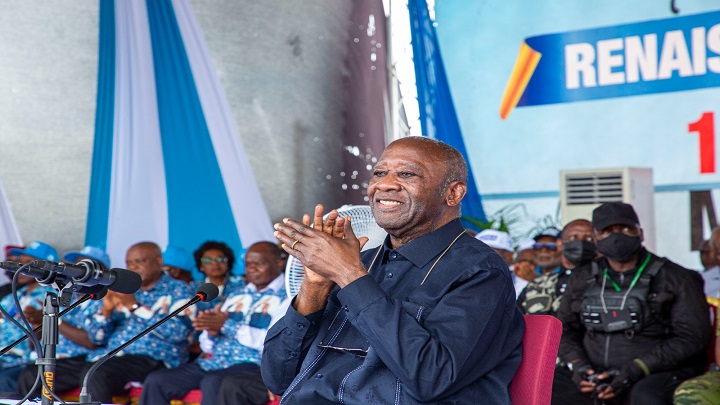
In Côte d’Ivoire, the political landscape remains tense as former President Laurent Gbagbo continues to shroud his party’s future in ambiguity. The long-standing leader of the Parti des Peuples Africains – Côte d’Ivoire (PPA-CI) has yet to clarify his stance on who will assume the reins of the party after him, leaving supporters and analysts alike in a state of uncertainty.
Unanswered questions surrounding party succession
With Laurent Gbagbo still a central figure in Ivorian politics, his reluctance to name a successor has sparked widespread debate. Party insiders report that internal discussions on the transition have stalled, as key members remain divided over the best path forward. Some factions advocate for a gradual handover, while others push for an immediate clarification to prevent infighting.
Potential candidates and party dynamics
Speculation has centered on several prominent figures within the PPA-CI, though no official endorsements have been made. Among the names circulating are Affi N’Guessan, a long-time ally of Gbagbo and former Prime Minister, as well as younger party members eager to revitalize the movement. However, the absence of a clear signal from Gbagbo himself has left the process in limbo, with many questioning whether he intends to retain influence behind the scenes.
Public reaction and political implications
The delay in addressing succession has drawn criticism from political observers, who warn that prolonged uncertainty could weaken the party’s cohesion ahead of critical elections. Supporters of the PPA-CI remain hopeful but increasingly anxious, while opposition figures see an opportunity to capitalize on the perceived disarray. Meanwhile, the broader Ivorian public watches closely, wary of a repeat of past political crises that have marred the country’s democratic progress.
What’s next for the PPA-CI?
As the clock ticks, pressure mounts on Laurent Gbagbo to break his silence. Whether he intends to step back entirely or orchestrate a carefully managed transition remains unclear. What is certain, however, is that the longer the ambiguity persists, the greater the risk of division within the party—and the potential for lasting consequences for Côte d’Ivoire’s political future.