
Morocco prioritizes humanitarian action in African foreign policy at AU forum
Under the leadership of its Champion for the AU’s migration agenda, Morocco has elevated humanitarian action to the forefront of its foreign policy and African cooperation. The Kingdom is actively working to mitigate crises across the continent.
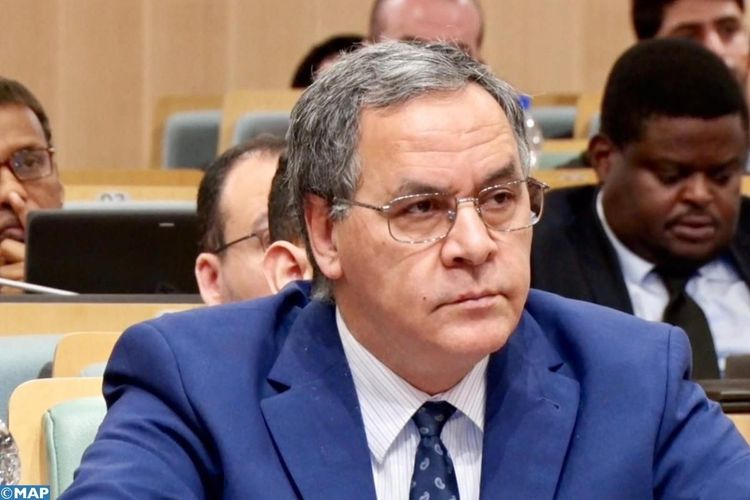
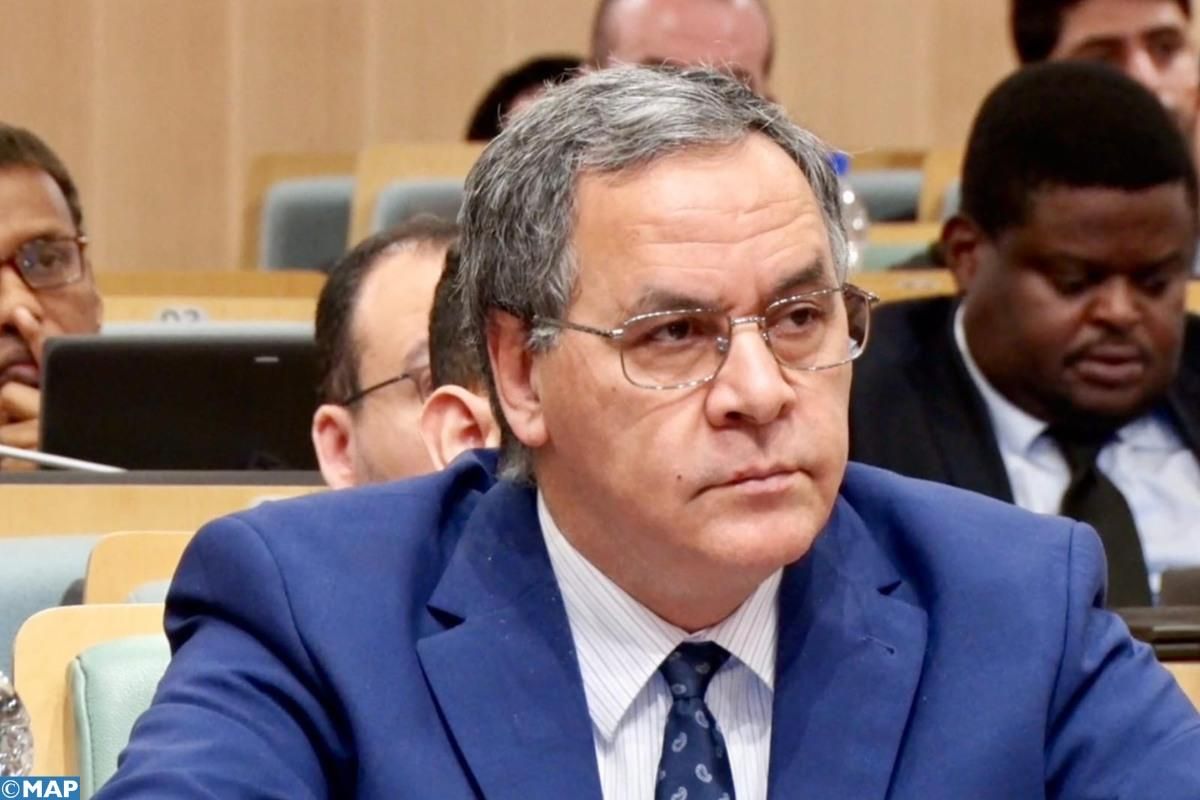
Mohamed Arrouchi, Morocco’s Permanent Representative to the African Union
Under His Majesty King Mohammed VI’s guidance, Morocco—serving as the AU’s Champion on migration—has made humanitarian action a cornerstone of its foreign policy and African cooperation. The Kingdom is leaving no stone unturned to address humanitarian crises wherever they arise on the continent, Mr. Arrouchi emphasized.
The diplomat highlighted that Morocco’s humanitarian efforts extend beyond emergency aid or field hospitals. Instead, they are rooted in a comprehensive strategy focused on sustainable actions to alleviate suffering. This approach also relies on co-development, expertise sharing, and the exchange of best practices.
He pointed out that this strategy includes combating the effects of climate change and desertification, whose humanitarian consequences are already evident in the growing number of climate refugees across Africa. Additionally, he underscored the importance of responsible governance in humanitarian action to ensure that aid reaches those in need without exploitation or diversion.
Mr. Arrouchi stressed that Morocco advocates for an integrated, multidimensional approach to humanitarian responses in Africa. This means combining humanitarian action with conflict prevention, mediation, peacebuilding, and development to address the root causes of forced displacement.
He also emphasized the need to strengthen the resilience of communities affected by conflicts, natural disasters, and climate shocks to reduce their vulnerability to future crises.
The diplomat underscored the importance of enhancing Africa’s capacity to anticipate, prevent, and respond to future humanitarian crises—especially those linked to climate change. This requires developing early warning systems, preparedness, and resilience mechanisms tailored to the continent’s realities.
Transparency, accountability, oversight, and evaluation mechanisms in humanitarian action across Africa must be reinforced to ensure aid reaches those in need and prevent any form of diversion, manipulation, or exploitation of resources, he added.
Mr. Arrouchi also called for strengthening data registration, monitoring, and management systems for refugees and internally displaced persons. Reliable, verified, and regularly updated data is essential to improve the efficiency of humanitarian responses and ensure adequate resource allocation.
The diplomat noted that Africa is currently facing an alarming humanitarian situation, with unprecedented waves of people fleeing conflicts and the devastating impacts of multiple climate shocks, economic slowdowns, and rising food insecurity in several regions.
This situation has created exceptional humanitarian needs, to which the collective response has often fallen short due to national, regional, and continental constraints, he explained.
Faced with this crisis, he stressed the urgency of focusing on operational and pragmatic solutions. A rational approach, sustainable solutions, and proactive proposals are needed to pave the way for an optimal African humanitarian order.
In this regard, he called for prioritizing preventive action to address increasingly frequent and complex shocks.