
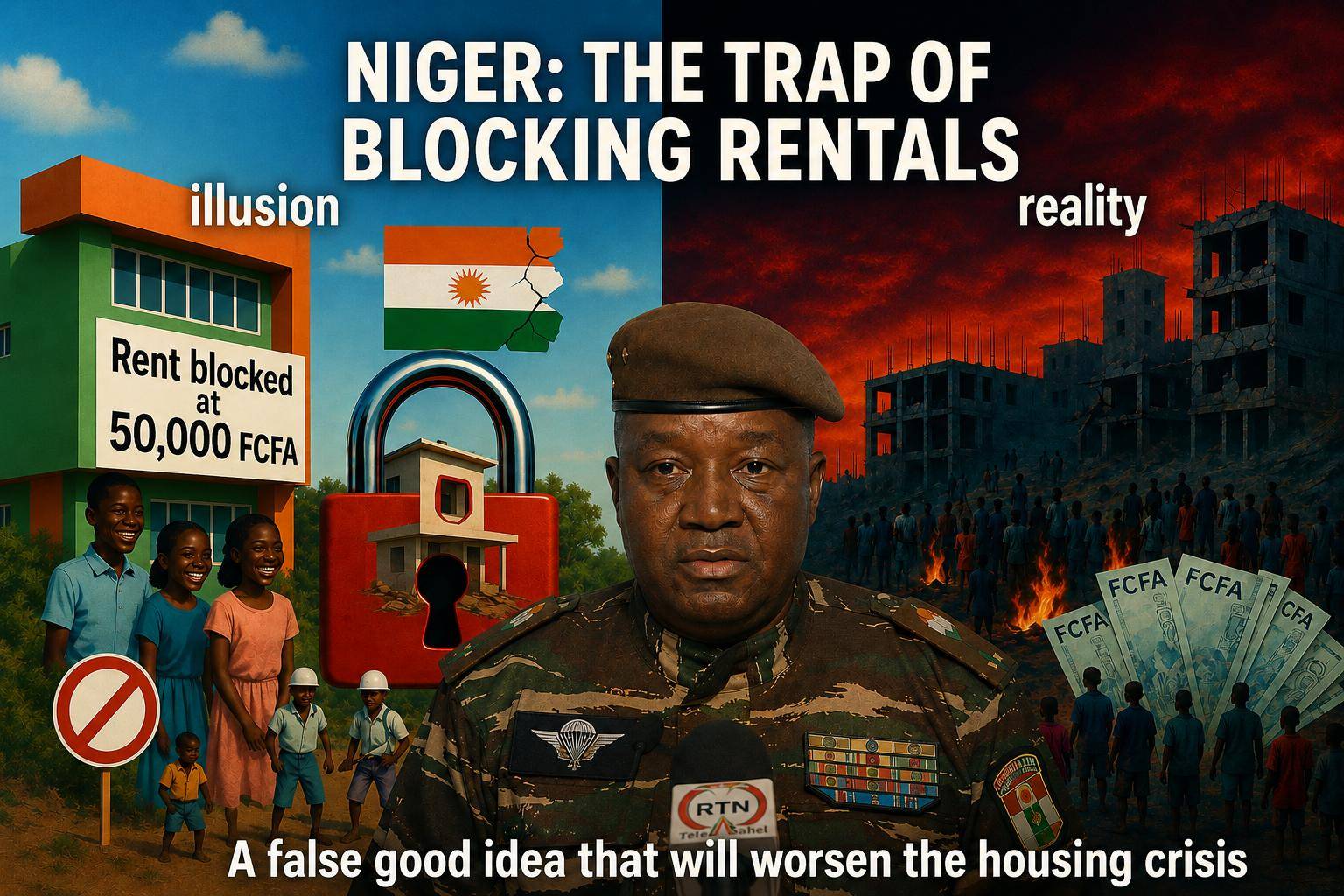
In a move aimed at currying favor with urban populations, the Nigerien transitional authorities have enacted a decree imposing strict rent controls across the country. The regulation, which caps monthly rents between 15,000 and 80,000 West African CFA francs in Niamey, seeks to curb real estate speculation and make housing more affordable for low-income citizens.
An intervention with unintended consequences
The government’s intentions may be well-meaning, but history shows that price controls rarely produce the desired outcomes. Economists warn that this measure, while temporarily easing financial burdens for tenants, could trigger a severe housing crisis by stifling investment and discouraging the development of new residential units.
The economic mechanics behind the crisis
At its core, the housing shortage in Niamey stems from a fundamental imbalance between supply and demand. When demand outstrips available housing options, prices naturally rise. The only sustainable solution to this problem is to increase the housing stock through new construction. However, the new decree effectively removes the financial incentives for developers to build more properties.
A threefold threat to the housing sector
The rent control policy introduces multiple risks that could exacerbate the existing crisis:
- Investment flight: Developers and property owners will reconsider their financial commitments if guaranteed returns on real estate projects become impossible under the new price ceilings.
- Deteriorating living conditions: Landlords, facing reduced income, will have little incentive to maintain their properties, leading to rapid decay of existing housing stock.
- Emergence of illegal practices: When housing becomes scarce and prices are artificially suppressed, prospective tenants may resort to under-the-table payments to secure accommodation, creating a black market for rental properties.
A burden too heavy for the state to bear
For rent control to succeed, the government would need to compensate by launching large-scale social housing projects. However, with national coffers strained by political instability and reduced international aid, such an initiative remains financially unfeasible. The policy shift also sends a discouraging signal to local banks, which may reduce lending for real estate ventures, further dampening economic activity.
A short-term political gamble with long-term costs
This decree appears to be a populist measure designed to bolster public support during a transitional period. Yet, by undermining the private sector’s role in housing development, the military-led administration risks transforming a cost-of-living issue into a full-blown housing crisis. In Niamey, finding decent accommodation could soon become an even greater challenge than it already is.