

The April 25 attacks in Mali marked a turning point in the political landscape, reshaping the trajectory of Colonel Assimi Goïta‘s leadership. Following the assault, the interim president swiftly implemented strategic measures to reinforce his authority, sending ripples through the nation’s corridors of power.
Immediate response and security reshuffle
In the aftermath of the violence, Assimi Goïta moved decisively to recalibrate the country’s security apparatus. A sweeping overhaul of key military positions underscored his commitment to strengthening national stability. The president’s actions sent a clear message: Mali’s leadership would not tolerate threats to its sovereignty, whether domestic or foreign.
Key appointments reshaped the defense landscape, with trusted allies placed in critical roles. This restructuring aimed to streamline decision-making and enhance operational efficiency, ensuring a unified response to future challenges.
Consolidating political influence
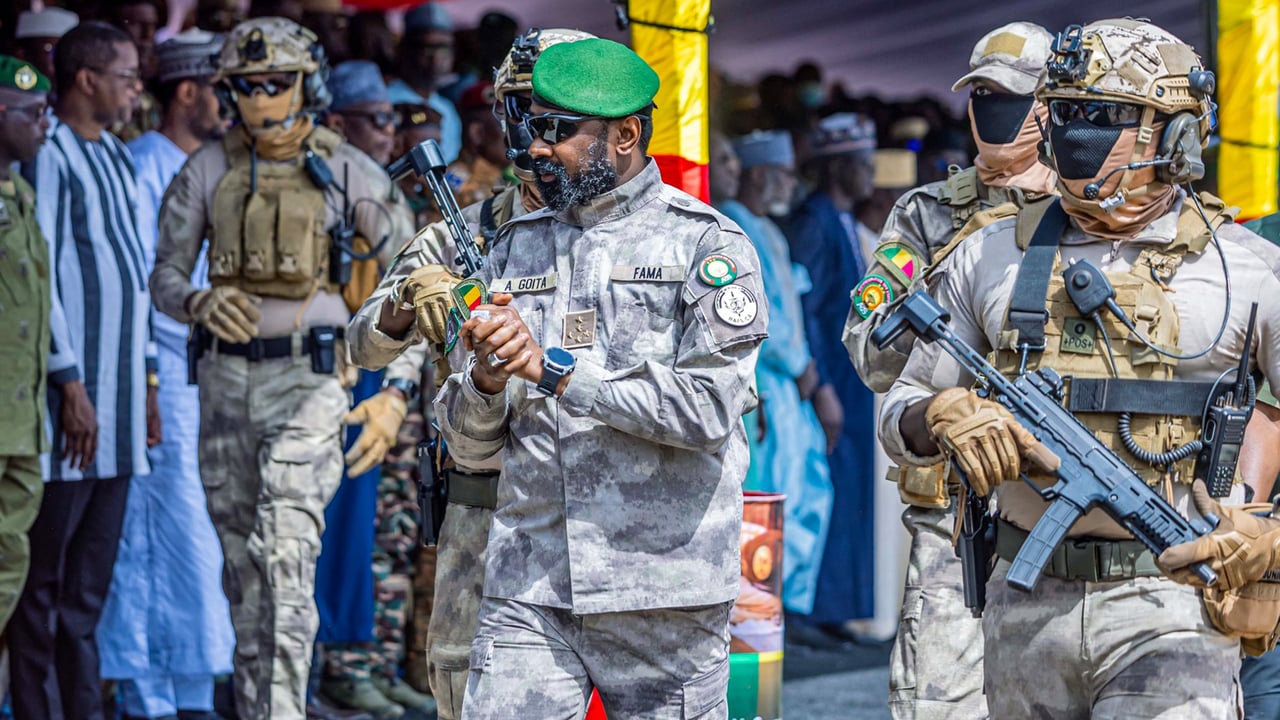
The post-attack period became a catalyst for Assimi Goïta to deepen his political footprint. By leveraging public sentiment and national pride, he positioned himself as the unifying figure Mali needed during turbulent times. His public appearances, particularly during high-profile ceremonies, reinforced his image as a steadfast leader committed to restoring order.
Analysts noted how public gatherings, such as the funeral of fallen officials, provided platforms for Goïta to reinforce his narrative of resilience. These moments were carefully orchestrated to bolster his legitimacy and project strength in the face of adversity.
Strengthening international alliances
Beyond domestic adjustments, Assimi Goïta turned his attention to international partnerships. The shifting geopolitical dynamics in the Sahel region prompted Mali to recalibrate its foreign policy. High-level diplomatic engagements signaled the country’s intent to diversify its alliances, reducing dependence on traditional partners while forging new strategic ties.
Discussions with international actors, including regional blocs and external powers, highlighted Mali‘s evolving priorities. These efforts were not merely symbolic; they reflected a calculated approach to securing support while maintaining autonomy in decision-making.
Public perception and long-term implications
The aftermath of the April 25 attacks has left an indelible mark on Mali‘s political landscape. Assimi Goïta‘s proactive measures have reshaped public perception, with many viewing him as a decisive leader capable of navigating the nation through crisis. However, questions linger about the long-term sustainability of these changes and their impact on Mali’s democratic trajectory.
As the country continues to grapple with security challenges and political transitions, the actions taken in the wake of the attacks will likely define Mali‘s path forward. The balance between stability and democratic principles remains a focal point for both citizens and observers alike.
Key takeaways
- Security restructuring: A comprehensive overhaul of military leadership to enhance responsiveness.
- Political consolidation: Strategic public engagements to reinforce leadership legitimacy.
- International realignment: Diversification of alliances to secure broader support.
- Public sentiment: Leveraging national pride to strengthen political influence.