
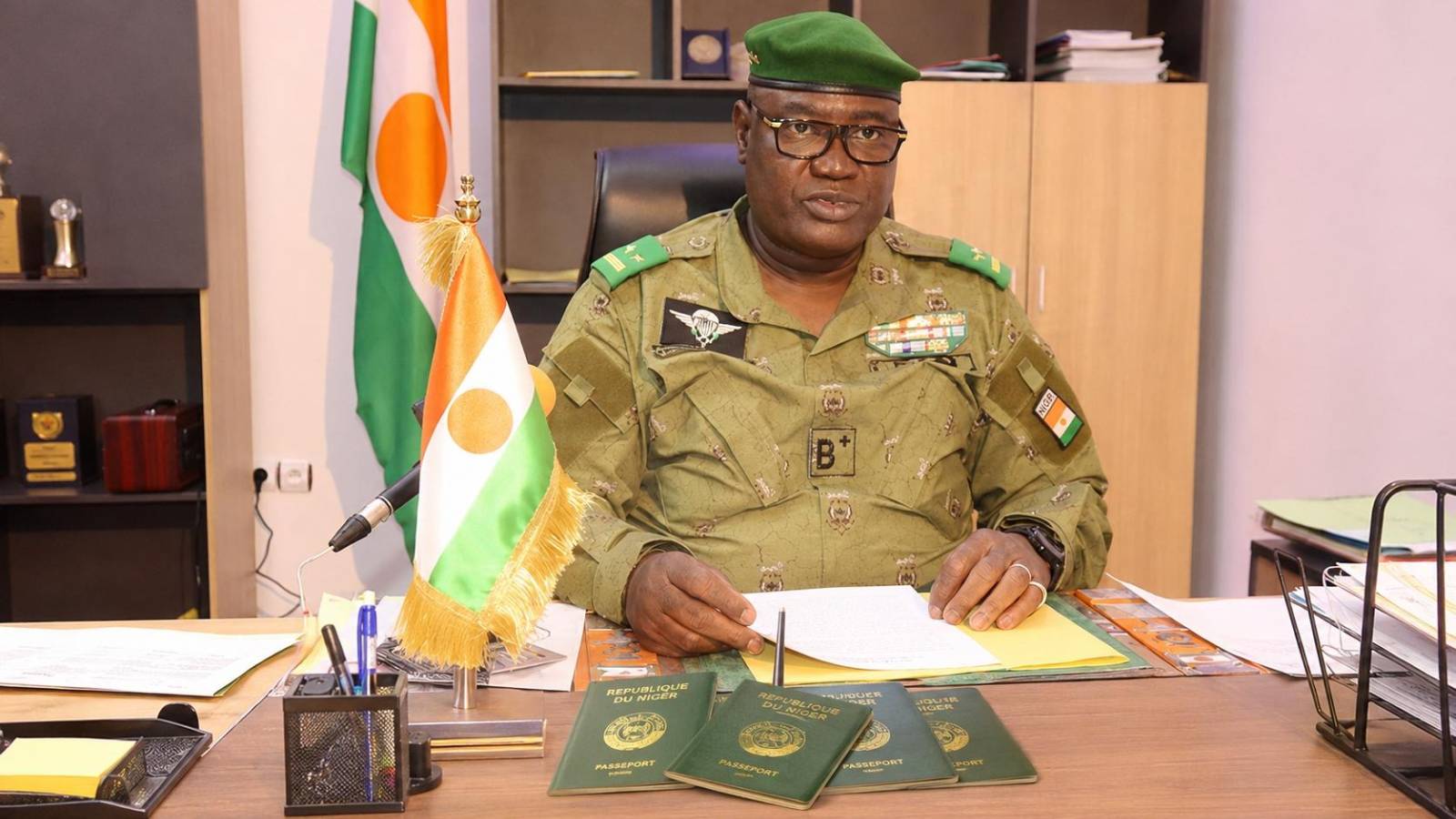
In a move that has sent shockwaves through Niamey’s political circles, the Spanish Foreign Ministry has quietly but decisively recalled its consul in Niger. This bold decision follows the dismantling of a lucrative Schengen visa trafficking network, where fraudulent permits were sold for over 2.5 million West African CFA francs each. The scandal has exposed deep-rooted corruption within Niger’s transitional government, implicating close associates of the third-highest-ranking official in the National Council for the Safeguard of the Homeland (CNSP), General Mohamed Toumba. As whispers of state-sponsored malfeasance grow louder, the conspicuous silence of transitional President General Abdourahamane Tiani raises troubling questions about the junta’s commitment to transparency.
Diplomatic fallout: Spain’s consul becomes the scapegoat
The repercussions of this affair have now crossed the Mediterranean. Officials in Madrid have confirmed the consul’s removal, though the Spanish government has remained tight-lipped about the specifics. Security sources in Niamey, however, confirm that the dismissal is directly tied to the ongoing visa trafficking scandal rocking the capital. The diplomat is alleged to have either actively facilitated or passively enabled the illegal issuance of Schengen visas, bypassing standard consular procedures.
While Spain’s decision may appear as a routine personnel change, it underscores the gravity of a transnational fraud network that had direct access to European diplomatic channels. The scandal has not only exposed weaknesses in Niger’s consular oversight but also highlighted the brazen nature of state-level corruption.
A web of corruption woven into the heart of the junta
Beneath the surface of this diplomatic expulsion lies a far more disturbing reality: an entrenched system of corruption operating at the highest echelons of Niger’s transitional government. Investigations by the Directorate General for Documentation and External Security (DGDSE) have revealed that this was no mere backstreet operation. Instead, it was a sophisticated, high-yield scheme orchestrated from within the corridors of power.
The central figure in this scandal is the wife of General Toumba, Niger’s Interior Minister and the CNSP’s third-ranking leader. Leveraging her husband’s considerable influence, she allegedly established an underground visa-for-cash system, bypassing official protocols. Each fraudulent visa was sold for approximately 3,800 euros—an exorbitant sum for most Nigeriens but a bargain for wealthy merchants and aspiring migrants. What began as an abuse of diplomatic privileges has morphed into a state-backed revenue stream, enriching the military elite at the expense of public trust.
The DGDSE strikes back: a counterintelligence coup
The dismantling of this network is credited to Lieutenant Colonel Souleymane Balla Arabé, head of Niger’s counterintelligence agency. Through intercepted communications and meticulous evidence gathering, the DGDSE has exposed the inner workings of the scheme, dealing a severe blow to the fragile unity of the CNSP. The offensive has left General Toumba politically vulnerable, his authority undermined by allegations of transnational crime at a time when he is expected to uphold law and order.
For a minister whose portfolio includes national security, the scandal has eroded his credibility both within the junta and among the ranks of the armed forces. Once viewed as a pillar of the transitional administration, Toumba now faces growing skepticism about his ability to lead—or even survive—the mounting scrutiny.
The deafening silence of General Tiani
As the scandal gains international traction, all eyes are on transitional President General Abdourahamane Tiani. Yet, he has chosen to remain silent—no official statements, no disciplinary actions, and no acknowledgment of the crisis. This conspicuous inaction has drawn sharp criticism in Niamey, where observers interpret it as either tacit complicity or a calculated political maneuver to preserve the junta’s fragile internal balance.
The general’s reticence is particularly striking given the junta’s public pledge, following the July 26, 2023 coup, to eradicate impunity and dismantle the corrupt practices of the previous regime. By failing to hold Toumba accountable, Tiani risks undermining the very legitimacy of the transition. The message to the public appears clear: loyalty to the inner circle may now outweigh the promises of reform and accountability made to the people of Niger.
A defining moment for Niger’s transitional government
The Spanish consul’s dismissal marks a critical juncture for Niger, exposing the paradox of a regime that publicly distances itself from Western influence while simultaneously profiting from illicit access to the Schengen Zone. Spain’s decisive action demonstrates a willingness to cleanse its diplomatic ranks of corruption. The question now is whether Tiani will follow suit—or if the protection of internal power structures will prevail over the junta’s professed commitment to justice and transparency.