
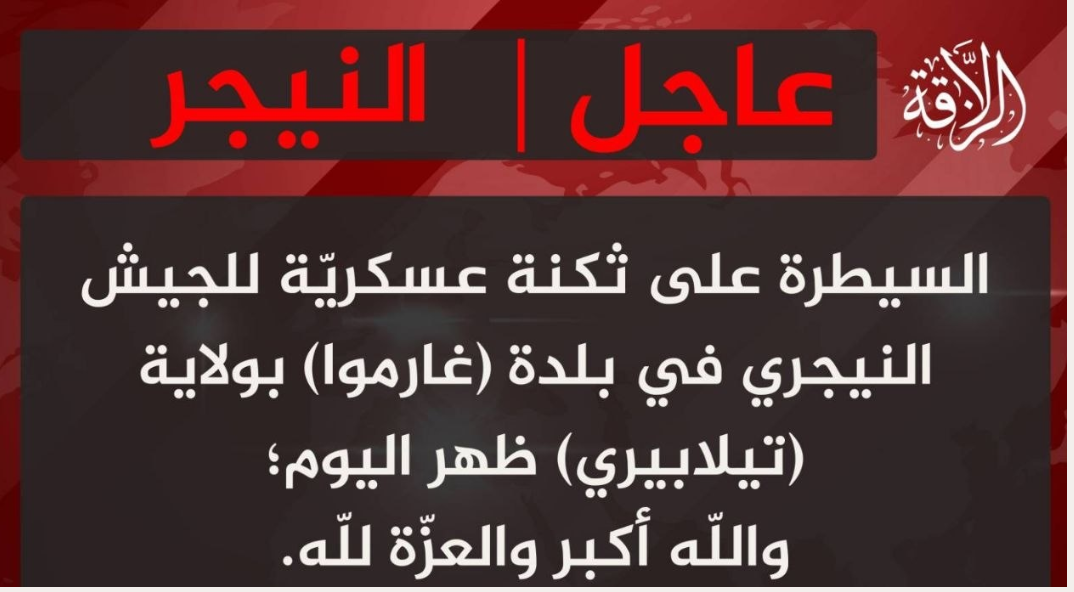
In a brazen and coordinated assault, suspected Islamist militants launched a devastating attack on a Nigerien military engineering unit stationed in Garbougna, part of the Tillabéri region, close to the Mali border. The brutal strike, attributed to the Group for the Support of Islam and Muslims (JNIM), unfolded at dawn, leaving at least 67 dead among soldiers and civilians alike.
Garbougna under siege: a premeditated assault in the heart of terror’s crossroads
Just before sunrise, the quiet hamlet of Garbougna—a strategic outpost in the volatile three-border zone—was engulfed in chaos as heavily armed attackers descended upon the military camp. Using a mix of motorcycles and pickup trucks, the assailants exploited the cover of darkness to launch their assault, catching the unit completely off guard.
The attackers, identified by military intelligence as JNIM operatives (an offshoot of Al-Qaïda), executed their strike with terrifying precision. Heavy gunfire and explosive detonations overwhelmed the defenders, despite their valiant resistance. The sheer scale and speed of the raid allowed the militants to overrun the camp, turning it into a battlefield where soldiers fought desperately to hold the line.
A grim toll: soldiers and civilians caught in the crossfire
The human cost of the attack is staggering. Among the 67 confirmed fatalities, both military personnel and local civilians were among the victims. Many of the civilians were laborers, equipment operators, and villagers who had been collaborating with the army on critical infrastructure projects in the area.
The wounded, some in critical condition, were airlifted and transported by road to medical facilities in Tillabéri and Niamey. Search and rescue operations are ongoing, with teams scouring the surrounding bushland for any remaining survivors or missing individuals.
Sabotaging progress: why terror targets development
The military engineering unit was not engaged in combat operations. Instead, its mission was to complete construction of a vital bridge—a project designed to unlock economic potential, enhance mobility, and restore a sense of normalcy to a region long crippled by insecurity. By striking this unit, the militants sent a chilling message: they will stop at nothing to prevent the return of state authority and the stabilization of Tillabéri.
For these extremist groups, disrupting infrastructure and terrorizing communities are proven tactics to maintain control and deepen local dependence. The bridge was more than concrete and steel—it was a symbol of hope, and its destruction was a deliberate blow to that hope.
The three-border zone: a powder keg of instability
This latest attack underscores the persistent volatility of the three-border zone, where Niger, Mali, and Burkina Faso converge. Despite intensified joint military operations and bolstered defense capacities, the threat posed by terrorist factions remains alarmingly adaptable. Militants exploit porous borders, launching deadly raids before retreating across national lines to evade pursuit.
In Niamey, the shock and condemnation are palpable. Military leaders have vowed that this tragedy will not go unanswered, pledging to continue national reconstruction efforts in honor of those who fell—whether wielding tools or weapons.
The assault on Garbougna marks a dark escalation in Niger’s fight against terrorism. It highlights a brutal reality: the battle against extremism is as much about safeguarding lives as it is about rebuilding economies and restoring dignity. The resilience of the Nigerien people will once again be tested, as the nation mourns and marches forward in defiance.