
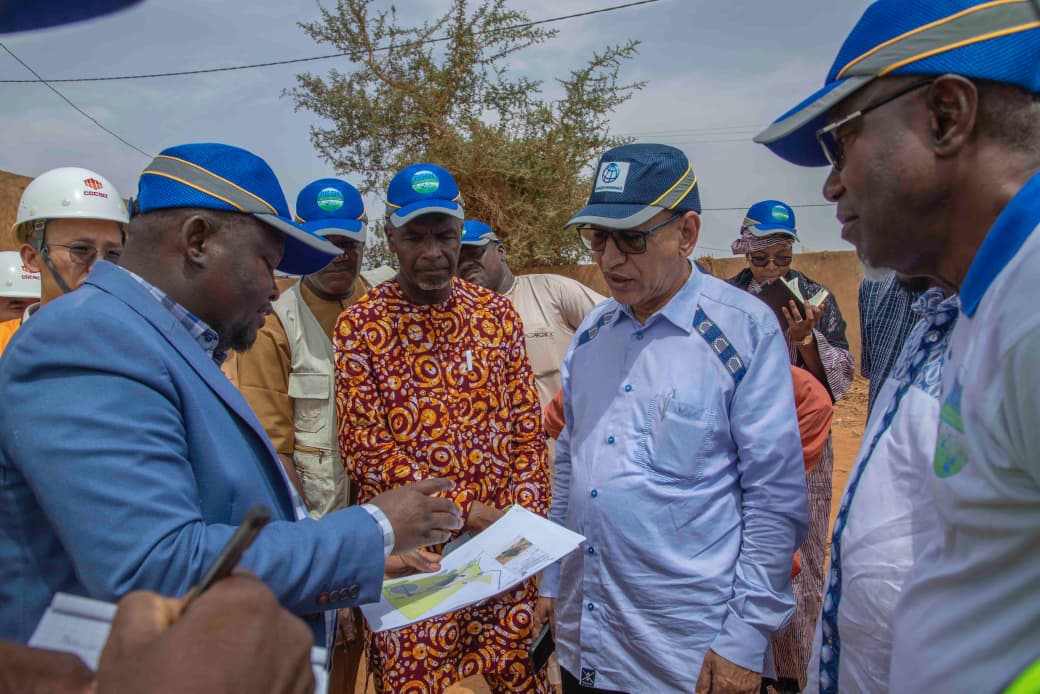
A high-level delegation, including the National Coordinator of Niger’s Integrated Water Security Platform (PISEN), Mr. Zibo Zakara, the World Bank Project Manager, Mr. Mohamed Nanzoul, and officials from the Niger Water Asset Company (SPEN), inspected key sites on Tuesday, June 2, 2026. The visit focused on the ongoing construction of Niamey’s third drinking water treatment and production plant, covering critical areas such as the water intake site, the plant’s construction zone, and the reservoir installation location.
Ambitious water infrastructure project nears completion
Since adopting its Urban and Semi-Urban Water Master Plan in 2017, SPEN has prioritized expanding potable water access across Niamey’s urban and peripheral zones. The third plant project, under PISEN’s coordination with World Bank support, is designed to deliver 250,000 cubic meters of water daily in three phases: an initial 100,000 m³/day phase followed by two 75,000 m³/day phases. This initiative aims to enhance water accessibility for Niamey’s growing population.
Key infrastructure milestones
Technical teams on-site confirmed that raw water will be channeled to the plateau where the treatment plant is under construction. From there, water will be stored in two 2,500 m³ reservoirs located on the Yawari plateau, ensuring reliable distribution to outlying neighborhoods.
Mr. Zakara emphasized that the first phase—100,000 m³/day—will secure Niamey’s water supply until 2035. He noted the project consists of 10 lots, with potential expansions planned for the plant’s operational lifespan.
Highlighting recent progress, he stated, « The work has shifted into high gear. Excavations are underway in Lots 6 and 7, with heavy machinery and skilled labor—including local workers—actively engaged. The project’s benefits are already reaching communities through employment and subcontracting opportunities. »
World Bank and local stakeholders reaffirm commitment
Mr. Nanzoul, representing the World Bank, praised the project’s momentum, pledging continued financial and technical support to bolster Niger’s water infrastructure for public welfare.
For his part, Mr. Haladou Laouali Amani, the plant’s construction project manager, outlined the preparatory phase’s completion: « From workforce mobilization to site setup, we’ve finalized data collection, topographical surveys, and geotechnical studies. Once operational, this plant will revolutionize Niamey’s water access, becoming one of the most significant potable water projects ever undertaken in the country. » He added that the initiative will enable approximately 45,000 social connections, significantly improving household water access.