
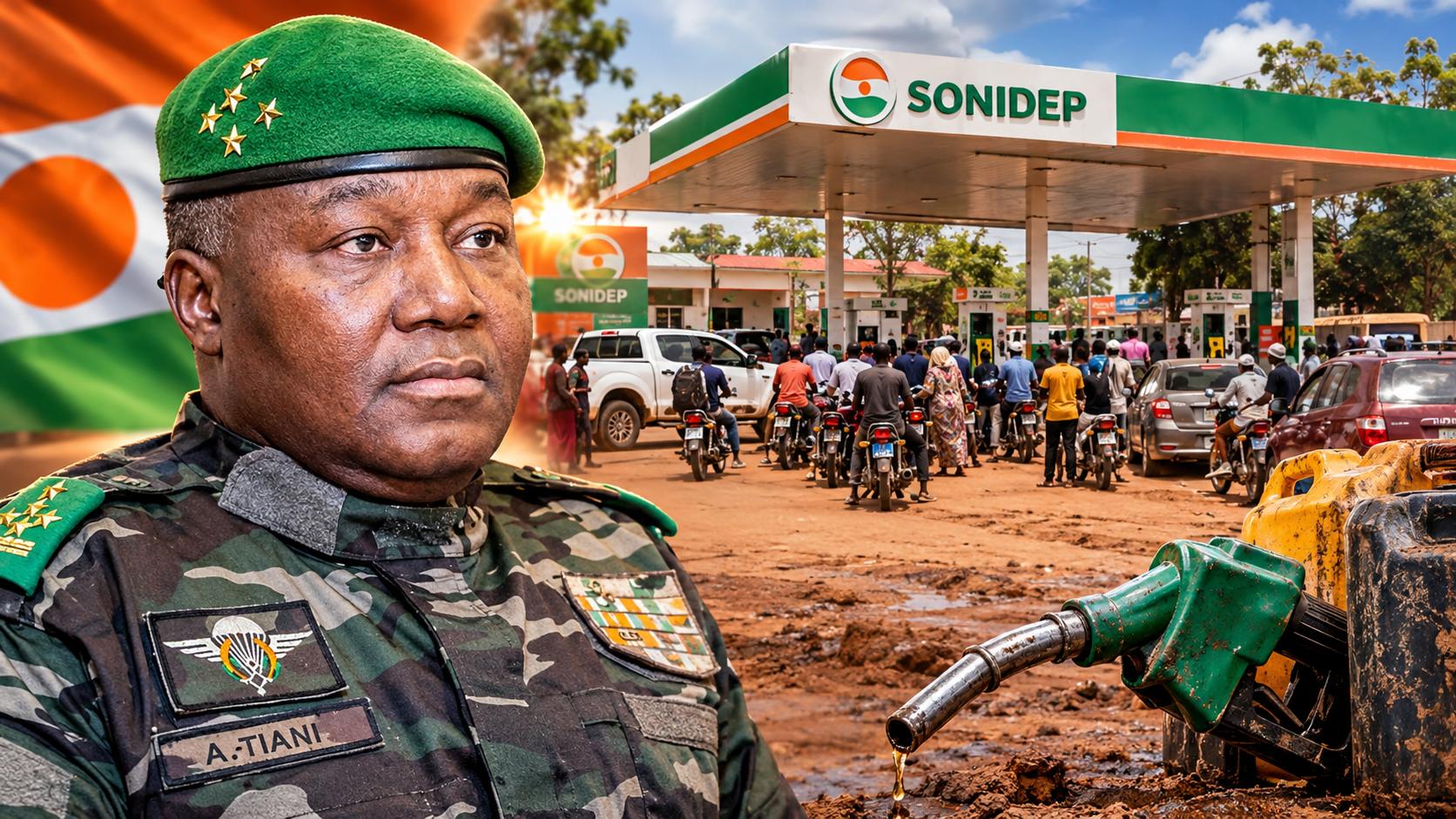
Is the Nigerien government truly the only administration on earth capable of dismissing an evident fuel shortage as mere hearsay?
While motorists across the nation queue for hours at service stations, and supply disruptions fuel public anxiety, Niamey’s response remains perplexing. State media have categorically labeled the situation a fabricated ‘rumour,’ insisting that no corner of the country faces genuine scarcity.
Yet this official stance raises its own urgent question: which narrative does Niger wish its people to trust the one they witness daily, or the one broadcast by their leaders?
From the petrol pump to the presidential podium: a widening credibility gap
The paradox deepens when one considers the human cost. Long lines outside stations are not invented by artificial intelligence. Neither are the delays that ripple through transport networks, nor the rising costs that burden families and businesses alike. A government cannot declare a crisis invisible simply because it refuses to acknowledge the word.
Niger’s approach mirrors a broader pattern observed among its neighbours in the Alliance of Sahel States. Both Mali and Burkina Faso have, at various moments, downplayed shortages while later conceding gaps in supply. The difference in Niamey is the insistence on erasing the term itself yet reality cannot be signed away by decree.
Price cuts cannot paper over supply fractures
For months, authorities pointed with pride to historically low fuel prices. Yet affordability is meaningless when pumps run dry. An artificially cheap price loses its value once the commodity vanishes entirely.
The consequences extend far beyond convenience. Transport fleets slow, food prices climb, construction halts, and small traders watch inventories dwindle. Every sector agriculture, retail, manufacturing feels the squeeze. And Niger’s vulnerability is structural: heavily reliant on imports from coastal states, the country remains hostage to maritime shipping flows and regional logistics bottlenecks.
The transparency deficit that fuels discontent
The crux is not whether the government uses the word shortage. It is whether it offers credible data to back its claims: inventory levels, delivery schedules, station-by-station status, import volumes, and regional breakdowns. Numbers tell a story; slogans do not.
When citizens see tangible evidence of scarcity but receive assurances to the contrary, trust erodes swiftly. The Alliance governments frequently decry foreign disinformation campaigns aimed at destabilising their rule. Yet the most corrosive fiction may be the one produced in domestic ministries one that asks a population to disregard its own eyes.
When denial outlasts evidence
Niger may continue to insist there is no shortage. But physics and economics do not obey political messaging. So long as queues persist, pumps remain half-empty, and citizens continue their daily searches for fuel, one conclusion becomes inescapable: the only thing more persistent than the shortage is the refusal to name it.
In such moments, leadership is measured not by the volume of its proclamations, but by its willingness to face reality before reality forces the issue upon it.
By Yvette Tchuente — Journaliste / Rédacteur