
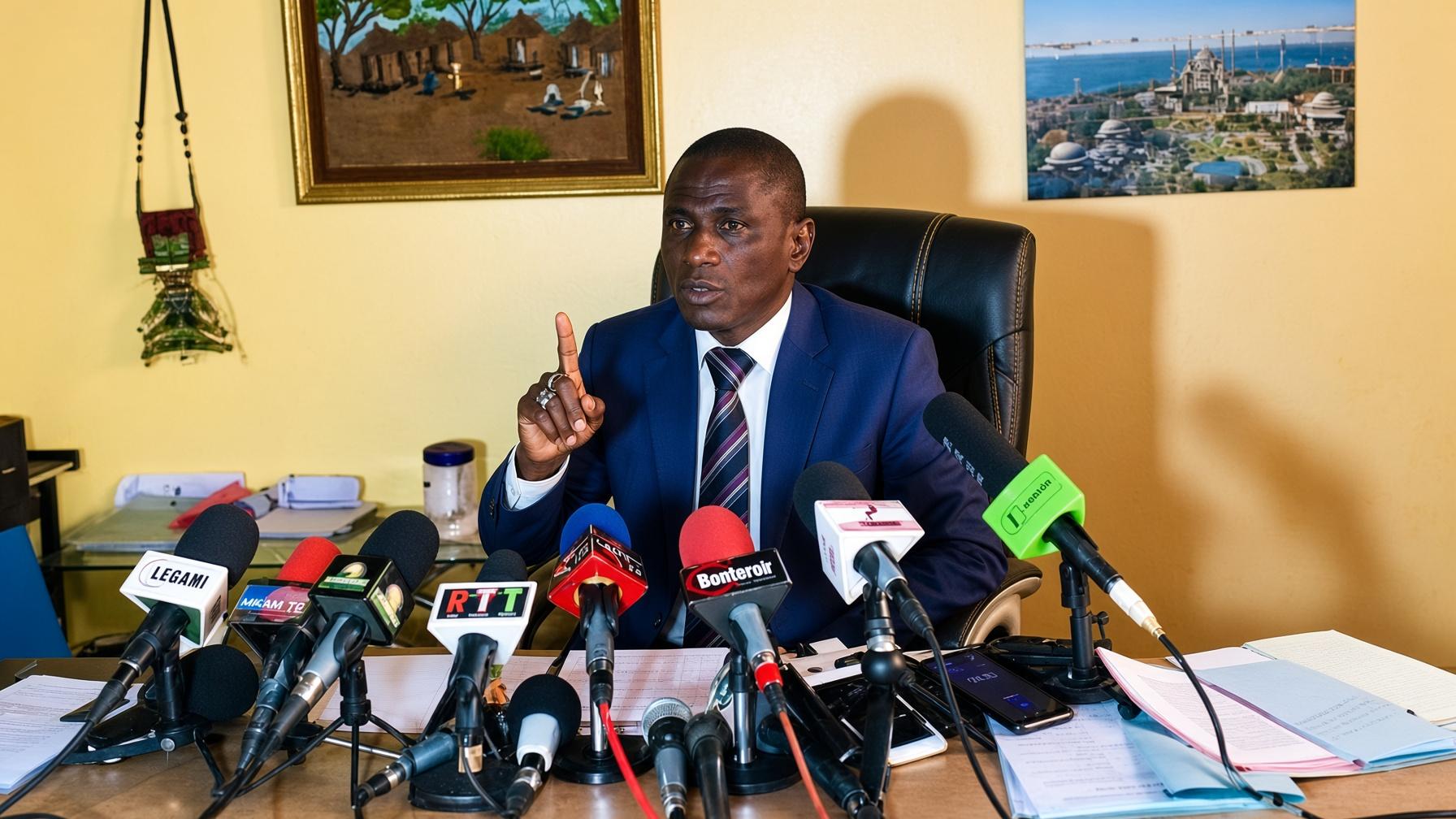
The showdown between Niger’s judiciary and outspoken members of the bar has reached a critical juncture. Detained for the past two weeks, lawyer Abdourahamane Lirwana faced the charges against him on Tuesday, October 6, before the High Court of Niamey. After the proceedings, the prosecution demanded a five-year prison sentence and a fine of five million CFA francs.
Online posts at the heart of the case
The prosecution stems from content that the lawyer shared on social media. The authorities specifically accuse Me Lirwana of “disseminating data likely to disturb public order,” an offense heavily penalized under Niger’s cybercrime legislation.
The hearing, however, unfolded amid intense procedural tension. Twenty-four hours before the trial began, the defense team had petitioned the Court of State to transfer the case, arguing that the Niamey court lacked the necessary independence for a fair trial. The higher court rejected the request, keeping the case in the capital.
A strategy of silence in the face of a contested justice system
Believing that their client’s defense rights were blatantly violated, Me Lirwana’s lawyers made a decisive choice: they refused to plead. Following their instructions, the defendant remained completely silent when questioned by the presiding judge and the prosecutor.
This refusal to cooperate did not halt the session. Ignoring the absence of defense arguments, the court closed the proceedings and took the case under advisement. The final ruling, now eagerly awaited by judicial circles and civil society, will determine the lawyer’s fate in a climate of strict regulation of public speech on digital platforms.