

Synergy and cooperation in Niger’s health financing landscape
Niger, a geographically isolated nation in West Africa, has faced significant challenges due to armed conflicts and persistent droughts. These environmental and social pressures have strained the national healthcare infrastructure, resulting in maternal and child mortality rates that remain among the highest globally. In response, the Government of Niger has committed to achieving universal health coverage (UHC), building on lessons learned from previous attempts to expand access to vital medical services.
In 2006, facing critical health outcomes, the authorities introduced a bold free healthcare policy. This initiative was designed to provide free reproductive health and family planning to women, alongside comprehensive medical services for children under the age of five. While the programme saw initial success, progress was hampered by a lack of sustainable funding. By 2011, only half of the necessary resources had been secured, leading to a backlog of unpaid medical bills and preventing clinics from delivering consistent care. Furthermore, since the policy targeted specific groups, other citizens faced high out-of-pocket expenses. The WHO estimates that direct payments still account for over 40% of total health spending in Niger.
The Government of Niger has struggled to significantly boost domestic health spending. Research shows that health expenditure as a percentage of GDP fluctuated from 5.4% in 2007 to 4.9% in 2011, eventually stabilising at approximately 5.7% between 2018 and 2020.
Even before the free care policy, Niger recognised the necessity of coordinating financial partners. In 2006, the Ministry of Health, the World Bank, and the Agence française de développement (AFD) established the Common Health Fund (FCS) to support the national health development strategy. By 2020, the fund grew to include Gavi, UNICEF, UNFPA, and the Spanish Agency for International Development Cooperation (AECID). However, the financial gaps in the free care policy highlighted the need for deeper reforms to ensure the long-term sustainability of UHC and other SDG 3 targets.

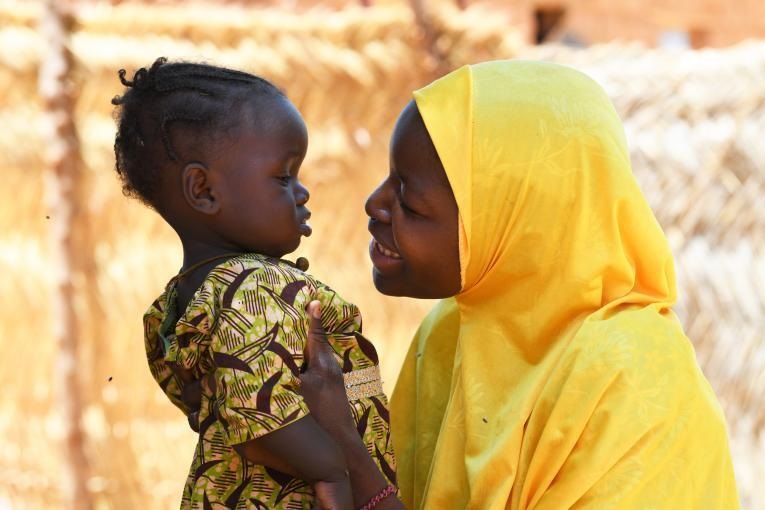
A mother cradles her infant in the village of Soki, located in central Niger. ©UNICEF/Dejongh
Leveraging the P4H network and the SDG 3 Global Action Plan for lasting impact
Recognising the urgency of health financing reform, the Government of Niger sought to address the fragmentation of external aid. To improve harmony among international partners, the country utilised the Providing for Health (P4H) network, which has been active in Niger since 2018. In 2021, P4H members and signatories of the SDG 3 Global Action Plan collaborated to appoint a national focal point. This role, supported by the Government, aims to streamline health financing coordination and facilitate practical research.
The recruitment of this focal point was led by Gavi in partnership with other health donors. By January 2022, the national focal point took over the responsibilities of the “co-rapporteur” for health financial partners. Based within the Ministry of Health, this liaison acts as a vital bridge to technical and financial contributors. The primary goal is to align partner support with national health priorities, moving away from an “agency-centric” model. Funding for this position, originally managed by the WHO and AFD, has transitioned to the World Bank via the Global Financing Facility, with long-term co-financing options currently under review.
Strengthening the health financing architecture in Niger
Prior to 2020, resource fragmentation often led to the simultaneous underfunding and overfunding of various projects. Through the P4H and SDG 3 Global Action Plan partnership, international contributors are now more engaged in supporting the government’s fiscal space. This collaboration allows health discussions to be integrated into broader social protection frameworks, focusing on outcomes for vulnerable women and children.
In 2020, partners prioritised support for COVID-19 response, domestic resource mobilisation, and development efficiency. The Government of Niger has identified several key areas for ongoing reform:
- Aligning budget support with strategic health expenditure indicators.
- Transforming the FCS from a management tool into a comprehensive financing system.
- Implementing strategic purchasing through the National Medical Assistance Institute (INAM).
- Improving the predictability of partner contributions and annual planning.
Specific objectives have been established to meet these goals:
Financial harmonisation:- Mapping donor flows and analyzing health funding alignment with support from the Global Financing Facility.
- Defining the future trajectory of the FCS with WHO and P4H assistance.
- Reviewing technical assistance for health financing.
- Analysing the operational strategies for free healthcare and universal insurance.
- Deploying tools to simulate the costs of care in peripheral regions.
- Identifying low-cost innovations to improve the healthcare supply chain from the ground up.
- Collaborating with the IMF to include health spending targets in economic programmes.
- Advocating for increased investment in primary healthcare and immunisation during high-level diplomatic missions.
While the strategy is still evolving, this coordinated approach is expected to enhance service delivery. By tracking resources more accurately, partners can avoid duplication and target interventions more effectively. Furthermore, these reforms support the operationalisation of INAM, which will help reduce the financial burden on Niger’s most impoverished populations.
Challenges and future outlook
The integration of joint focal points within the Ministry of Health provides significant value in a country where external aid is a major component of the health budget. However, challenges remain, particularly regarding the workload of personnel involved in these partnerships. Ensuring that staff have sufficient time to dedicate to these coordination efforts is essential for long-term success.
The sustainability of the focal point position is also a key concern. While the Global Financing Facility has extended support, Gavi is leading discussions to secure permanent funding from a broader range of partners. The lessons learned from this pilot initiative in Niger will eventually be shared with other nations seeking to harmonise their health financing systems.
Understanding the SDG 3 Global Action Plan
The Global Action Plan for Healthy Lives and Well-being for All (SDG 3 GAP) represents a commitment by 13 international agencies to accelerate progress toward health-related Sustainable Development Goals. By fostering collaboration and aligning with national strategies, the plan supports a sustainable and equitable recovery from the COVID-19 pandemic. These case studies serve to monitor the plan’s impact at the sovereign level.