
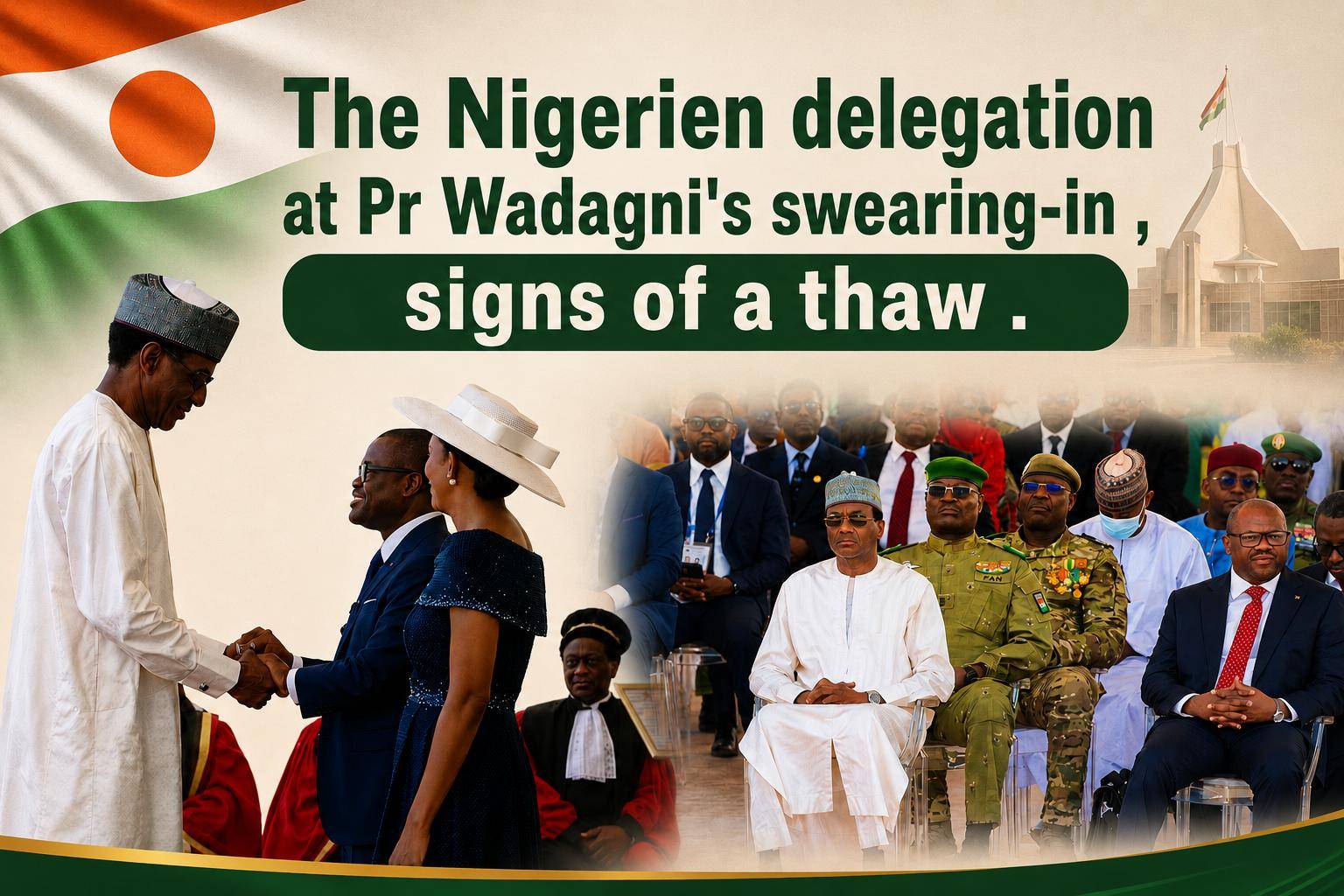
Diplomatic thaw: Niger’s transition leader breaks ground in Cotonou
Amid the formal proceedings in Cotonou, a significant diplomatic moment unfolded when the Prime Minister of Niger’s transitional government arrived alongside the Foreign Ministers of Burkina Faso and Mali. This rare convergence of Sahelian leadership at an official Beninese event underscores a potential shift in the region’s strained diplomatic landscape.
The presence of Niger’s Prime Minister, Ali Mahamane Lamine Zeine, at the inauguration ceremony of Romuald Wadagni‘s new role reflects more than mere protocol. It signals a deliberate effort to recalibrate relations amid escalating tensions between Niamey and Cotonou.
Since mid-2023, relations between Niger and Benin have deteriorated sharply, exemplified by the prolonged closure of their shared border and recurring disputes over the transit of Nigerien oil through Benin’s Sèmè-Podji port.
A united front from the Alliance of Sahel States
The Nigerien Prime Minister did not arrive in isolation. His delegation included the Foreign Ministers of both Burkina Faso and Mali, the three nations forming the Alliance of Sahel States (AES). Their collective presence at a Beninese official event carries dual implications:
- Economic diplomacy preserved: Romuald Wadagni, a pivotal figure in Benin’s financial framework and a frequent interlocutor with international institutions, maintains open channels of communication with Sahelian authorities despite regional fractures.
- Thaw in diplomatic tensions: Following months of logistical and customs-related blockades at Benin’s northern border, the Nigerien transitional government’s attendance in Cotonou signals a shared intent to ease longstanding tensions.
Economic imperatives driving high-level engagement
The political rupture stemming from Niamey’s July 2023 coup initially froze institutional ties, but economic realities have since reasserted themselves. Benin faces substantial revenue losses due to the border closure, while Niger grapples with logistical challenges that impede critical exports and imports.
The border closure, now nearing its third year, has choked historic trade corridors. This high-level meeting in Cotonou could lay the groundwork for a structured timeline toward reopening, addressing both nations’ economic vulnerabilities.
By convening Niger’s Prime Minister alongside the region’s top diplomats, Cotonou has carved out a pivotal moment in West African diplomacy. It serves as a reminder that, despite ideological divides, geographical and economic pragmatism remains the unifying force across the Sahel.