
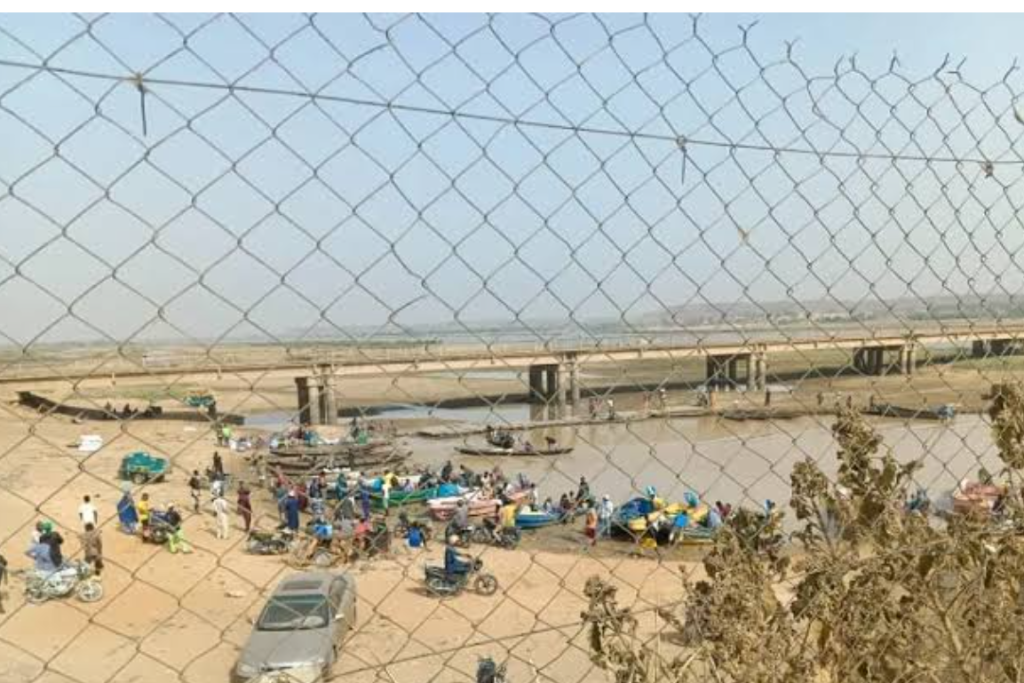
The International Monetary Fund (IMF) has delivered a stark warning: Niger’s border closures have cost the state over 117 billion West African CFA francs in lost customs revenue. This financial hemorrhage is not just a number—it exposes the deep economic crisis gripping the Sahel, where political posturing has crippled trade arteries essential to regional stability.
Financial collapse: the hidden cost of closed borders
According to IMF calculations, the paralysis of cross-border trade has created a budgetary black hole of 117 billion FCFA. This staggering figure reveals the true scale of economic devastation in West Africa following recent political upheavals. Customs and tax revenues, the financial lifeblood of Sahelian nations, have plummeted. By severing trade routes that once linked coastal ports to landlocked markets, military regimes gambled on geopolitical leverage—only to find themselves staring into the abyss of empty public coffers. These lost revenues directly undermine the ability to fund basic public services. Education, healthcare, and critical infrastructure projects now face brutal budgetary trade-offs, as states scramble to patch financial wounds with makeshift solutions.
From markets to homes: inflation hits hardest at the grassroots
The IMF’s dry economic data masks a human crisis unfolding in real time. Every morning, ordinary Nigeriens feel the pinch of soaring prices on essential goods. Rice, cooking oil, sugar, and even construction materials have become scarcer since transit routes were blocked. The resulting shortages have driven prices skyward, compounded by spiraling transport costs as goods are rerouted through longer, costlier paths. Small traders and informal economy workers bear the brunt of this collapse, with many forced into bankruptcy. The most vulnerable households—those already struggling to make ends meet—now face an impossible choice between food, medicine, or school fees. By cutting off cross-border trade networks, governments have dismantled the microeconomic backbone that once sustained entire communities.
Security rhetoric: a smokescreen for economic failure
When confronted with these financial realities, the military-led governments of the Alliance des États du Sahel (AES) double down on a familiar narrative. They blame external security threats or crumbling infrastructure—like the controversial closure of bridges and key roads—as necessary for national defense. Yet the true purpose of these measures becomes increasingly transparent: they serve as a convenient distraction from economic mismanagement and the inability to stabilize public finances. By framing border closures as acts of patriotic resistance, authorities deflect scrutiny from their own policy failures. The strategy has backfired spectacularly. Cutting ties with long-standing partners and militarizing trade decisions haven’t brought prosperity—they’ve created an environment of uncertainty that chokes private investment and forces states into precarious financial dependency.
A dead end that demands pragmatic solutions
The ideological deadlock has reached its breaking point. A 117 billion FCFA deficit cannot be resolved with fiery speeches or blame games against international partners. The economy operates on tangible realities: the free movement of goods and people is the engine of Sahelian growth. By turning borders into political trenches, military regimes have weakened the very region they claim to protect. To avert social collapse, urgent action is needed. Reopening trade routes permanently, engaging in pragmatic dialogue with regional economic bodies, and removing trade barriers must become top priorities. The survival of millions depends on it—populations who can no longer afford to foot the bill for their leaders’ political gambles.