
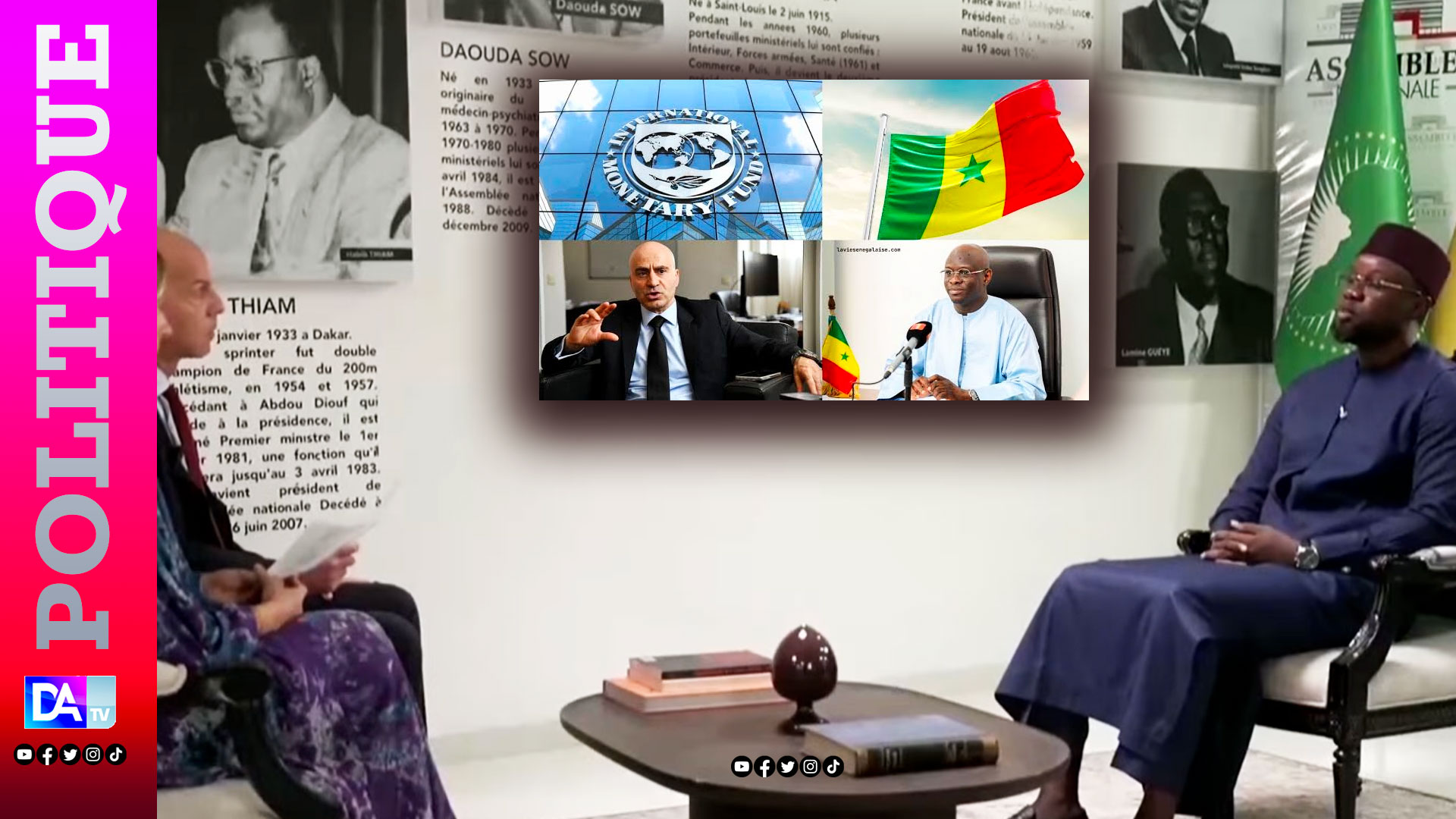
In a candid assessment of Senegal’s economic challenges, Ousmane Sonko, President of the National Assembly, addressed concerns over national debt management and the upcoming International Monetary Fund (IMF) mission to Dakar. Speaking with unfiltered clarity, he reflected on his two-year tenure as Prime Minister, setting forth firm boundaries for the current administration led by Al Aminou Lo.
On the possibility of debt restructuring, Sonko firmly rejected rigid, dogmatic stances. “We do not operate within absolute constraints,” he stated. “Every decision must be made with clear-eyed realism and consideration of long-term implications.” Previously, as Prime Minister, he had strongly opposed any reckless restructuring, asserting that Senegal was not in default and was meeting its obligations. That principle remains intact. “If any proposal threatens to sacrifice systemic or structural progress for short-term financial ratios, we will oppose it,” he warned, vowing to leverage the powers of the National Assembly to block such moves.
Sonko also addressed criticism regarding his administration’s continued reliance on international lenders despite advocating for economic sovereignty. He defended the choice of transparency, arguing that “hiding the numbers would have caught up with us sooner or later,” drawing parallels with the Greek debt crisis. “Debt is a global reality—it is refinanced, renewed, and managed responsibly,” he emphasized, positioning his approach as a model of fiscal prudence.
When questioned about the concept of “odious debt,” Sonko acknowledged the moral and practical weight of the issue. Though he had previously labeled portions of Senegal’s debt as unjust, he admitted to institutional limitations during his time in office. “The Prime Minister’s powers are constrained,” he admitted. “As a party leader, I could advocate boldly, but as head of government, my room to act was limited.” He clarified that he and President Diomaye Faye had remained aligned on this front, noting that the President had recently reaffirmed the government’s stance.
The conversation turned to the future, where Sonko urged decisive political courage. “It takes courage to confront this debate head-on,” he asserted. He called on the current administration to take responsibility and initiate discussions on canceling portions of the debt deemed odious. His remarks served as both a critique and a challenge, testing the consistency of a government he once helped steer.