
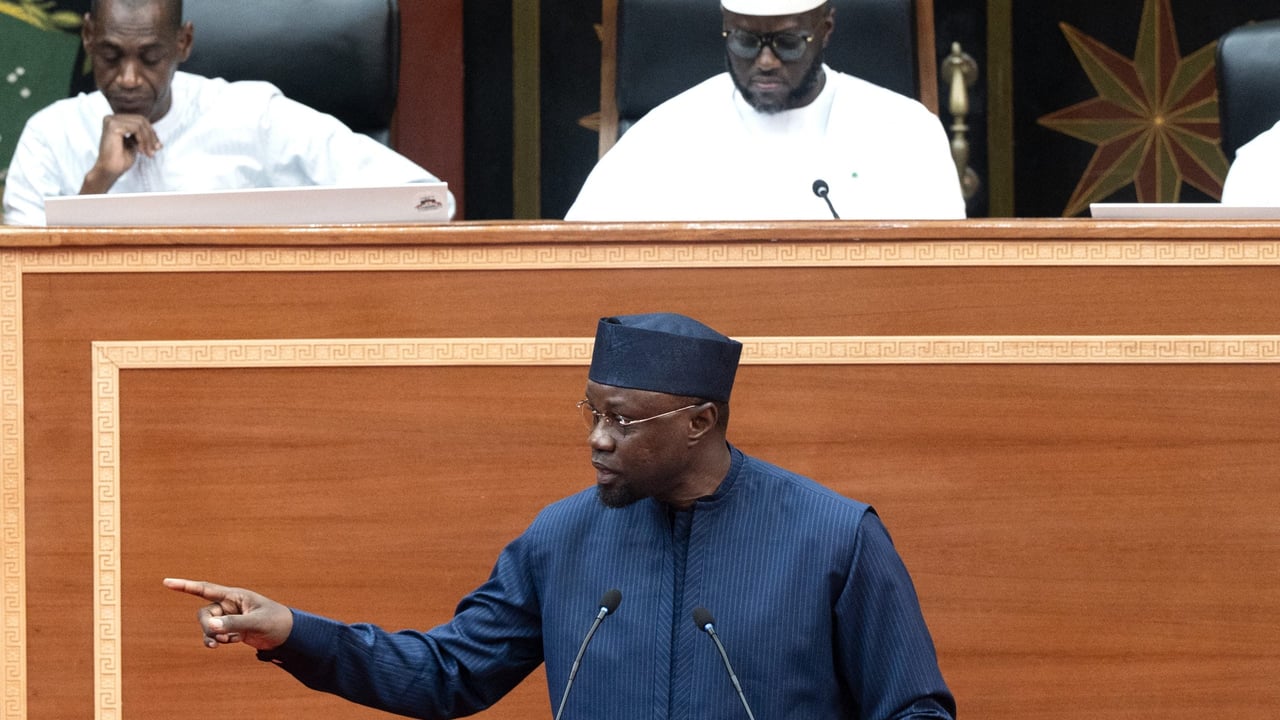
The Senegalese Prime Minister Ousmane Sonko has sharply criticized what he describes as an attempt by Western powers to impose LGBTQ+ rights on the rest of the world. Speaking before the National Assembly in Dakar, he framed the issue as a cultural imposition rather than a matter of human rights.
Sonko condemns external cultural pressure
In a passionate address, Sonko argued that Western governments and international organizations are increasingly using economic and diplomatic leverage to push for the recognition of same-sex relationships across Africa. He emphasized that Senegal, rooted in Islamic traditions and conservative values, will not yield to such pressures.
National sovereignty vs. foreign influence
The Prime Minister asserted that his government remains committed to protecting Senegal’s cultural identity and religious principles. He warned that any attempt to normalize homosexuality through foreign aid conditions or political coercion would be met with firm resistance.
“We will not accept that our sovereignty be undermined in the name of values that contradict our collective conscience,” Sonko declared. “No country should dictate our social norms.”
Reactions from political circles
Sonko’s remarks have sparked debate among Senegalese politicians and civil society. While some lawmakers praised his stance as a defense of national values, others expressed concerns about potential diplomatic fallout. The government has not yet outlined specific countermeasures but has signaled its intention to prioritize local laws over external demands.
Broader implications for Africa
Sonko’s comments reflect a growing sentiment across the continent, where several nations have reaffirmed laws criminalizing same-sex relations. Senegal currently upholds legislation that penalizes homosexual acts, a stance Sonko reaffirmed during his speech.
The Prime Minister’s firm position underscores the tension between global human rights advocacy and national sovereignty in Africa, a debate that shows no signs of abating.