
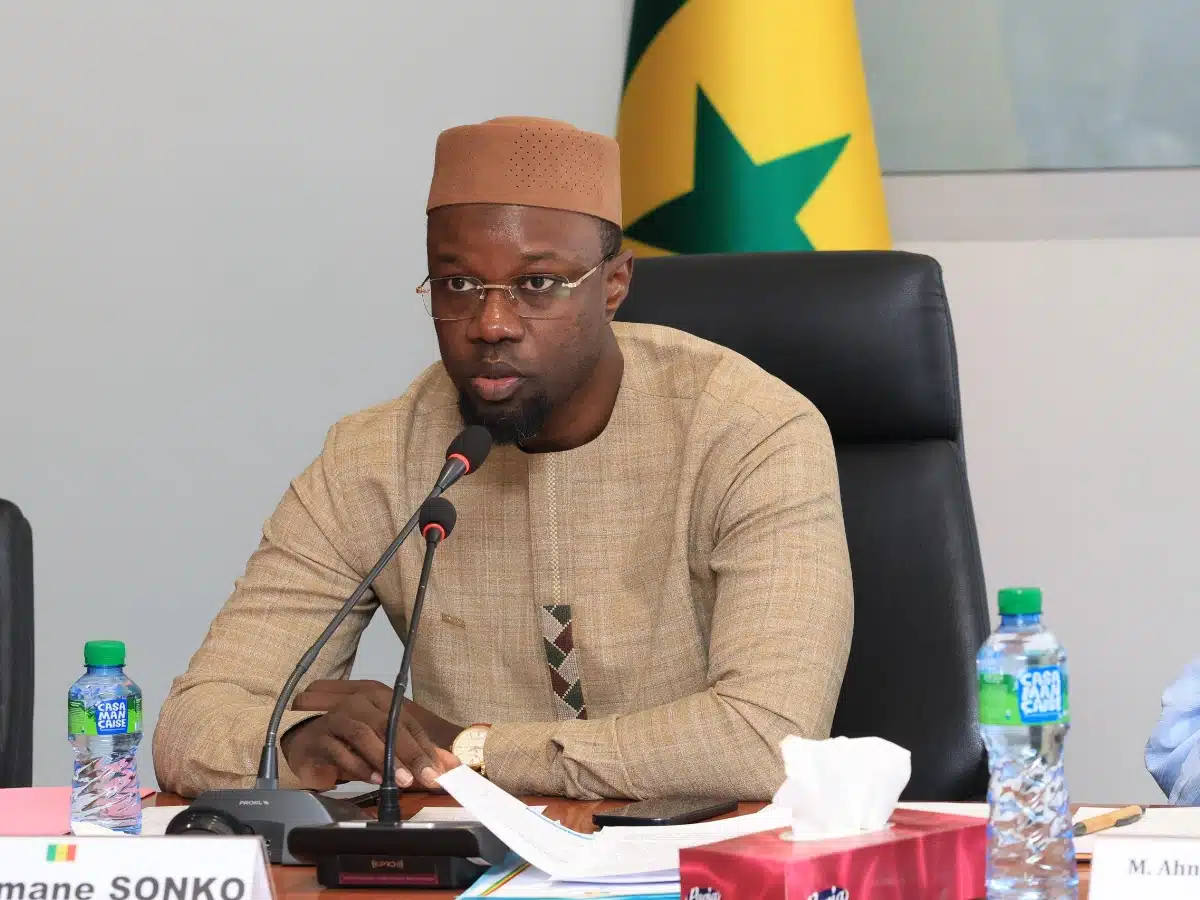
Senegal’s Prime Minister Ousmane Sonko has reaffirmed the government’s commitment to implementing the recently strengthened legislation targeting homosexuality in the country. Speaking before lawmakers in Dakar on May 22, 2026, during a parliamentary session, he dismissed international criticism from Western nations regarding the new legal measures.
“The Senegalese people are sovereign. The vast majority of them reject certain practices within our society,” Sonko declared, emphasizing that Senegal remains a self-determining nation that prioritizes its cultural and social values over external pressures.
Confronting Western influence
Addressing backlash from both domestic and international critics—including prominent figures like Cameroonian lawyer Alice Nkom—Sonko condemned what he described as “a form of Western tyranny.” He argued that while debates on homosexuality remain unresolved within Western societies themselves, powerful Western elites are attempting to impose their views globally through media dominance.
“There are eight billion people in the world, yet a small Western elite, despite internal disagreements, uses its financial and media influence to force its agenda on the rest of humanity. On what grounds?” Sonko questioned. He firmly rejected any possibility of a moratorium on the enforcement of the law, stating unequivocally, “This law will be applied in full.”
Legal framework and penalties
The National Assembly of Senegal adopted Law No. 2026-08 on March 27, 2026, amending Article 319 of the 1965 Penal Code to broaden the definition and penalties for “acts against nature.” The updated legislation now criminalizes same-sex sexual acts, defines them explicitly, and introduces stricter punishments, including fines and imprisonment.
According to the new provisions, “any sexual act or conduct of a sexual nature between individuals of the same sex” is classified as an act against nature. The law also extends criminalization to include sexual acts committed on human corpses or animals. Perpetrators face imprisonment ranging from five to ten years and fines between 2 million and 10 million West African CFA francs. These penalties apply independently of any additional charges related to rape or pedophilia.
The Prime Minister’s announcement signals a firm stance on upholding the law despite ongoing international scrutiny and debate surrounding human rights and legal reforms in Senegal.