
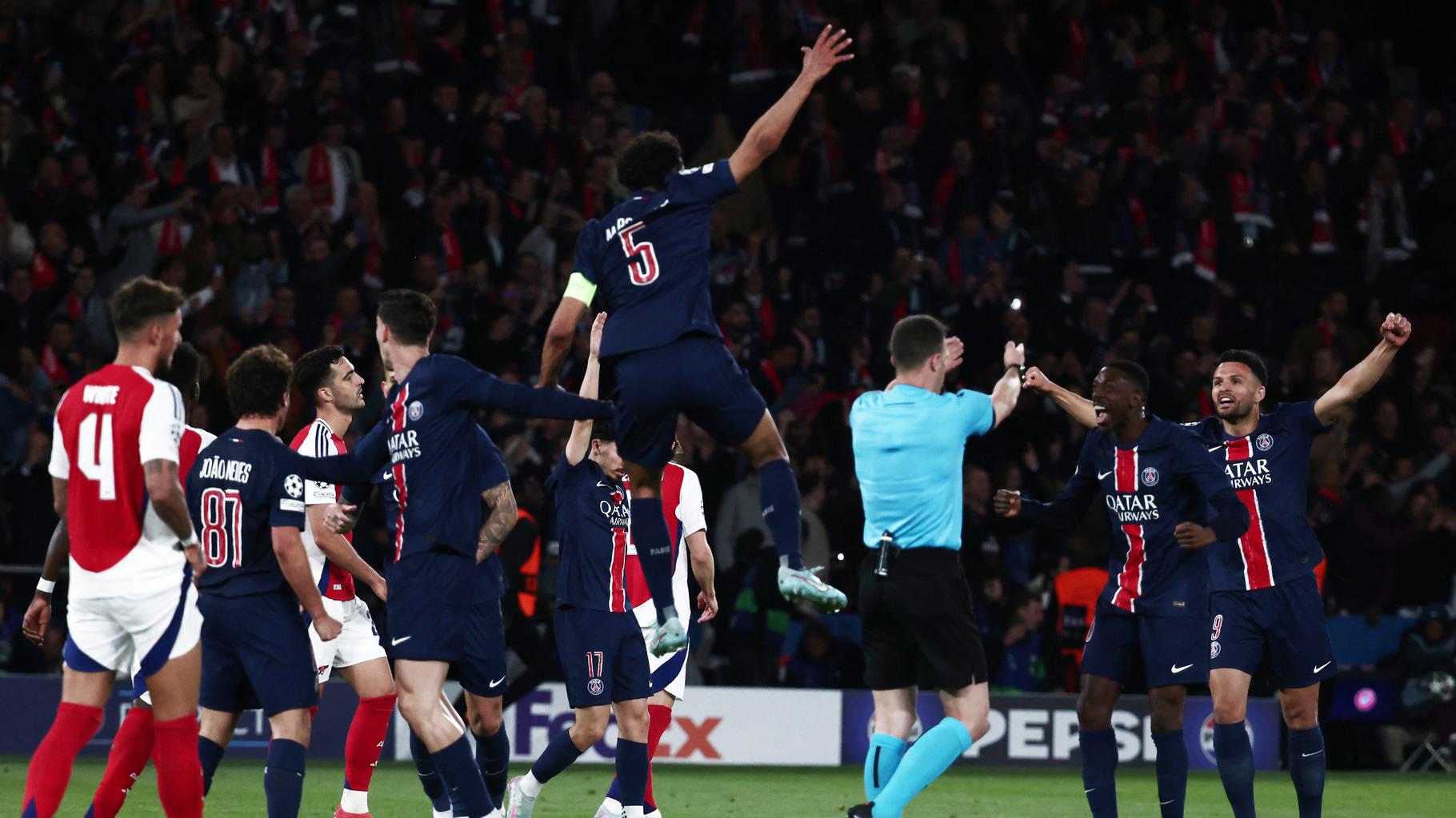
This Saturday at 18:00 in Budapest, the Paris Saint-Germain and Arsenal will clash in the Champions League final, a showdown of contrasting philosophies. One team, PSG, dazzles with flair and attacking brilliance, while the other, Arsenal, thrives on grit and tactical precision.
The French champions arrive in Hungary on the back of a breathtaking run. Since January 2025, PSG has dismantled opponents with relentless offensive firepower, culminating in a 5-0 triumph over Inter Milan in the previous final, a 5-4 thriller against Bayern Munich, and emphatic victories over Liverpool. Their attack, spearheaded by French Ballon d’Or winner Ousmane Dembélé and Georgian winger Khvicha Kvaratskhelia, is backed by a solid defensive core including Ecuadorian defender Willian Pacho, all orchestrated by the astute Luis Enrique.
Arsenal, meanwhile, has carved its path to the final through a different kind of excellence. The English side relies on a rock-solid defense, anchored by central defenders William Saliba and Gabriel, and an uncanny ability to capitalize on set pieces. Their pragmatic approach, though often labeled as ‘boring’ in the media, has yielded eleven wins and three draws in European competitions this season, with a particular knack for surviving tight encounters. Their path included a dramatic 1-0 victory over Sporting CP in stoppage time and a 2-1 aggregate win over Atlético Madrid in the semifinals.
contrasting philosophies on the pitch
At the heart of this final lies a clash of two very distinct footballing identities. PSG embodies the modern, high-pressing, attacking ideal—a team that turns matches into spectator-friendly spectacles. Their attacking trio of Dembélé, Kvaratskhelia, and a resurgent Neymar (if fit) promises a feast of creativity and goal-scoring prowess.
Arsenal stands in stark contrast. Under the guidance of Mikel Arteta, the Gunners prioritize structure, discipline, and defensive solidity. Their success hinges on defensive organization, clean sheets, and clinical finishes from dead-ball situations. Their set-piece specialist, Nicolas Jover, has instilled a culture where every corner and free kick is an opportunity, making them one of Europe’s most dangerous teams from these set plays.
the coaches: architects of their teams’ identities
Luis Enrique’s PSG is a reflection of his own ambitions—a leader who has transformed the club into a relentless attacking force. His ability to inspire his players and elevate their performance in high-stakes matches has turned him into the embodiment of the team itself.
Mikel Arteta, on the other hand, has cultivated Arsenal’s reputation as a team that wins ugly but wins consistently. His unapologetic confidence, even in the face of criticism, underscores his belief in the system he has built. In a recent statement, he declared, “We have the chance to make history for our club, and I am certain we will do it.” His focus remains solely on the outcome—a first-ever Champions League title for Arsenal.