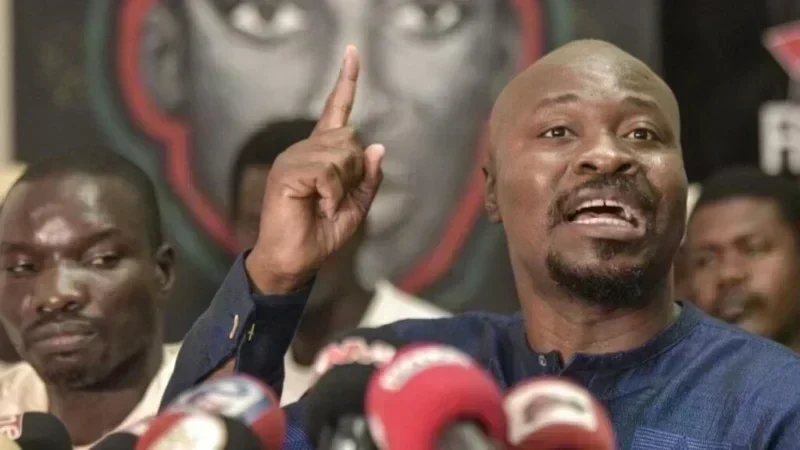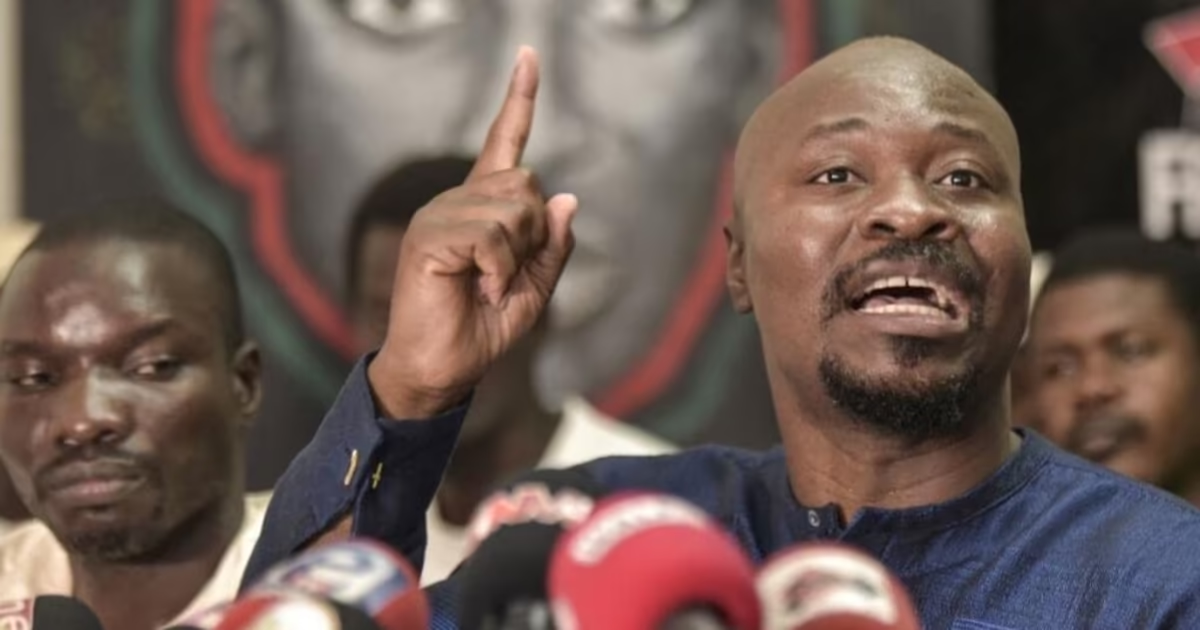
Senegal’s political landscape has been shaken by fresh revelations regarding the management of political funds, with Member of Parliament Guy Marius Sagna publicly disclosing details of financial allocations received by leading opposition figure Ousmane Sonko during his tenure as Prime Minister. According to Sagna, Sonko accessed 1.7 billion West African CFA francs in political funds, a sum he emphasized was transferred without any institutional oversight or control mechanisms.
Unregulated financial flows draw sharp criticism
While Sagna acknowledged that the legal framework technically permits such allocations, he highlighted a critical flaw: these funds operate entirely outside formal institutional scrutiny. This lack of transparency, he argued, mirrors the situation faced by President Bassirou Diomaye Faye, who is reportedly managing over 8 billion CFA francs across multiple financial instruments including political funds, special reserves, and sovereign wealth funds—none of which are subject to public or parliamentary review.
Sagna’s disclosure has reignited debates about accountability in Senegal’s political funding system, particularly as it exposes discrepancies between public rhetoric and actual financial practices. The MP’s statements target both Sonko and President Faye, questioning their commitment to fiscal transparency despite their vocal support for stricter regulation of political funds.
Contradictions fuel political tensions
Ousmane Sonko, a prominent opposition leader, has long positioned himself as a crusader for financial accountability, advocating for tighter controls on political funds during his opposition years. However, Sagna’s revelations draw a stark contrast between Sonko’s public stance and his own past financial dealings. The MP’s remarks, delivered with biting sarcasm, underscored what he described as a pattern of political inconsistency among certain leaders.
« This is the kind of sorcery that defines some politicians—magicians who bend rules to suit their narratives, » Sagna remarked on social media, directly challenging the credibility of Sonko’s reformist claims. His critique extends to President Faye, whose administration is now under scrutiny for maintaining parallel financial systems shrouded in secrecy.
Calls for systemic reform intensify
The controversy surrounding these financial allocations has amplified demands for comprehensive reforms in Senegal’s political funding mechanisms. Critics argue that unchecked access to such substantial sums undermines democratic principles and erodes public trust in governance. As political actors navigate these revelations, the spotlight remains firmly on whether Senegal’s leadership will prioritize transparency—or continue to navigate the blurred lines between public service and private financial interests.