
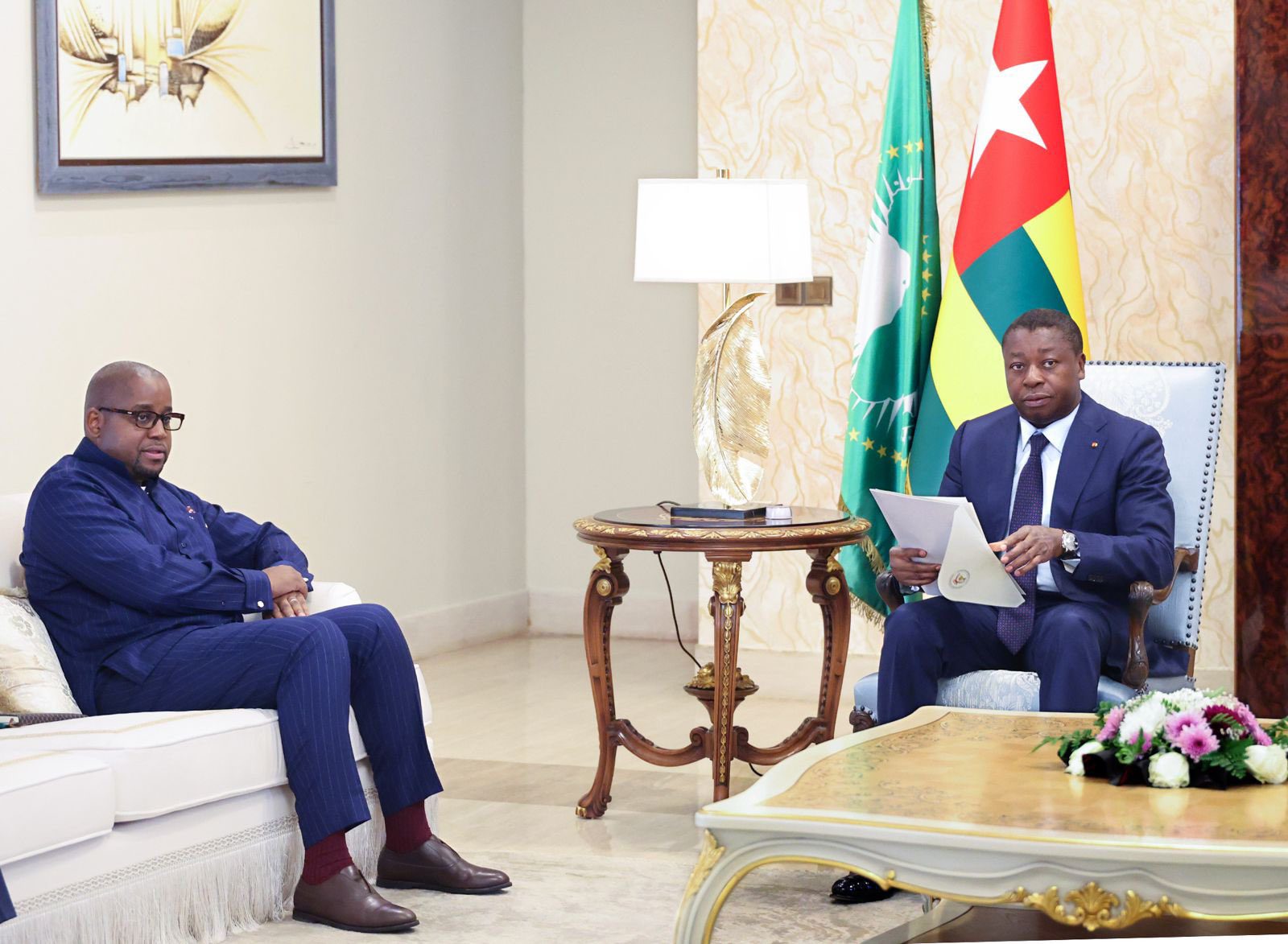
In a decisive diplomatic breakthrough, Togolese President Faure Gnassingbé hosted an urgent high-level meeting in Lomé to address the escalating crisis in Eastern Democratic Republic of Congo (DRC). The encounter with Floribert Anzuluni, the Congolese Regional Integration Minister, marks a pivotal moment in the African Union’s mediation framework, signaling renewed momentum toward sustainable peace in the war-torn region.
The extraordinary audience, held on September 29, 2026, centered on the handover of a confidential communiqué from Congolese President Félix Tshisekedi to President Gnassingbé. According to government sources in attendance, the document outlines strategic pathways for disarming armed factions, reintegrating ex-combatants, and restoring civilian safety across Eastern DRC. Anzuluni emphasized that the initiative reflects Kinshasa’s commitment to accelerate peacebuilding under the African Union’s leadership.
Why this Lomé meeting carries historic significance
Eastern DRC has endured years of unrelenting conflict, with over two million displaced civilians and fragile ceasefire agreements repeatedly violated. The Togolese mediation under Faure Gnassingbé is now gaining critical traction as a neutral, facilitative platform. Since his appointment as African Union mediator in April 2025, President Gnassingbé has convened multiple regional summits in Lomé, uniting African heads of state, military observers, and civil society in structured dialogue.
Key outcomes of this extended diplomatic engagement include:
- Strengthened ceasefire monitoring: A joint verification mechanism integrating Rwandan, Burundian, and Ugandan military observers is set to deploy in conflict hotspots.
- Economic collaboration initiatives: A tentative agreement on cross-border trade corridors aims to reduce illicit mineral trafficking that fuels insurgencies.
- Humanitarian corridor activation: Plans are advancing to reopen vital supply routes, particularly in North Kivu, where over 500,000 people face acute food insecurity.
From diplomacy to tangible peace dividends
Beyond symbolic exchanges, the Lomé audience produced measurable commitments from both governments. The Congolese delegation presented a six-month de-escalation benchmarks, including:
- A phased withdrawal of foreign armed groups from DRC territory.
- Launch of community reintegration programs supported by the African Union Development Agency.
- Establishment of a permanent mediation cell in Goma to resolve local disputes before they escalate.
President Gnassingbé underscored that Togo’s neutral positioning offers a rare opportunity to break historical impasses. “In Lomé, we have found a platform where all parties can engage without preconditions,” he stated. “Our focus is on converting diplomatic breakthroughs into daily security for Congolese families.”
Regional ripple effects and long-term outlook
The stabilization of Eastern DRC is not just a Congolese imperative—it is central to regional security across the Great Lakes. The African Union has now tasked Togo with leading a technical working group involving Angola, Kenya, and South Africa to harmonize peace enforcement strategies.
Meanwhile, civil society organizations in Goma and Bukavu report cautious optimism. Local peace activists have welcomed the renewed diplomatic attention, noting that previous mediation efforts often stalled due to lack of follow-through. “This is the first time we’ve seen concrete timelines attached to peace commitments,” said one activist who requested anonymity.
The next phase will test the durability of this momentum. With a regional summit scheduled in Lomé for November 2026, stakeholders are calling for accelerated disarmament schedules and increased funding for the African Union stabilization mission. Failure to deliver tangible results risks reigniting hostilities—a scenario neither Kinshasa nor the international community can afford.
As dawn breaks over the Gulf of Guinea, the diplomatic wheels set in motion in Lomé are beginning to turn. Whether they gather sufficient force to shift the trajectory of conflict in Eastern DRC may well determine the stability of an entire region for years to come.