
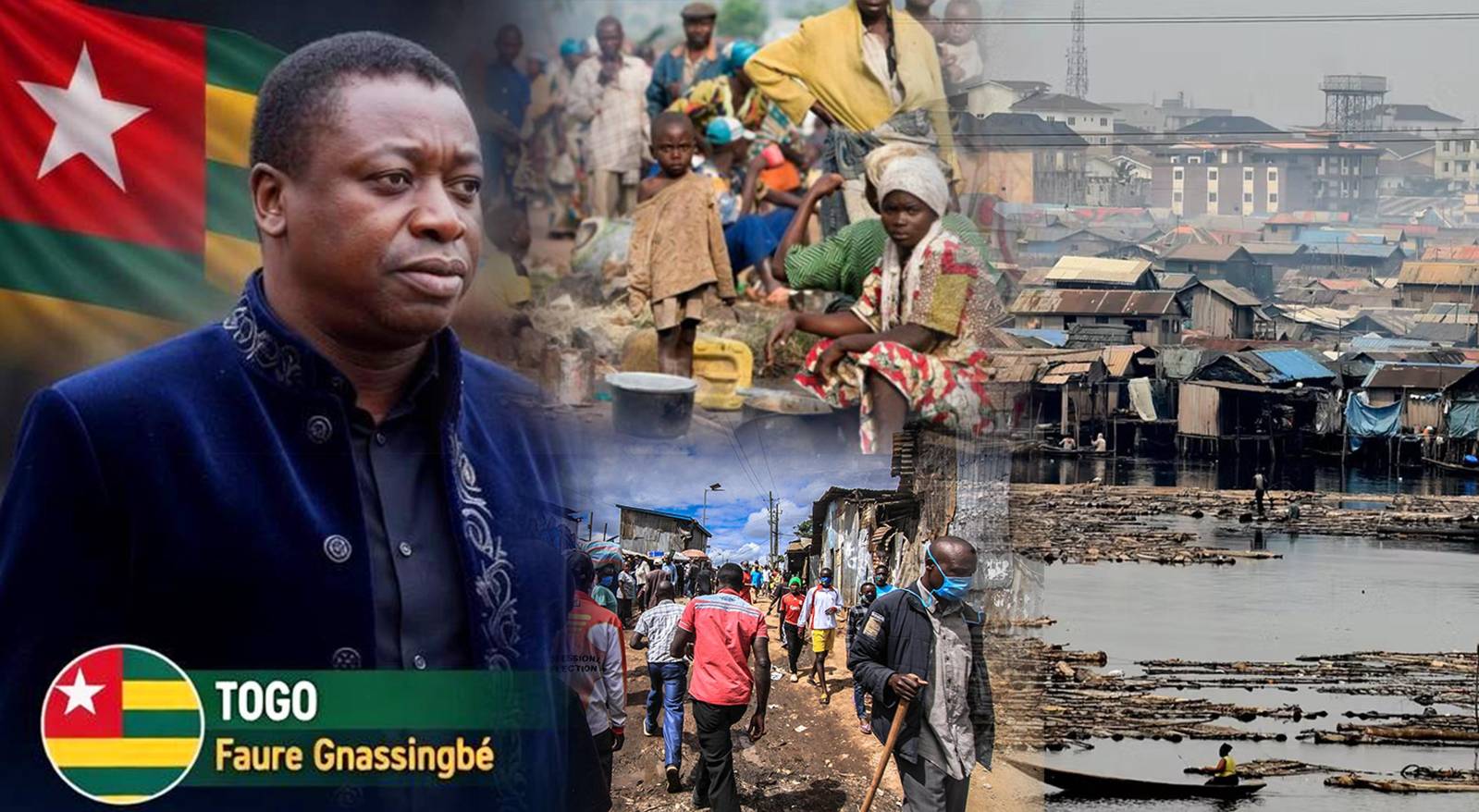
While Togolese citizens anxiously await relief from the escalating cost of living and persistent power outages, President Faure Essozimna Gnassingbé embarked on a journey to the snow-capped peaks of Kyrgyzstan. This expedition, far from being a mere exotic excursion, has left many within the nation grappling with profound confusion. Amidst whispers of clandestine maneuvers and an absence of concrete outcomes, this Central Asian venture appears less like a forward-thinking vision and more like a geopolitical distraction.
A striking disconnect: a detached presidential journey
In Lomé, the populace yearns for tangible solutions concerning electricity supply, healthcare access, and job creation. Conversely, in Bishkek, the focus was on ceremonial handshakes and diplomatic niceties. The disparity between these realities is stark. Kyrgyzstan, a landlocked nation of seven million, possesses neither the financial reservoirs of Dubai, the abundant gas reserves of Qatar, nor the technological prowess of Silicon Valley.
Consequently, a pressing question arises: what precisely did Faure Gnassingbé aim to achieve in a country largely unknown to most Togolese until recently? Without any announcements of significant contracts or substantial direct investments, this official trip appears to be an expensive enigma for the nation’s taxpayers.
Russia’s “back door” strategy: a high-stakes geopolitical wager
For seasoned political observers, the true objective of this engagement lies not in Kyrgyzstan itself, but in Moscow. By aligning with members of the Eurasian Economic Union (EAEU) and the Collective Security Treaty Organization (CSTO), Lomé seems to be attempting to gain entry into Vladimir Putin’s sphere of influence through an unconventional route.
This assertive diversification sends a clear message to Western allies. However, at what potential cost? By engaging in the complex dynamics of global tensions, Togo risks weakening its relationships with long-standing partners for the sake of vague and unproven Eurasian commitments.
“The real question isn’t solely about the destination, but the strategic direction it signifies,” is a sentiment echoed in diplomatic circles. And this chosen direction appears to diverge significantly from the immediate concerns of the Togolese people.
Minimal technical gains for a struggling populace
While discussions revolved around “customs digitalization” or “resilient livestock farming models,” technical cooperation is undoubtedly valuable. Yet, does it truly warrant a presidential visit of this magnitude? Togo, aspiring to become a prominent regional logistics hub, seems to be settling for minor administrative details when neighboring countries are actively securing substantial infrastructure projects and extensive industrial alliances.
Lomé’s silence: a governance transparency deficit
The most significant failing of this visit stems from its inherent lack of transparency. The absence of clear official communication has fueled rampant speculation. Why Kyrgyzstan? Why now? Without a definitive strategic roadmap, this journey only reinforces the perception of a detached presidency, seemingly more comfortable in the exclusive circles of the former Soviet bloc than addressing the pressing social realities confronting Togo.
Time is critical for Togo’s future
Faure Gnassingbé’s unconventional diplomatic approach represents a bold gamble, but it’s one placed on the shoulders of a nation already under immense strain. If this “unseen strategy” does not swiftly translate into a tangible reduction in household costs or a noticeable improvement in daily life, it will simply be remembered as a geopolitical diversion in history.
Togo can no longer afford to subsist on unfulfilled Eurasian aspirations. Any strategy, however ambitious on paper, is only truly valuable when it delivers concrete benefits to its citizens. For now, the only return from Bishkek appears to be an unsettling emptiness.