
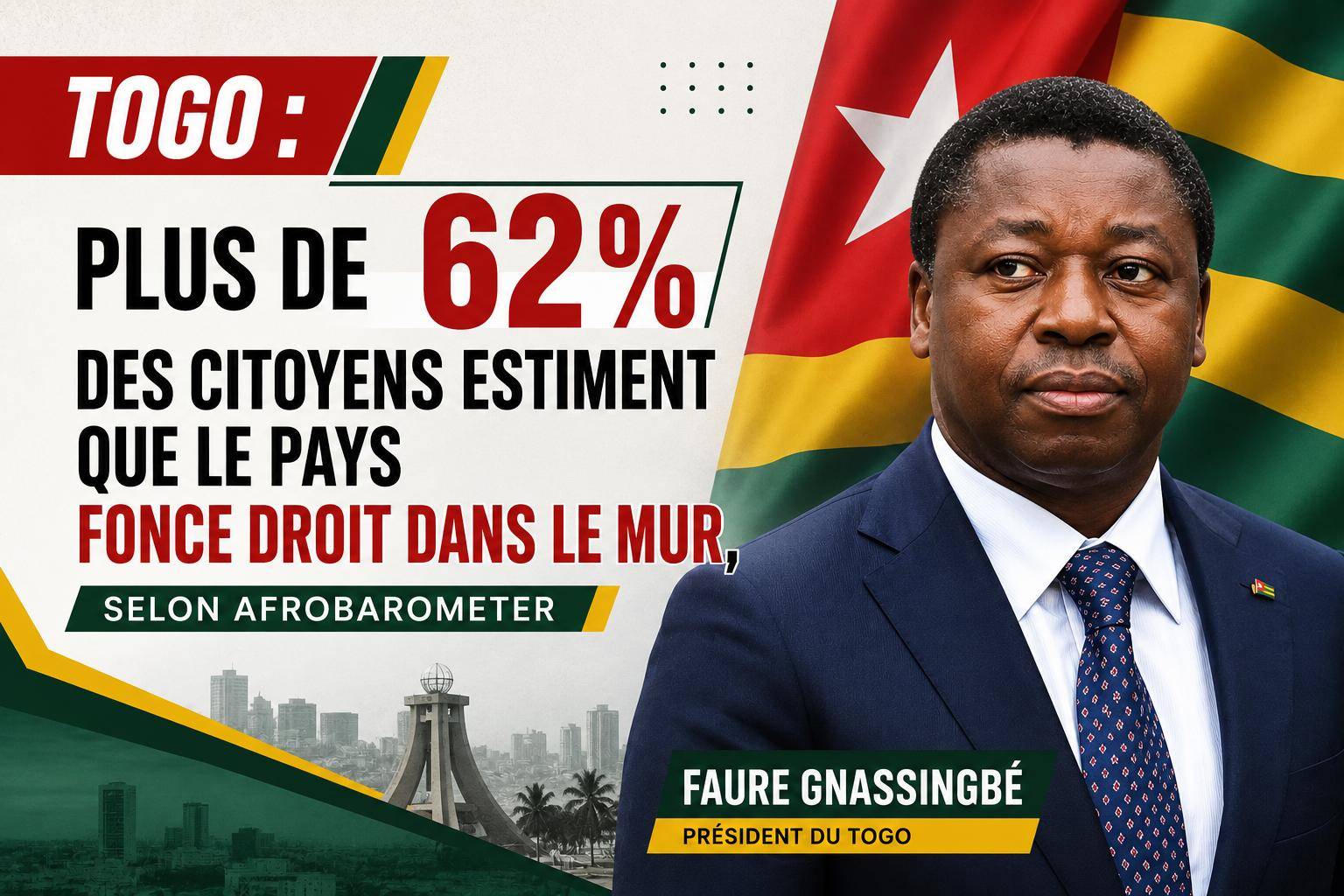
While official narratives praise the National Development Plan and stable macroeconomic growth, the reality on the ground has delivered a sharp rebuke to Faure Gnassingbé’s administration. The latest Afrobarometer survey paints a picture of a Togo struggling, with 62% of citizens believing the nation is on a detrimental path. The chasm between the ruling elites and the populace has never been wider, marked by an explosion of severe poverty, water scarcity, and inadequate healthcare access.
The assessment of widespread disillusionment has landed squarely on the desks of decision-makers in Lomé. Currently, more than six out of ten Togolese consider the country to be moving in the wrong direction, representing a significant eleven-percentage-point increase since 2021. This skepticism isn’t merely a fleeting sentiment but mirrors profound disappointment regarding economic management, which 63% of Togolese now rate as quite poor or very poor. This pervasive pessimism is not imaginary; it stems directly from daily life characterized by a continuous erosion of purchasing power and a complete absence of opportunities for a vibrant youth.
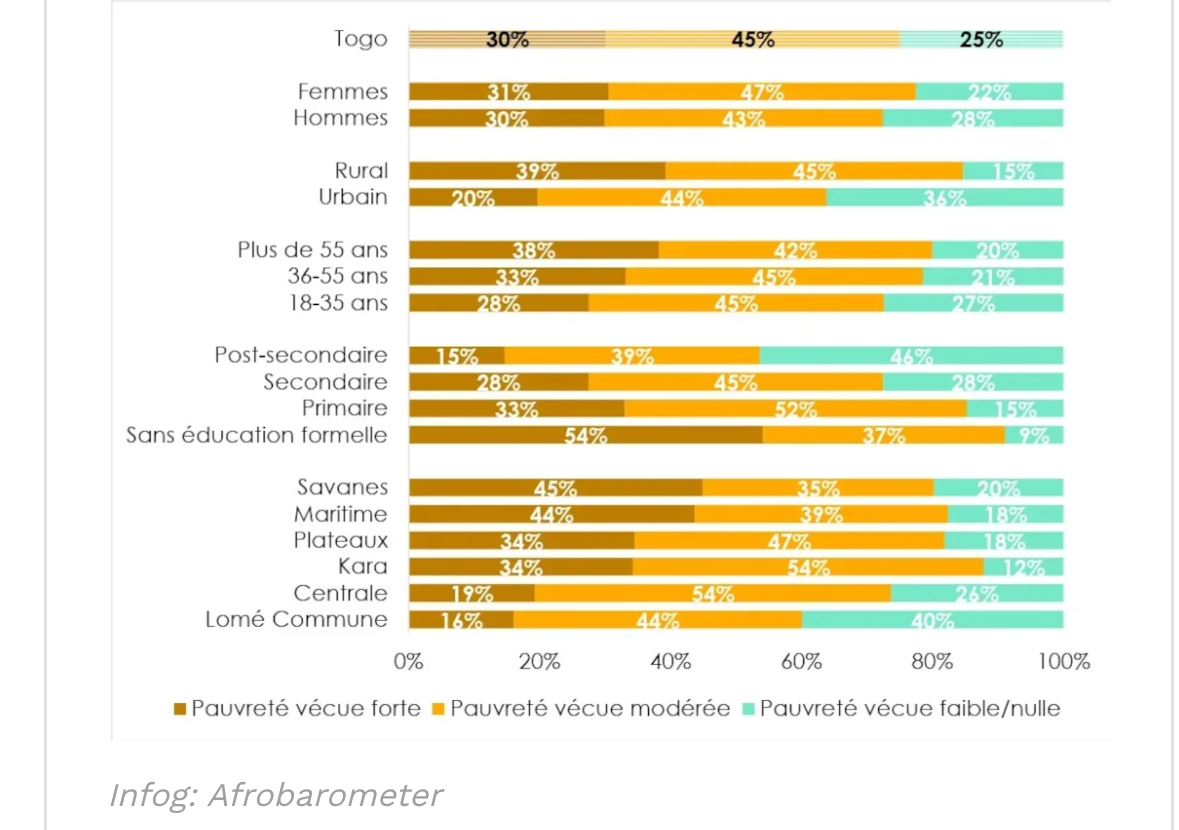
Beyond the often-cited cold GDP statistics championed by the government, the survey delved into lived poverty—the kind experienced daily in household budgets and on dinner plates. The findings are unequivocally alarming: the majority of respondents describe their personal living conditions as poor, and over half report a decline in their financial situation over the past twelve months. Presently, three-quarters of Togolese experience moderate to severe poverty, indicating that the benefits of economic growth vanish long before reaching the average citizen. For most, daily life has become a relentless struggle for survival, marked by a severe lack of cash income, essential medical care, and even safe drinking water.

This widespread precarity does not affect the country uniformly, revealing a striking territorial and social divide. One of the study’s most salient points concerns the Kara region. Contrary to common assumptions that historical strongholds of power might be spared, this area holds the unfortunate national record, with 88% of its population experiencing lived poverty. This figure serves as a direct challenge to the balanced development policies frequently lauded by the highest echelons of the state. Concurrently, the survey highlights that women and rural inhabitants remain the primary victims of this failing system, while education, though beneficial, is no longer sufficient to guarantee a decent standard of living in a saturated and clientelist job market.
How can such a decline be explained after so many years of social promises? The current contrast is unbearable: the ostentatious luxury displayed by a minority juxtaposed with the profound distress of populations in the interior. The regime appears to have prioritized large-scale prestige projects at the expense of genuine investment in human capital. Afrobarometer’s findings depict a society on the brink, where trust in institutions erodes as fundamental rights become unattainable luxuries.
Togo can no longer rely on artificial growth figures to conceal rampant hardship. When the vast majority of a nation asserts that its country is heading in the wrong direction, the entirety of current governance is called into question. The supposed Togolese miracle is merely a mirage for the millions of citizens forming the base of the societal pyramid. Without a radical shift in direction, prioritizing human well-being, the nation of Togo risks permanent decline. The Togolese people have spoken; they are weary of merely surviving. It remains to be seen if anyone in Lomé is still capable of heeding this cry of distress.