
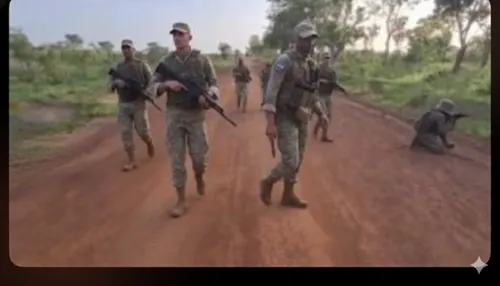
In the southeastern reaches of the Central African Republic, the town of Zémio has become the latest flashpoint in a brutal campaign that is pushing local communities to the brink of famine. Reports from the ground indicate that groups of Russian-speaking mercenaries have shifted their tactics, no longer confining themselves to armed confrontations but now systematically targeting agricultural stockpiles in the Haut-Mbomou region.
Witnesses describe a pattern of destruction that mirrors the scorched earth strategy, with granaries and food reserves being deliberately set ablaze or seized. The goal appears clear: disrupt the local food supply to weaken civilian resilience and erode support for opposing factions. This development comes as tensions in the region have already displaced thousands, leaving families dependent on dwindling reserves.
Impact on local agriculture and food security
The Haut-Mbomou region has long been a breadbasket for Central Africa, with smallholder farmers cultivating staples like maize, cassava, and sorghum. However, the recent wave of attacks has crippled agricultural operations. Farmers report losing entire harvests stored in community granaries, leaving them with no means to feed their families or sell surplus to neighboring towns.
Local leaders warn that the destruction of these granaries could trigger a humanitarian crisis, particularly as the rainy season approaches. Without stored food, communities face months of food insecurity, compounded by the economic strain of rising prices and limited access to markets.
Residents caught in the crossfire
For the residents of Zémio, the situation is dire. Many have already fled to safer areas, but those who remain are trapped in a cycle of fear and hunger. One local farmer, who asked to remain anonymous for safety reasons, shared his account: “They burned our granary last week. We had enough maize to last us until the next harvest, but now we have nothing. We don’t know how we’ll survive.”
The targeting of agricultural infrastructure is not just an attack on livelihoods—it is an attack on the very fabric of the community. Schools, clinics, and markets in the area are already struggling to function, further isolating the population from critical services.
International response and ongoing threats
While the Central African government has condemned the attacks, the presence of Russian-speaking mercenaries—widely believed to be linked to the Wagner Group—has drawn international scrutiny. Analysts suggest that this strategy may be part of a broader effort to destabilize the region, making it easier for armed groups to exert control over key resources.
Humanitarian organizations are scrambling to respond, but access to the affected areas remains severely restricted. The United Nations and other agencies are calling for urgent action to protect civilians and restore food security, warning that the situation could spiral into a full-blown famine if left unaddressed.
As the violence intensifies, the people of Zémio and the Haut-Mbomou region face an uncertain future. With their food reserves destroyed and their communities under siege, the humanitarian toll of this conflict is becoming impossible to ignore.