
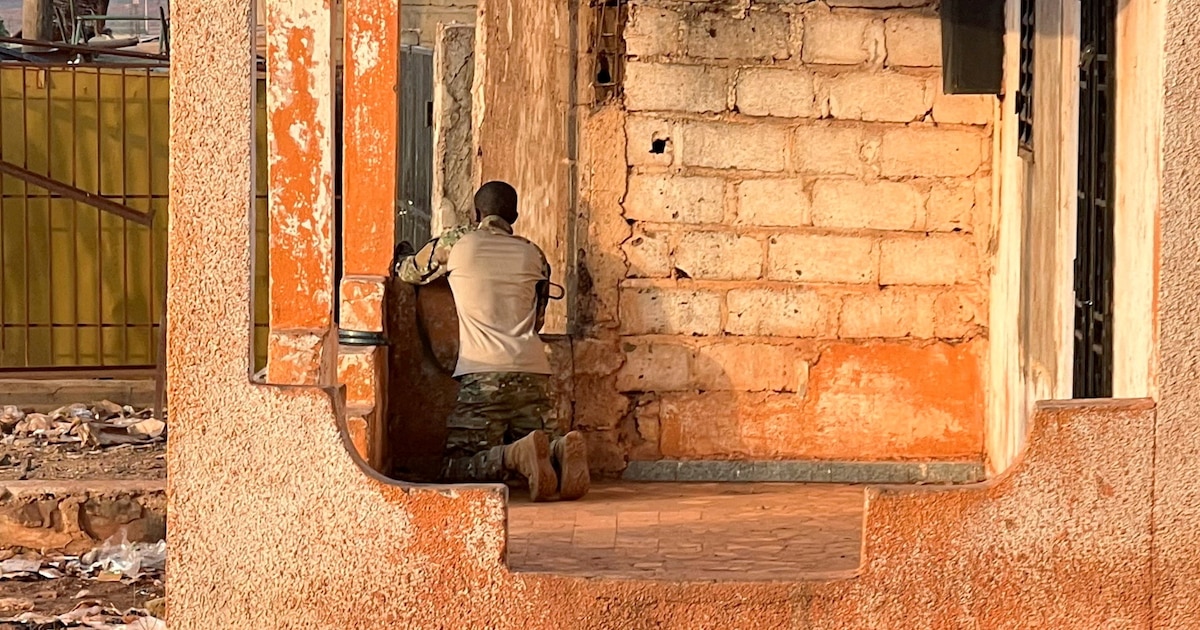
In a significant and symbolic reversal, Russian mercenaries from the Africa Corps—successors to the Wagner Group since 2025 and allies of Mali’s military junta—were forced into a humiliating retreat on April 26 in Kidal, northeastern Mali. Social media footage captured the debacle: disarmed and fleeing under pressure from the Group for Support of Islam and Muslims (GSIM), an Al-Qaeda affiliate, alongside rebel Tuareg fighters from the Azawad Liberation Front (FLA), the mercenaries abandoned the area in haste. Their rapid departure left behind a trail of abandoned armored vehicles, helicopters, and several captured Malian soldiers after brief clashes.
The country has been gripped by a wave of coordinated attacks since Saturday, with GSIM militants—backed by the FLA’s separatist rebellion—targeting key military positions across Mali, including areas near the capital, Bamako. The offensive marks a dramatic escalation in a conflict that has raged for years, transforming the region into a global hotspot for terrorism and its devastating toll by 2025, according to the Institute for Economics and Peace.
Kidal’s fall: a blow to Russian-backed forces
On Monday, the Africa Corps, under Russia’s Defense Ministry, officially confirmed its withdrawal from Kidal, a strategic stronghold in northern Mali. The setback is particularly stinging for the FLA rebels, who had watched Wagner’s mercenaries seize the city in November 2023, proudly hoisting their emblem—a white skull on a black background. The loss of Kidal was the only notable strategic gain Russia had secured since deploying to Mali in 2021, according to Djenabou Cissé, a researcher at the Foundation for Strategic Research. Its recapture underscores the junta’s growing vulnerabilities.
The coordinated assaults extended beyond Kidal, striking Bamako, Kati—home to Mali’s principal military base—and Gao, a former UN stronghold. At least six major cities faced simultaneous attacks, signaling a coordinated push to destabilize the junta’s grip on power.
Mali’s junta under siege: mercenaries fail to stem the tide
Since seizing power in a 2021 coup, Mali’s military leadership has leaned heavily on Russian mercenary support, first through the Wagner Group and now the Africa Corps. Yet violence has only escalated, with some of the deadliest attacks on civilians attributed to Russian mercenaries and Malian forces alike. Reports from the United Nations and Human Rights Watch have documented a surge in conflict-related sexual violence, with survivors recounting abuse at the hands of joint forces. Wassim Nasr, a jihadism expert, emphasized the mercenaries’ ineffectiveness: “It was evident long ago that Russian mercenaries, whether under Wagner or Africa Corps, were incapable of counterterrorism. Saturday’s attacks only confirmed their failures.”
Videos emerging from across Mali painted a grim picture. In Kidal, GSIM fighters stormed the governor’s office, while in Bamako, residents filmed militants entering the city unopposed. In Kati, near the junta’s headquarters, a bomb demolished the home of Defense Minister Sadio Camara, who was killed in the assault.
Accusations of betrayal and shifting alliances
On Monday, Prime Minister Abdoulaye Maïga paid tribute to Camara during a televised address, while junta leader Assimi Goïta declared the situation “under control” on Tuesday, vowing to pursue operations until the attackers were “fully neutralized.” Yet skepticism lingers. A Malian officer, speaking anonymously to RFI, alleged “The Russians betrayed us in Kidal.” He claimed regional authorities had warned Africa Corps three days before the attack, yet the mercenaries took no action—allegedly negotiating their own exit instead. With rumors of further withdrawals in northern Mali, the junta’s already fragile position may weaken further.
Russia’s Kremlin denied inquiries into the Africa Corps’ ability to regain control during a routine briefing on April 28, though its spokesman, Dmitry Peskov, insisted the group had thwarted a coup attempt by the FLA and GSIM, per Reuters.