
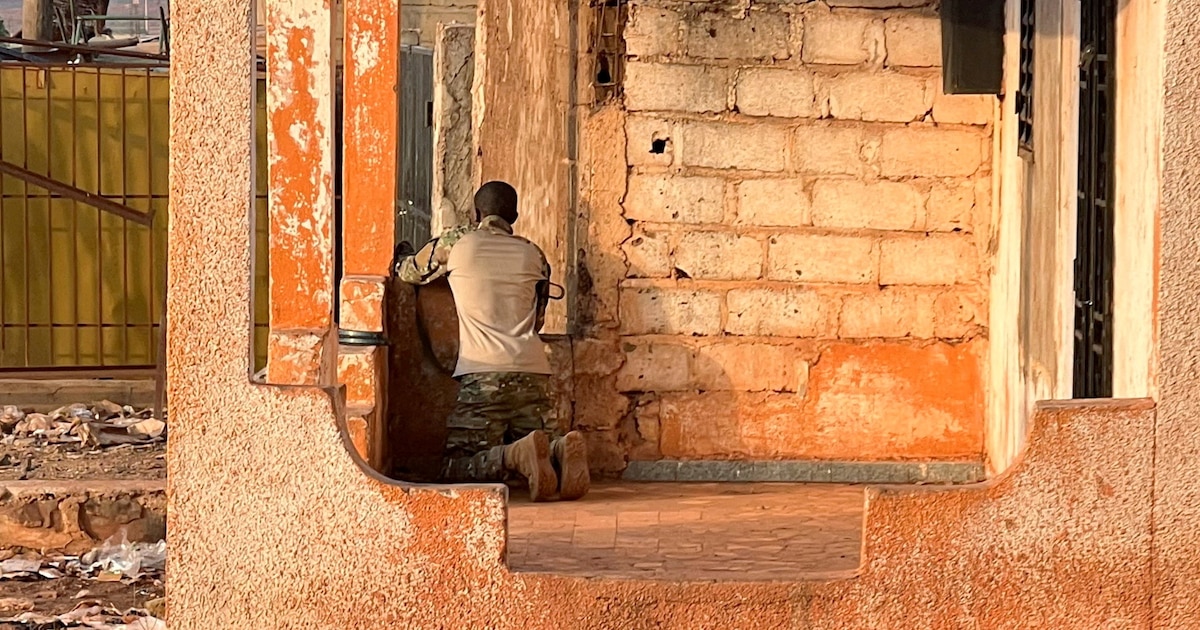
The military balance in Mali has shifted dramatically this weekend. In Kidal, northeastern Mali, Russian-backed mercenaries from the Africa Corps—successors to the Wagner Group since 2025—were forced into a humiliating retreat by advancing jihadist forces. Social media footage reveals the shocking scenes: mercenary fighters hastily boarding trucks, stripped of their weapons, under pressure from the Group for Support of Islam and Muslims (GSIM), an Al-Qaeda affiliate, and their Tuareg rebel allies from the Azawad Liberation Front (FLA). The retreat was so abrupt that dozens of armored vehicles and helicopters were abandoned in the hands of the attackers. Several Malian soldiers were also taken prisoner after brief clashes.
coordinated attacks shatter malian junta’s defenses
Since Saturday, Mali has been rocked by a wave of coordinated assaults by GSIM fighters, working alongside the FLA’s separatist rebels. These offensives targeted key positions held by the military junta across the country, including areas around the capital, Bamako. The strikes also hit Kati, home to the nation’s main military base, and Gao, a former UN peacekeeping stronghold. In total, at least six cities came under attack.
Kidal falls again: a major setback for Moscow’s strategy
On Monday, the Africa Corps, controlled by Russia’s Ministry of Defense, confirmed its withdrawal from Kidal, a northern stronghold. The retreat marks a stunning reversal for Moscow’s allies. Eighteen months earlier, in November 2023, Wagner Group mercenaries had seized Kidal and proudly raised their skull-and-crossbones flag—a symbolic victory for the junta. “The only major strategic success Russia had achieved in Mali since 2021 was taking Kidal,” said Djenabou Cissé, associate researcher at the Foundation for Strategic Research, in an interview. “Its loss now is a clear rebuke to their military ambitions.”
junta under siege as jihadists tighten grip
Since the summer of 2025, jihadist forces have inflicted repeated defeats on the Malian army and its Russian allies, tightening their encirclement around Bamako. The goal: to strangle the capital economically. This escalation has turned central Mali into one of the world’s deadliest conflict zones, according to the Institute for Economics and Peace. Reports from international observers, including the United Nations and Human Rights Watch, have documented a surge in civilian casualties, with Russian mercenaries and Malian troops linked to multiple atrocities—including sexual violence—since 2021.
mercenaries fail to stem terror tide
Despite deploying Russian contractors—first through Wagner, now via Africa Corps—since 2021, Mali’s junta has seen violence escalate. “It was always evident that Russian mercenaries were ineffective partners in counterterrorism,” said Wassim Nasr, a leading expert on jihadist movements. “Saturday’s attacks only confirmed what many already knew.” Analysts point to systemic failures: poor coordination, lack of local trust, and a pattern of abandoning positions under pressure.
new blow to junta’s legitimacy
Footage from across Mali this weekend captured the scale of the collapse. In Kidal, jihadists stormed the governor’s office. In Bamako, residents watched as GSIM fighters entered the city unopposed. Near the capital, in Kati—home to the junta’s headquarters—a bomb destroyed the residence of Defense Minister Sadio Camara, who was killed in the assault.
Prime Minister Abdoulaye Maïga addressed the nation, honoring the slain minister and urging calm. Earlier, junta leader and transitional President Assimi Goïta declared in a televised address that the situation was “under control” and vowed to continue operations “until the complete neutralization of all attacking groups.”
Yet doubts are growing. “The Russians betrayed us in Kidal,” an unnamed Malian officer told RFI. He claimed regional authorities had warned Africa Corps three days before the attack—but no reinforcements or defensive measures were taken. “They had already negotiated their exit,” the officer alleged. With mercenaries reportedly pulling out of other northern towns, Mali’s regular forces face increasing strain.
At a Kremlin briefing on Tuesday, spokesperson Dmitry Peskov refused to comment on Africa Corps’ ability to regain control. He did, however, assert that the group had prevented a coup attempt led by FLA and GSIM fighters, according to Reuters.