
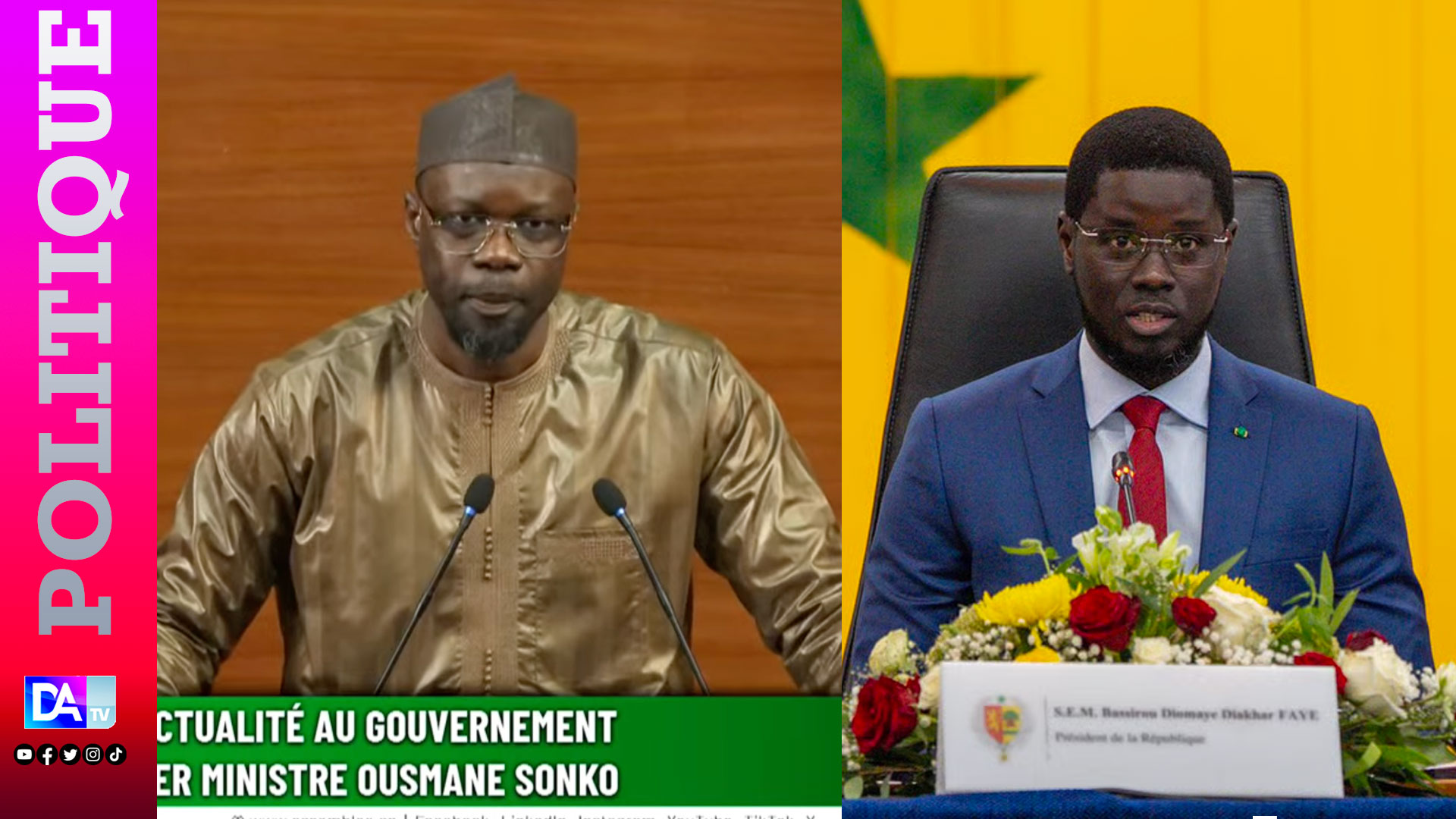
The political landscape in Sénégal has been shaken by a public rift between Prime Minister Ousmane Sonko and President Bassirou Diomaye Faye over the oversight of political funds—a reform central to their party’s presidential campaign promises. During a parliamentary session, Sonko disclosed a fundamental disagreement regarding who should spearhead the legislation on this critical issue.
Sonko emphasized that the initiative originated from Guy Marius Sagna, a member of parliament, rather than the executive branch. He argued that such a significant reform should be driven by the government, not the legislature, and admitted to personally alerting the President about this misalignment. However, President Faye responded cautiously, requesting additional time to assess the feasibility of the proposal without committing to a deadline.
Frustrated by the delay, Sonko issued a stark warning: if the President fails to make a definitive decision promptly, he will bypass the usual channels and present the draft law directly to the Council of Ministers for approval. This bold stance not only underscores the urgency of the matter but also reveals the underlying governance tensions between the two leaders of Sénégal’s executive branch.
Key takeaways from the political standoff
- Legislative vs. executive power: The dispute highlights a clash over which branch of government should lead the reform on political funds, with Sonko advocating for executive control.
- Government inaction: The Prime Minister accused the administration of inaction, urging decisive action rather than prolonged deliberation.
- Consequences of delay: Sonko’s threat to bypass the President signals a potential escalation in the power struggle within the ruling party.