
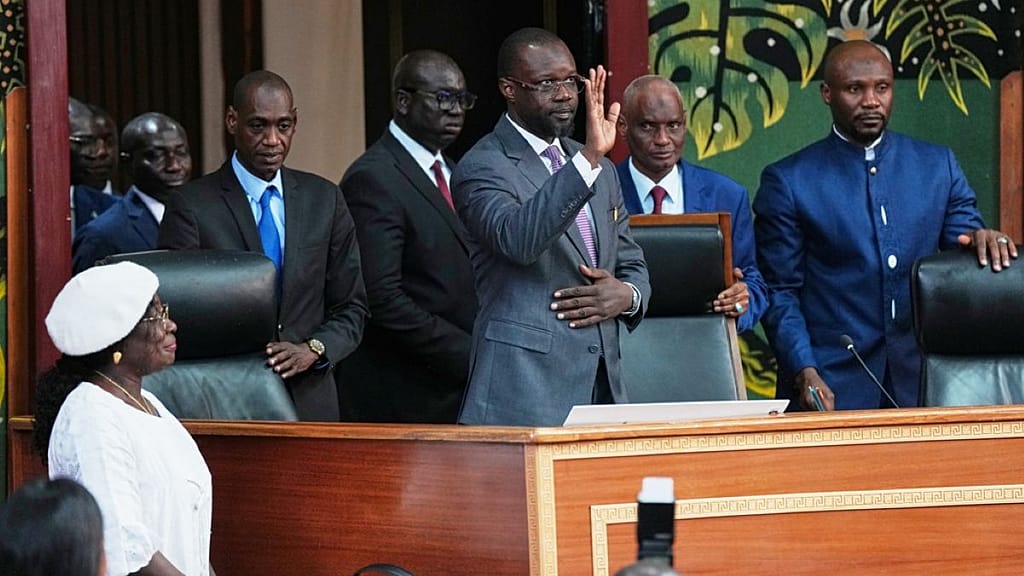
Senegal’s political landscape has shifted once again after the Constitutional Council dismissed opposition challenges to Ousmane Sonko’s election as President of the National Assembly. The ruling, delivered without possibility of appeal, solidifies Sonko’s grip on legislative power just weeks after his abrupt dismissal as Prime Minister by President Bassirou Diomaye Faye.
Sonko’s rapid return to parliamentary leadership followed his reinstatement as a deputy after the May dismissal. His swift ascent to the Assembly’s top position underscores the growing rift between once-united allies, as economic policy and public finance management become key battlegrounds in Senegal’s evolving political climate.
The court’s decision eliminates legal obstacles to Sonko’s leadership, embedding him deeper into the heart of Senegal’s decision-making process. Observers note this move signals a new phase of political realignment, where legislative influence may increasingly shape the nation’s economic trajectory.
With Sonko now firmly positioned at the helm of the National Assembly, Senegal faces a period of heightened legislative activity. His ability to steer policy debates could redefine the balance of power between executive and legislative branches, particularly as fiscal and economic strategies take center stage in national discussions.