
Senegal’s Prime Minister Ousmane Sonko Takes Uncompromising Stance on Controversial Legislation
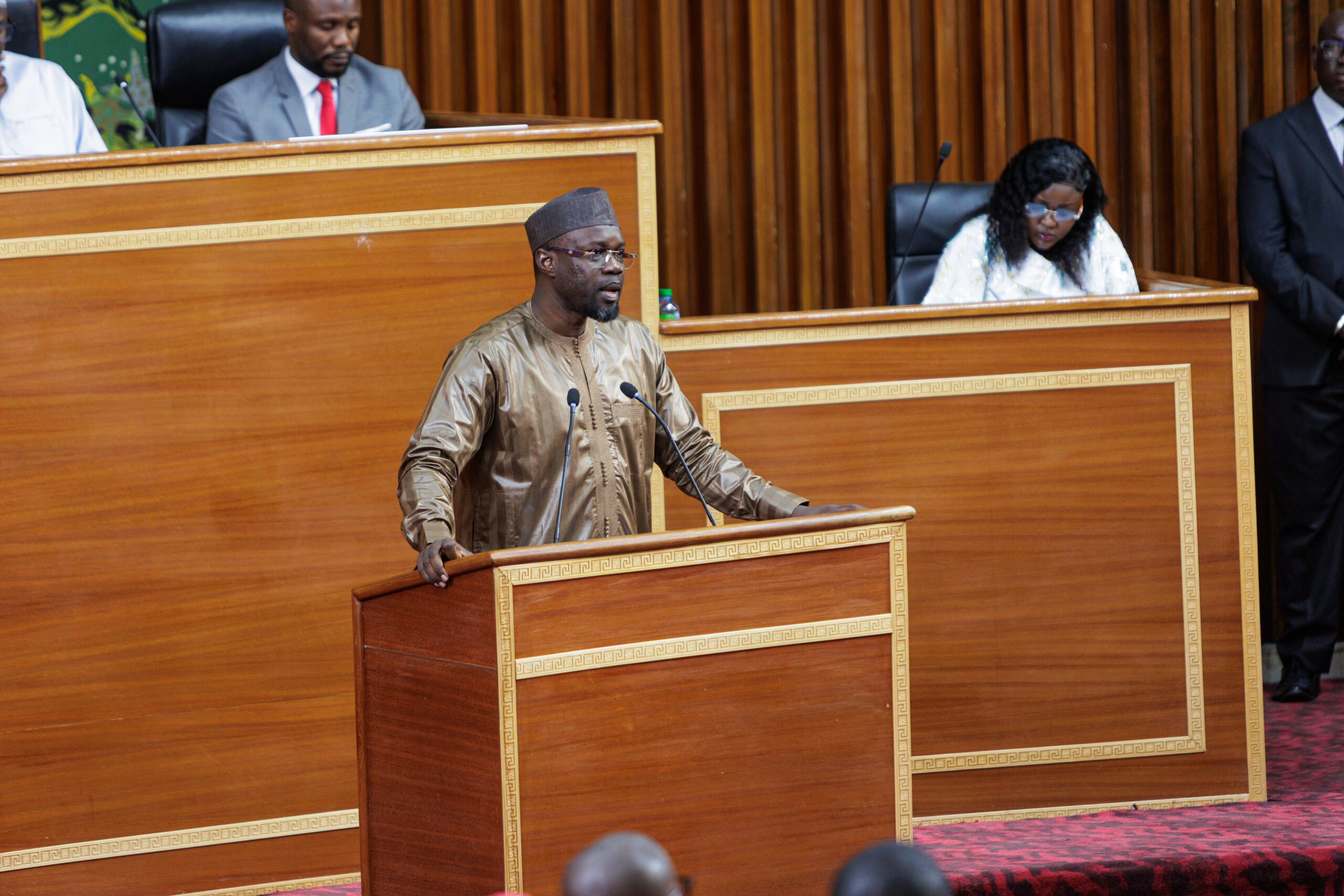
In a decisive address to the National Assembly, Senegalese Prime Minister Ousmane Sonko firmly defended the newly enacted law targeting unnatural acts, reaffirming the government’s resolute position during a session of urgent parliamentary questions. Speaking with unwavering clarity, he framed the legislation not as a targeted measure but as a necessary response to what he described as the “proliferation of harmful practices” threatening societal values.
Legislation Designed as a Deterrent, Not a Personal Attack
Addressing concerns raised by legislators, Sonko emphasized the law’s neutral and impersonal nature, stressing that its application would not single out any individual or group. “Once a law is passed, it applies universally,” he stated before the assembled deputies, rejecting suggestions that the legislation served specific agendas. His remarks underscored the government’s commitment to impartial enforcement while addressing what he characterized as a growing societal concern.
Religious and Community Leaders Rally Behind the Initiative
The Prime Minister highlighted strong support from religious authorities, noting that prominent clerics and community leaders had reached out to commend the government’s legislative approach. This backing, he argued, reflects a broad consensus across Senegalese society that such acts run counter to the nation’s moral and cultural foundations. By framing the issue as a matter of national values rather than legal technicalities, Sonko sought to validate the law as a legitimate societal safeguard.
Warning Against External Interference
In a pointed rejection of international criticism, Sonko framed the law as a matter of Senegalese sovereignty, declaring that the country would not be swayed by external pressures. He criticized what he termed as “cultural imperialism” from Western nations, accusing certain elites within Senegal of harboring an inferiority complex in the face of foreign norms. “Senegal sets its own course,” he asserted, adding that the overwhelming majority of citizens oppose practices that undermine the nation’s identity. His stance positioned the law as both a defense of Senegalese values and a rejection of perceived neo-colonial influences.
Call for Strict Judicial Enforcement
Sonko issued a clear directive to the judiciary, demanding uncompromising and impartial enforcement of the new legislation. He warned that no individual, regardless of status or influence, would be shielded from accountability. “We will not shield the powerful,” he declared, signaling a zero-tolerance policy toward violations. His remarks suggested that the law would be applied with equal rigor to all sectors of society, leaving no room for exceptions or delays.
Rejection of Moratorium or Softening of Measures
Concluding his address, the Prime Minister dismissed any possibility of suspending or relaxing the law, stating firmly that “there will be no moratorium”. He reassured citizens that the government would remain steadfast in its implementation, framing the legislation as a critical step in preserving Senegal’s moral fabric. His closing remarks reinforced the government’s determination to address the issue decisively, without yielding to political or external pressures.