
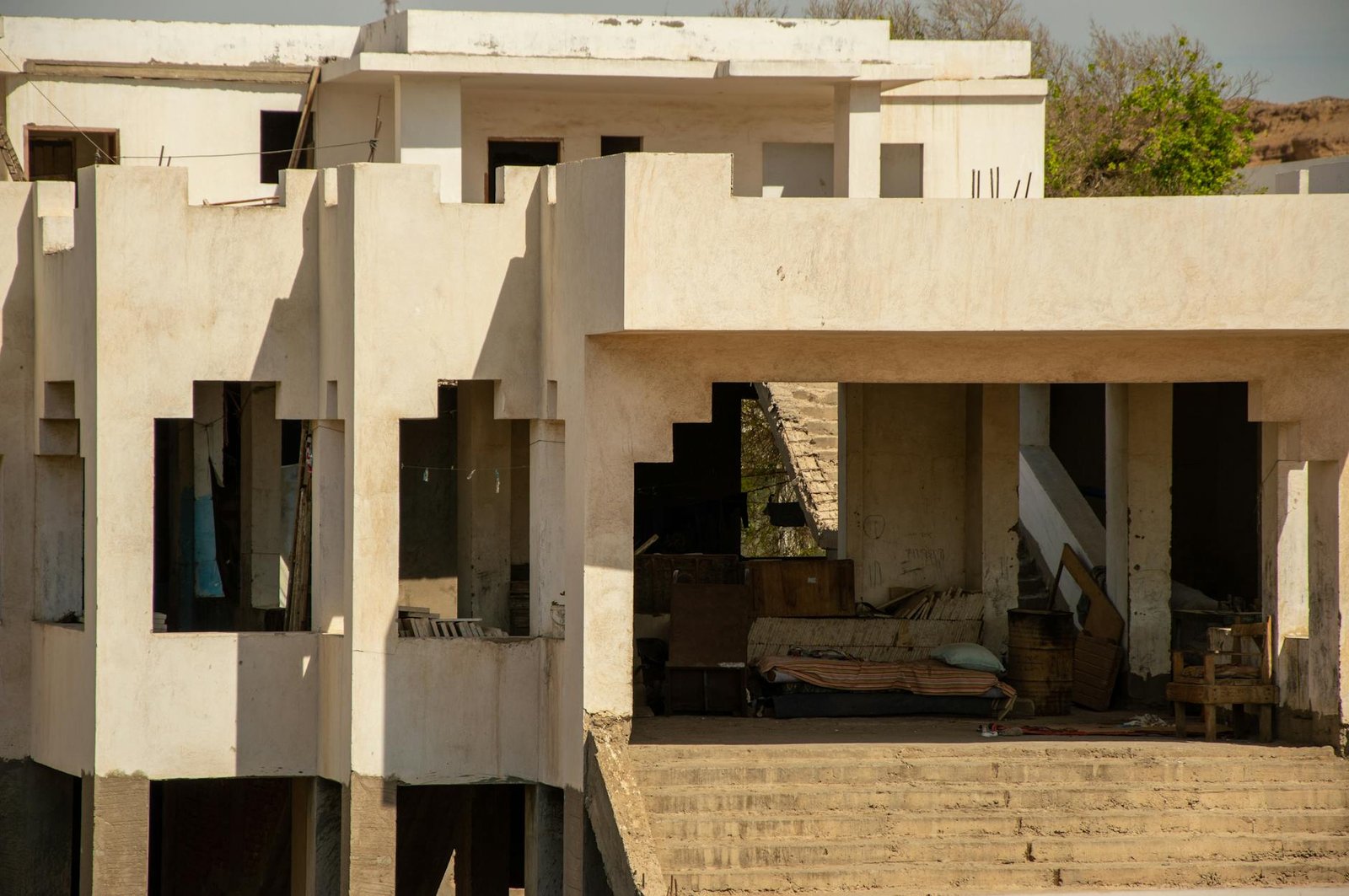
The Government of Senegal has launched a sweeping review of its public assets with a sharp focus on 25 recently completed infrastructures that have yet to deliver any meaningful service. According to official assessments, these dormant facilities represent a combined value of 279 billion CFA francs—an immobilised budget equivalent that yields no economic or social return. The situation underscores a persistent gap between public procurement, construction completion, and actual service delivery.
Targeted audit exposes costly gaps in asset utilisation
A systematic inventory by state teams has flagged completed but unused assets across sectors: government buildings, sector-specific facilities, and economic infrastructure. Each idle asset drains public funds through amortisation costs without generating any utility—compounded by ongoing expenses for basic maintenance, security, and, in many cases, accelerated deterioration due to neglect. The audit aims to reintegrate these resources into productive or administrative use through targeted redeployment, inter-agency sharing, or public-private partnerships.
Investigations reveal recurring root causes: facilities commissioned without allocated operating budgets, buildings constructed without designated functions, and projects where logistics for activation were never planned. Addressing these gaps requires granular analysis of each site to unlock trapped value.
Budgetary pressure drives urgency for asset revival
This initiative aligns with the current administration’s commitment to financial transparency and expenditure control since taking office in 2024. Tapping into 279 billion CFA francs of already-paid assets offers a rare opportunity to free up fiscal space without resorting to new debt—critical at a time of elevated debt servicing and reduced reliance on external financing. The move complements broader public contract reviews and audits of state-linked entities, reinforcing a clear policy: maximise existing assets before pursuing new spending.
The initiative also responds to longstanding critiques from the national Audit Court, which has repeatedly highlighted the absence of robust post-delivery management in Senegal’s public procurement cycles.
Governance reforms target weak links in project lifecycles
The audit reveals systemic flaws in project governance. The handover of a completed facility should mark the beginning—not the end—of its utility. Yet in practice, responsibility for feasibility studies, financing, construction, and operational activation is often scattered across multiple ministries and agencies, creating blind spots. International financial institutions have long advocated for unified responsibility chains from planning to activation to prevent such inefficiencies.
For the 25 underused sites, potential solutions include reassigning them to ministries currently renting private office space to cut lease costs, leasing them to private operators under strict performance agreements, or completing missing components—equipment, staffing, or utilities—to restore intended services. Final decisions will hinge on case-by-case evaluations and budgetary trade-offs.
This asset revival initiative serves as a credibility test for public administration. Success will depend on transparent progress tracking and measurable performance indicators. Senegal’s experience could serve as a model for other regional economies grappling with the burden of “ghost infrastructures” that erode the value of public investment.