
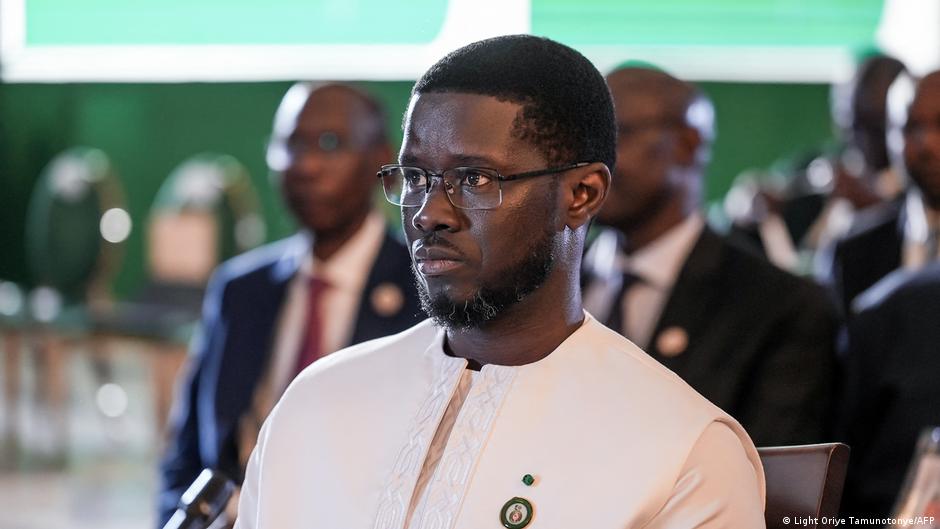
In Sénégal, the Parti Démocratique Sénégalais (PDS) has publicly urged citizens to reject the proposed constitutional changes in the upcoming referendum. President Bassirou Diomaye Faye recently announced this national vote, allowing the public to decide the fate of a law that has become a flashpoint for political tension.
This legislative text, championed by Ousmane Sonko and his Pastef party, was recently passed by the National Assembly. Its primary goal is to expand the powers of the legislature while curtailing the executive authority of the President. By opposing these changes, the PDS is siding with Bassirou Diomaye Faye, a move that highlights a complex and evolving relationship between the party of Abdoulaye Wade and the current administration.
The PDS-Diomaye connection since 2022
The roots of this cooperation trace back to the July 2022 legislative elections, when the PDS and Pastef formed a tactical alliance to challenge the dominance of then-President Macky Sall. This partnership reached a new level just before the March 2024 presidential election. When Karim Wade, the PDS’s chosen candidate, was barred from running, the party leadership decided to endorse the joint ticket of Ousmane Sonko and Bassirou Diomaye Faye.
This endorsement was crucial in broadening Bassirou Diomaye Faye’s support base. While the move was framed as a defense of democratic principles and a way to defeat the incumbent’s candidate, Amadou Ba, it was also a strategic reaction. The PDS blamed Macky Sall’s government for Karim Wade’s disqualification. Wade, who has been living in exile following his time in prison, saw this as a way to maintain political relevance in Sénégal.
A relationship based on convenience
Despite their shared history, this cooperation has not turned into a formal governing alliance. Since the election, the PDS has remained outside the new administration, keeping its distance from both Pastef and the broader presidential coalition. Local analysts point out that this alignment is more about tactical positioning than any deep ideological bond.
Following its loss of power years ago, the PDS has faced a steady decline. Aligning with the current presidency is seen as an attempt to regain influence and remain a central player in national politics. This fluid strategy was evident during the late 2024 snap elections, where the PDS actually partnered with Macky Sall’s APR, its former arch-rival, to contest the polls.
Blocking Ousmane Sonko’s influence
The growing rift between Bassirou Diomaye Faye and Ousmane Sonko has provided the PDS with a fresh opportunity to assert itself. The party has voiced its support for the President’s decision to hold a referendum, while simultaneously campaigning against the reforms themselves. In a formal statement, the PDS called on its supporters and the general public to “block” these changes by voting “no.”
The party claims that these constitutional revisions are motivated by Ousmane Sonko’s personal ambitions and a “thirst for power” that threatens the country’s republican institutions. This stance reflects a broader sentiment within the opposition, where Ousmane Sonko is increasingly viewed as a polarizing figure whose radical rhetoric hinders national unity.
A temporary alignment with the President
However, this support for the President’s referendum should not be mistaken for a permanent alliance. Many in the opposition and civil society are not necessarily backing Bassirou Diomaye Faye’s overall agenda; rather, they are united in their opposition to what they see as a power grab by the legislative branch under Pastef’s influence.
For Bassirou Diomaye Faye, these shifting dynamics could be an advantage. As he faces internal pressure from within the movement that brought him to power, he is working to strengthen his own “Diomaye Président” coalition. Some observers believe the break between the President and Ousmane Sonko is now final, with elements within Pastef openly describing the President’s recent moves as a betrayal of their shared cause.